Related Articles
 Omanghana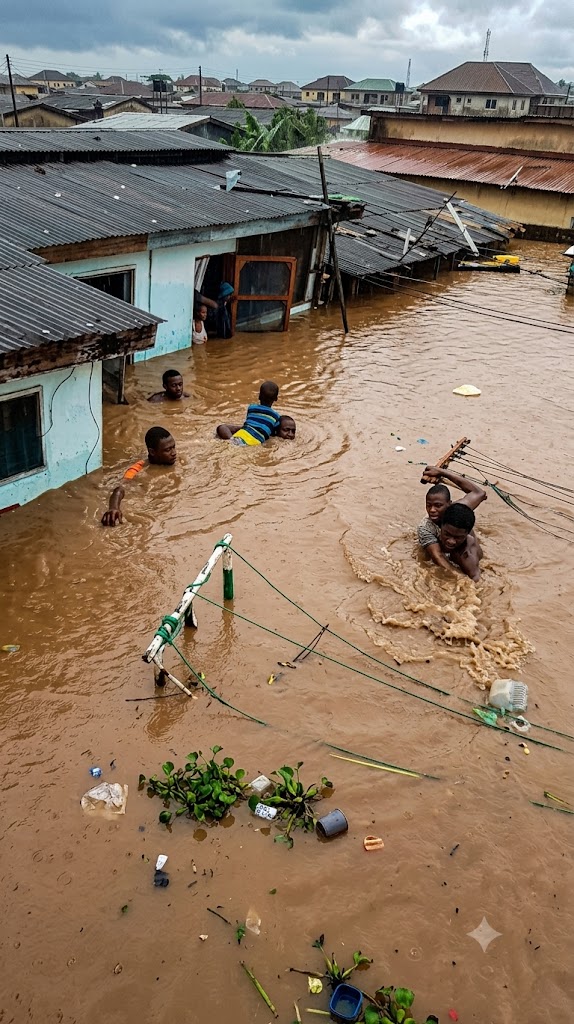
The Ghana National Fire Service (GNFS) has confirmed that at least 12 people have died following catastrophic flooding that swept across the Greater Accra Region after days of torrential rainfall.
Emergency responders have rescued nearly 500 residents from floodwaters since rescue operations began on Sunday and intensified through Monday, while more than 38,800 people have been displaced by one of the region’s worst flooding disasters in recent decades.
Authorities say at least seven people remain missing as of Tuesday, June 30, 2026, raising concerns that the death toll could increase as search and rescue operations continue in submerged communities.
Rescue Operations Continue Around the Clock
Firefighters, personnel from the Ghana Armed Forces, and police tactical teams have been working around the clock to reach stranded residents trapped by rising floodwaters.
Odawna emerged as the worst-affected community, where emergency crews rescued approximately 300 people after overflowing drains and stormwater inundated homes, businesses, and major roads.
In Tse Addo, rescue teams successfully evacuated about 105 residents as floodwaters rapidly engulfed residential neighborhoods.
According to the GNFS, the confirmed fatalities include three women, eight men, and one child.
Among the most heartbreaking incidents occurred in the Achimota-Agbogbloshie area, where a mother and her child were reportedly swept away by fast-moving floodwaters.
Near-Record Rainfall Triggers Disaster
The widespread flooding followed exceptionally heavy rainfall that dumped between 140 and 169 millimeters of rain over Accra within less than 24 hours.
President John Dramani Mahama described the rainfall as one of the highest single-day precipitation events recorded in decades.
The intensity of the storm overwhelmed drainage infrastructure across the capital, causing rivers and storm drains—including the Odaw drain—to overflow and inundate major roads, leaving numerous vehicles stranded or abandoned.
Urban planning experts have also pointed to longstanding challenges, including inadequate drainage systems and construction on natural waterways, as major factors that worsened the impact of the floods.
Thousands Displaced Across Greater Accra
The disaster has forced more than 38,800 residents from their homes, with many seeking refuge in temporary shelters established by emergency authorities.
Entire communities remain underwater, while hundreds of families have lost homes, household belongings, and sources of livelihood as cleanup efforts begin.
Emergency agencies continue to assess the full extent of damage to homes, schools, businesses, and public infrastructure across the Greater Accra Region.
Government Announces Emergency Relief Measures
Following public criticism over the pace of the initial emergency response, the government acknowledged shortcomings in the handling of the crisis and pledged to strengthen relief operations.
A relief package totaling GH¢300 million (approximately $27 million) has been fast-tracked to support emergency humanitarian assistance for affected communities.
The government has also deployed the Ghana Armed Forces and the Ghana Police Service to work alongside the National Disaster Management Organization (NADMO) in managing evacuation centers, distributing relief supplies, and assisting displaced residents.
Health Authorities Warn of Disease Risks
As floodwaters begin to recede in some areas, public health officials are monitoring the situation closely to prevent disease outbreaks.
Health authorities have warned of an increased risk of waterborne and mosquito-borne illnesses, including cholera and malaria, and are urging residents to avoid contaminated floodwater, consume safe drinking water, and observe proper sanitation practices.
Search and rescue operations remain ongoing as emergency teams continue to comb flooded communities in the hope of locating those still missing while providing aid to thousands of residents affected by one of Ghana’s deadliest flooding disasters in recent years.