Omanghana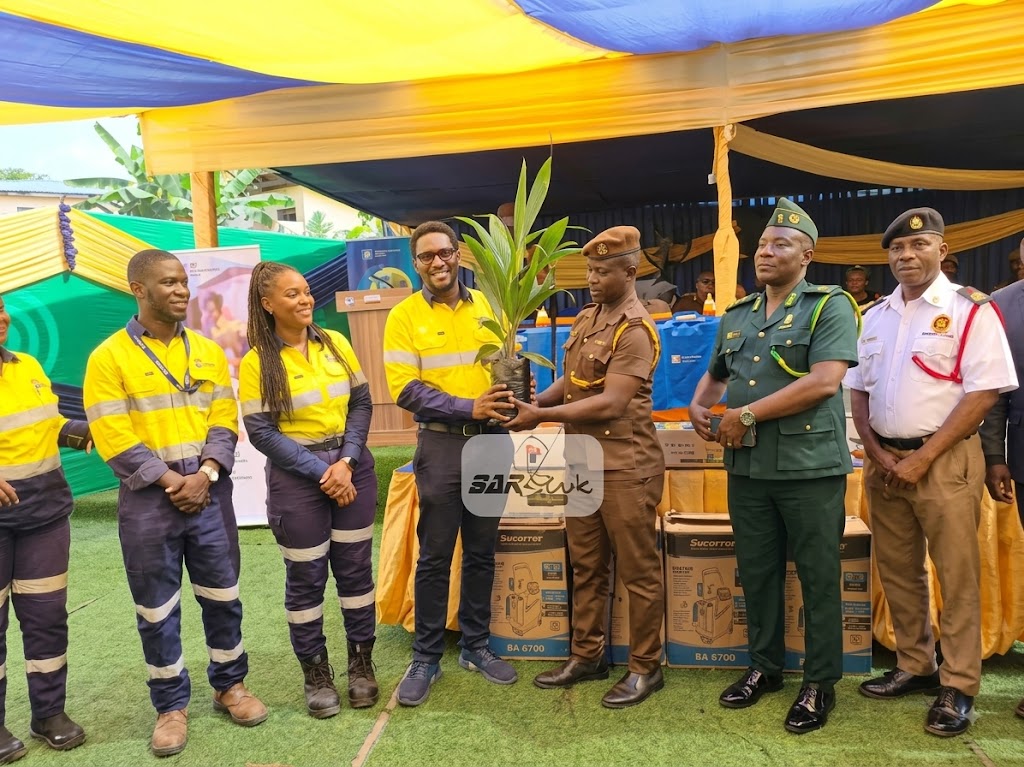
The Gold Fields Ghana Foundation has launched the Prisons Agro-Support and Empowerment Project at the Tarkwa Local Prison in the Western Region.
The initiative, known as PASE, is designed to increase the prison’s agricultural production, improve food availability and provide inmates with practical skills to support their reintegration into society after completing their sentences.
As part of the project, the foundation has invested approximately GH¢144,666 to establish an additional 20-acre oil palm plantation at the correctional facility.
The expansion will build on the prison’s existing 30-acre agricultural operation, increasing the total area available for farming activities.
During the launch, the Gold Fields Ghana Foundation presented 1,400 high-yield Tenera oil palm seedlings to the prison authorities. Fertilizers, organic compost, knapsack sprayers, weedicides, cutlasses and protective boots were also supplied to support cultivation and maintenance of the plantation.
The project seeks to address some of the welfare and resource challenges facing the facility, which currently accommodates more than 340 inmates.
The prison operates with a government feeding allocation of GH¢5 per inmate each day. Authorities say the limited amount makes it difficult to provide adequate and nutritious meals without additional support.
Chief Superintendent Bright Gbogbo, Commander of the Tarkwa Local Prison, said expanding agricultural production would help supplement the facility’s food supply and reduce pressure on its feeding budget.
Although oil palm is primarily a commercial crop, revenue generated from the expanded plantation could support the prison’s agricultural program and other welfare needs over time.
The project will also allow inmates to participate in practical farming activities. Through the program, they are expected to gain experience in land preparation, planting, crop maintenance, fertilizer application, weed control and farm management.
Chief Superintendent Gbogbo emphasized that the initiative extends beyond food production. He said vocational and agricultural training could provide inmates with useful livelihood opportunities after their release.
The skills acquired through the project may enable beneficiaries to seek employment in the agricultural sector, establish small farms or participate in agribusiness activities when they return to their communities.
Supporters of the initiative believe productive training can reduce idleness within the prison and strengthen rehabilitation by preparing inmates for independent and lawful livelihoods.
Speaking at the handover ceremony, Executive Secretary of the Gold Fields Ghana Foundation Abdul-Razak Yakubu reflected on the changing role of prisons in society.
He said his previous fear of correctional facilities had developed into a better understanding of their potential to reform people and redirect lives when they receive the necessary support.
Yakubu explained that the investment forms part of Gold Fields’ wider commitment to enterprise development, sustainable livelihoods and the creation of a positive legacy within its host communities.
He stressed the importance of supporting institutions such as the Ghana Prisons Service to move beyond confinement and provide meaningful rehabilitation for people in custody.
The PASE Project is expected to contribute to food security, agricultural training and income-generating opportunities at the Tarkwa Local Prison.
Its long-term impact will depend on proper maintenance of the oil palm plantation, effective inmate training and sustained cooperation between the foundation and prison authorities.
If successfully implemented, the initiative could serve as a model for using agriculture to improve inmate welfare and strengthen rehabilitation within other correctional facilities across Ghana.
Source: Omanghana