Omanghana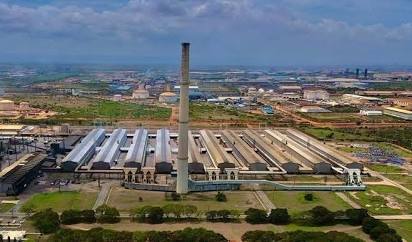
The Government of Ghana has inaugurated a high-level team to negotiate with a prospective strategic investor over the modernization, retooling and expansion of the Volta Aluminum Company Limited.
The initiative is intended to revive the struggling Tema-based smelter and position it as a central component of Ghana’s planned integrated bauxite-to-aluminum industry.
Minister for Lands and Natural Resources Emmanuel Armah-Kofi Buah inaugurated the team on Friday, August 21, 2026, and charged its members to negotiate an agreement that protects Ghana’s economic and strategic interests.
The team includes representatives from the Ministry of Lands and Natural Resources, Ghana Integrated Aluminum Development Corporation, Ministry of Finance, Office of the Attorney-General and VALCO.
Its mandate includes assessing the prospective investor’s financial strength, technical expertise, smelter-management experience and ability to make a long-term capital commitment.
The negotiators must also determine the proposed ownership arrangement, investment timetable, production targets and safeguards for workers and Ghana’s wider aluminum industry.
Mr Buah instructed the team to conduct the process transparently, diligently and with a strong focus on securing value for money.
The government has maintained that VALCO will not be sold outright. Instead, the proposed arrangement would allow a credible strategic partner to obtain an equity interest in return for providing the capital, modern technology and operational expertise required to revive the company.
The minister previously indicated that more than $700 million may be needed to modernize the plant and restore its operations. VALCO is also burdened by more than $250 million in electricity-related debt.
Operational conditions at the smelter have continued to deteriorate. The number of active reduction cells reportedly fell from 127 in 2025 to approximately 90 by August 2026.
The decline has been attributed to obsolete equipment, frequent breakdowns, power constraints and difficulties within the company’s supply chain.
VALCO was designed with an annual installed capacity of about 200,000 tones of aluminum across five potlines. It currently operates at only a fraction of that capacity.
Earlier modernization proposals envisaged replacing the five ageing P69 potlines with more efficient technology and eventually expanding annual production to approximately 300,000 tones.
The government believes that introducing a strategic investor offers the most commercially viable route to rehabilitating the smelter while reducing the financial burden on the state.
VALCO was established in the 1960s as part of Ghana’s post-independence industrialization agenda. The Tema smelter was linked to the development of the Akosombo Hydroelectric Dam and the country’s ambition to establish a fully integrated aluminum industry.
Ghana acquired complete ownership of the company in 2008 following the exit of Kaiser Aluminum. Since then, insufficient investment, ageing infrastructure and high production costs have prevented the smelter from operating at its full potential.
Cabinet approved the search for a strategic equity investor in 2022 after GIADEC and VALCO concluded that substantial private capital and technical expertise would be required to modernize the facility.
An investor-selection committee was subsequently inaugurated in November 2025 to evaluate proposals. Its options analysis report was submitted in January 2026, paving the way for the latest stage of negotiations.
A modernized VALCO is expected to become an anchor for Ghana’s integrated aluminum development program.
Under GIADEC’s master plan, locally mined bauxite would be processed at a domestic alumina refinery before being supplied to the VALCO smelter. The resulting aluminum could then support manufacturers producing cables, roofing sheets, cookware, automotive components and packaging materials.
VALCO has historically depended on imported alumina despite Ghana possessing substantial bauxite deposits. Establishing a domestic refinery would reduce that dependence and allow the country to retain more value from its mineral resources.
The planned transformation could also create employment, expand local manufacturing, reduce aluminum-product imports and generate additional export revenue.
Government officials have assured VALCO workers that their interests will be considered throughout the negotiations. A worker representative was added to the investor-selection process following concerns about the company’s future.
The Negotiations Team is expected to conclude discussions as quickly as possible without compromising transparency, commercial viability or Ghana’s long-term interests.
Further details on the government’s position are available in the Ministry of Lands and Natural Resources’ statement on VALCO.
Source: Omanghana