Omanghana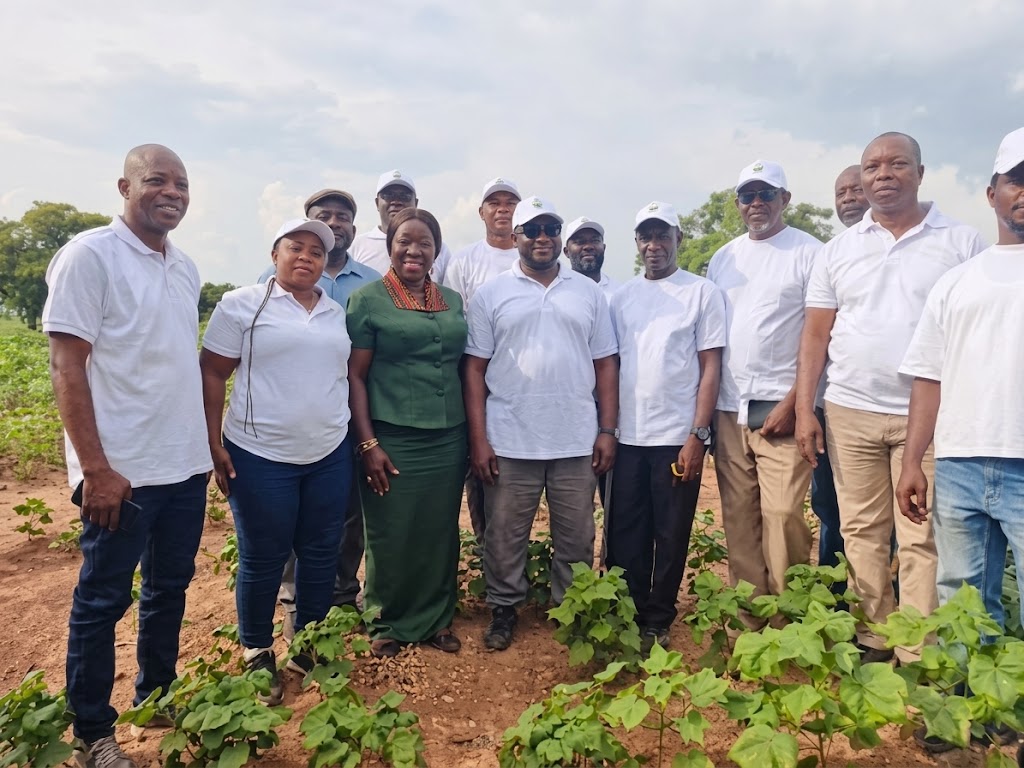
The Government of Ghana is intensifying efforts to revive large-scale cotton cultivation in the Northern Region as part of plans to secure a sustainable supply of raw materials for the country’s textile and apparel industry.
Minister for Trade, Agribusiness and Industry Elizabeth Ofosu-Adjare reaffirmed the government’s commitment during a working visit to a 20-hectare pilot cotton farm at Zoosale in the Savelugu Municipality.
The farm forms part of the Northern Cotton Revival Initiative, a partnership involving Benti Energies, Recell Ghana Ltd. and SELOC.
The initiative is intended to establish a multi-district cotton production belt across northern Ghana and restore the region’s position as a major source of raw materials for domestic textile manufacturing.
Project Lead Consultant Cephas Bedi explained that the program extends beyond the cultivation of cotton. It has been designed to link farmers directly to ginning, spinning, weaving and apparel manufacturing operations.
The integrated farm-to-factory model is expected to keep more economic value within Ghana by ensuring that locally grown cotton is processed and transformed into finished products domestically.
Ofosu-Adjare said a reliable supply of local cotton would help textile manufacturers reduce production expenses and become more competitive.
She noted that the country’s dependence on imported raw materials raises costs for domestic mills and places additional pressure on Ghana’s import bill.
Expanding local cotton cultivation could also improve the livelihoods of farmers, create jobs in rural communities and generate new economic opportunities across the agricultural and manufacturing sectors.
The minister indicated that the government remained committed to creating the necessary partnerships and support systems to make commercial cotton production sustainable.
The Northern Cotton Revival Initiative is also being aligned with Ghana’s expanding apparel manufacturing capacity, particularly in the northern part of the country.
One of the major projects connected to this industrial expansion is Northshore Apparel Ltd. in Savelugu, which was commissioned by President John Dramani Mahama and is projected to create thousands of manufacturing jobs.
A dependable domestic cotton supply could provide factories such as Northshore Apparel with locally sourced inputs while creating a ready market for farmers participating in the cotton revival program.
The government believes that connecting agricultural production to industrial processing will strengthen Ghana’s textile value chain, reduce reliance on imports and create sustainable employment opportunities from farms to factories.
The 20-hectare pilot farm will serve as an important test for the proposed expansion of cotton production across several districts in northern Ghana.
Source: Omanghana