Omanghana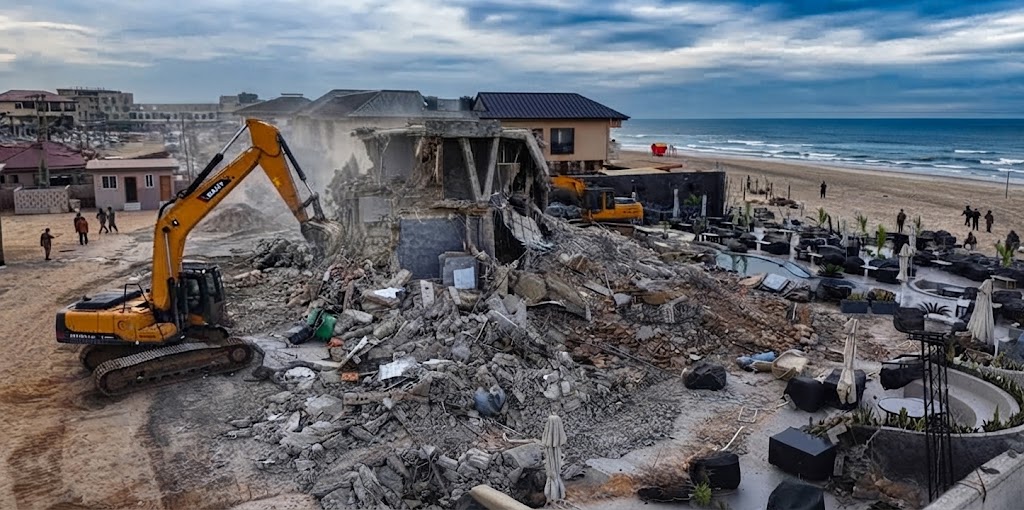
The government has directed the immediate ecological restoration of reclaimed sections of the Kpeshie Lagoon following the demolition of unauthorised structures within the wetland’s protected buffer zone at Laboma.
Deputy Chief of Staff in charge of Operations and Chairman of the National Flood Mitigation Taskforce, Stan Xoese Dogbe, instructed the Greater Accra Regional Coordinating Council to coordinate the rehabilitation exercise. The work will be undertaken with technical support from the Forestry Commission and the Environmental Protection Authority.
The directive followed a demolition operation carried out by the Post-Flood Mitigation Task Force and led by the Ghana Armed Forces’ 48 Engineer Regiment. The exercise targeted identified residential and commercial structures constructed on portions of the lagoon’s natural floodplain, including the popular Pink Flamingo Lounge.
Authorities said sections of the wetland had been converted into artificial land through the dumping of heavy boulders, sand, construction debris and other solid materials. The activity destroyed vegetation, reduced the lagoon’s water-holding capacity and obstructed the natural movement of water towards the sea.
The demolition followed a directive issued by the Greater Accra Regional Security Council after an inspection of the area. Occupants of the affected structures were given 21 days to vacate before the enforcement exercise commenced. Officials clarified that the operation did not target the entire Laboma enclave but only structures identified within the lagoon’s protected retention basin.
Under the restoration plan, demolition debris will be removed before coconut trees and other suitable vegetation are planted across the secured areas. The Environmental Protection Authority will also provide guidance to support the recovery of the lagoon’s fragile ecosystem.
Dogbe said the intervention would not end with the removal of illegal structures, stressing that the long-term objective was to return the reclaimed land to its natural state and protect it from renewed encroachment.
Restoring the wetland is expected to improve the lagoon’s ability to retain excess water during heavy rainfall and strengthen Accra’s resilience against flooding. Authorities have identified the Kpeshie Lagoon as one of the capital’s most critical flood-control areas following years of sand-filling and uncontrolled development.
The exercise forms part of the government’s wider post-flood mitigation program, which has included dredging, demolition and restoration work at the Tesa Dam, the Lafa Water Retention Basin and other flood-prone locations across Greater Accra.
Source: Omanghana