Omanghana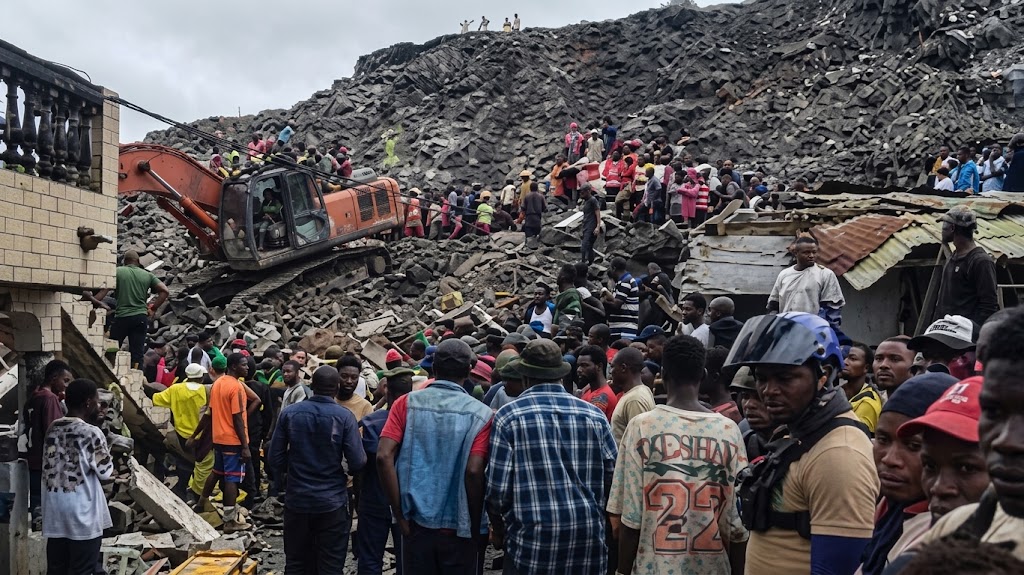
At least 30 people have been killed after a massive rubbish landslide buried homes and makeshift structures near the Dar-es-Salam open-air landfill in Conakry’s Gbessia district.
The disaster occurred at about 2:00 a.m. following hours of intense overnight rainfall. A towering mound of waste reportedly became unstable and collapsed onto nearby houses, shacks and temporary dwellings while residents were asleep.
Official government figures confirmed that 30 people died in the incident. Twenty-two others were injured, including six people who sustained severe injuries and 16 who were treated for less serious wounds.
Several residential structures were completely buried under tones of refuse, raising concerns that more people could be trapped beneath the debris. Families living around the landfill were forced to flee as emergency personnel searched the affected area.
Heavy excavators were deployed to remove layers of compacted rubbish, while defense and civil protection teams worked to locate survivors and recover bodies. The unstable waste piles and waterlogged ground complicated the rescue operation.
Prime Minister Amadou Oury Bah visited the disaster site to assess the extent of the destruction and supervise the government’s emergency response. Authorities also coordinated medical assistance for the injured and temporary support for displaced residents.
The collapse occurred as the government was preparing to permanently close and relocate the landfill because of growing concerns about its safety during the rainy season.
Authorities had reportedly begun containment operations and issued eviction notices to households living near the dump. However, relocation had not been completed, and dozens of families remained along the landfill’s perimeter when the mound collapsed.
The incident has renewed questions about why residents were still permitted to live so close to a site that officials had already identified as dangerous.
Communities surrounding the landfill have long faced health and environmental risks, including contaminated water, air pollution, flooding and exposure to unstable mountains of refuse.
Continuous rainfall can saturate waste and increase its weight, weakening the stability of large rubbish piles. When such dumps are poorly compacted or lack adequate drainage, the risk of a sudden collapse becomes considerably higher.
Conakry’s waste-management system has struggled to keep pace with rapid population growth and urban expansion. Limited access to affordable housing has also pushed many low-income families into informal settlements near landfills, waterways and flood-prone areas.
The tragedy highlights the wider vulnerability of communities living in unsafe urban locations across the Guinean capital. During periods of heavy rainfall, inadequate drainage and unstable ground conditions can expose residents to floods, building collapses and landslides.
Authorities are expected to continue searching the site while assessing the number of people displaced. The government will also face pressure to accelerate the landfill’s closure and provide safer accommodation for families previously living around it.
Beyond the immediate emergency response, the disaster has intensified calls for stronger waste-management policies, improved drainage infrastructure and more effective enforcement of settlement restrictions around hazardous sites.
The Dar-es-Salam landfill collapse is one of the deadliest urban disasters recorded in Conakry in recent years, leaving families mourning their relatives and raising urgent concerns about public safety in the city’s most vulnerable communities.
Source: Omanghana