Omanghana
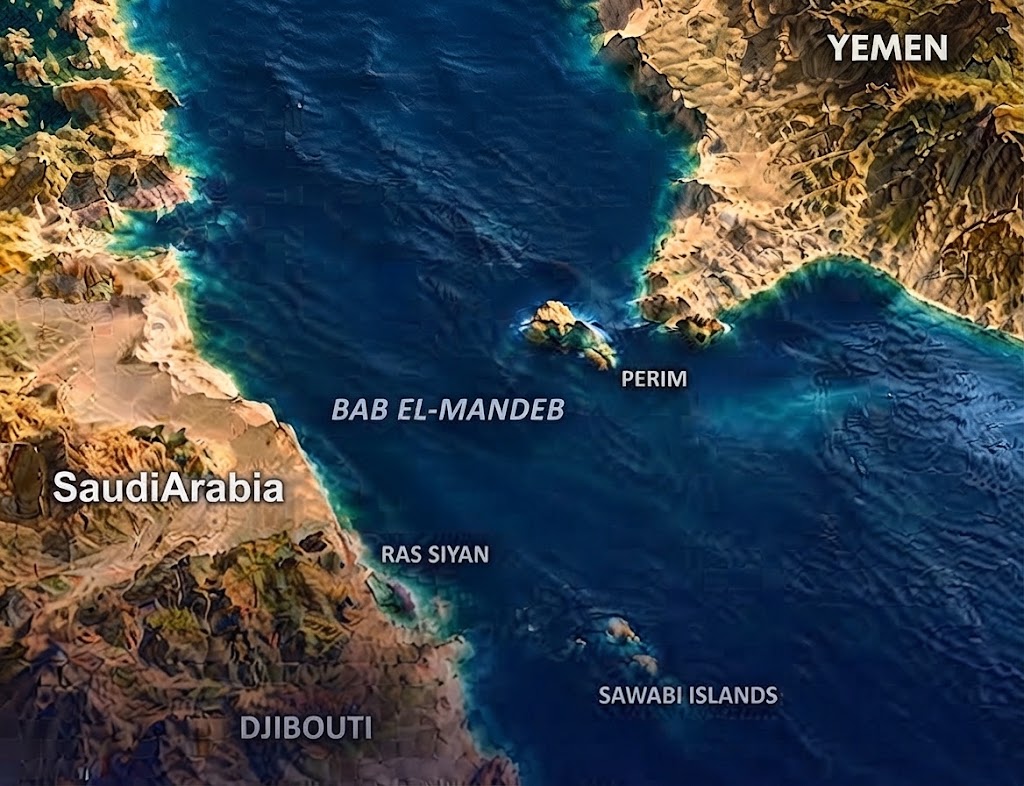
Houthi territorial gains along Yemen’s Red Sea coast are raising fresh concerns over maritime security and the economic prospects of African ports, as shipping companies weigh the risks of using the Bab el-Mandeb Strait.
The Iran-backed movement’s capture of Mokha and Perim Island, also known as Mayyun, has strengthened its position around the narrow passage connecting the Red Sea to the Gulf of Aden. Control of these strategic locations gives the group greater capacity to threaten vessels travelling along a major route between Asia, Europe and the Middle East.
The developments have increased uncertainty for shipping operators already balancing security concerns against the additional fuel costs and sailing time associated with voyages around the Cape of Good Hope. Previous Houthi attacks have reduced traffic through the Red Sea and pushed up insurance and security costs for vessels continuing to use the route.
For African ports along the Red Sea and Gulf of Aden, prolonged disruption could reduce demand for cargo handling, refueling and other maritime services. Fewer vessel calls would also affect transport operators, port workers and businesses whose income depends on shipping activity.
An analysis by Hamer Intelligence warned that weaker port revenues could place further pressure on governments already facing financial constraints. Persistent uncertainty could also complicate investment decisions involving port expansion and transport infrastructure. These remain potential consequences rather than confirmed losses across all East African ports.
The outlook for West Africa is more mixed. Earlier diversions around southern Africa helped introduce larger container vessels to the region, supported by investments in Deepwater terminals. Shipping industry reporting has documented regular calls by vessels capable of carrying about 24,000 twenty-foot containers, including on MSC’s Africa Express service.
However, the available reporting does not establish a widespread withdrawal of these vessels from West Africa. Future deployment decisions will depend on commercial demand, operating costs and the security of alternative routes.
The fighting is also placing humanitarian pressure on neighboring Djibouti. The United Nations migration agency reported on September 18 that at least 112,000 people had been displaced inside Yemen within two weeks, while nearly 3,000 had crossed the sea to Djibouti.
Beyond shipping and displacement, analysts are concerned about closer cooperation between the Houthis and Somalia’s al-Shabaab. Carnegie researchers, citing a UN report, highlighted exchanges involving weapons and technical training, warning that a stronger Houthi presence around the strait could create more opportunities for collaboration.
Source: Omanghana