Omanghana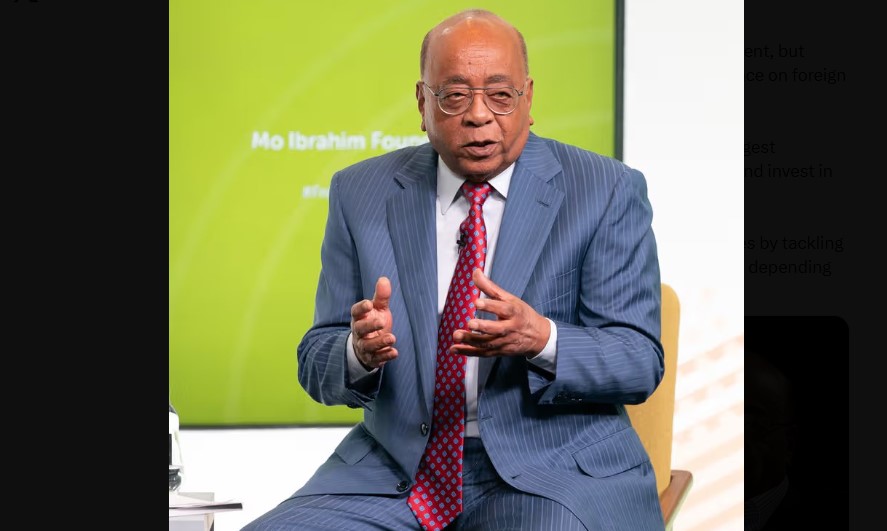
At 80 years old in 2026, Sudanese-British entrepreneur Mo Ibrahim remains one of the most influential figures in Africa’s modern business history. Through the creation of Celtel International, Ibrahim challenged long-standing assumptions that Sub-Saharan Africa was too risky for large-scale private investment, ultimately helping to unlock billions of dollars in capital and reshape the continent’s telecommunications industry.
His journey from telecommunications engineer to billionaire businessman and philanthropist is widely regarded as a blueprint for building successful enterprises in emerging markets through transparency, local empowerment, and strategic execution.
When Ibrahim launched Celtel International in 1998, many global investors viewed Africa as an unattractive destination for large-scale telecommunications investment. Weak infrastructure, political instability in some regions, and low-income consumer markets led many to question whether mobile phone networks could become profitable.
Ibrahim saw a different reality.
He recognized that millions of Africans lacked access to reliable communication services and believed mobile technology could fill a critical gap across the continent. Starting with a telecommunications license in Uganda, Celtel began building networks in markets that many multinational operators had overlooked.
To finance the venture, Ibrahim embarked on an ambitious fundraising campaign. During Celtel’s first year, the company secured approximately $16 million in investment capital to expand infrastructure and network coverage. Over the following years, the company raised hundreds of millions of dollars from international investors, many of whom were persuaded by Celtel’s emphasis on strong corporate governance and operational transparency.
By 2004, Celtel had expanded into 13 African countries, with telecommunications licenses covering more than one-third of the continent’s population. The company served over five million subscribers and had grown into one of Africa’s most successful private-sector enterprises.
A defining feature of Ibrahim’s business model was his commitment to local talent.
Rather than relying heavily on expatriate management teams, Celtel prioritized recruiting, training, and promoting African professionals to lead operations across its markets.
By the early 2000s, approximately 99 percent of the company’s workforce consisted of African employees. This approach enabled the company to better understand local market conditions while creating thousands of skilled jobs across the continent.
Beyond direct employment, Celtel’s operations supported broader economic activity through contractors, suppliers, distributors, retailers, and service providers. From infrastructure maintenance to airtime distribution networks, the company helped stimulate local business ecosystems in numerous African countries.
In 2005, Ibrahim made one of the most significant business decisions of his career.
Although Celtel had been preparing for public listings in London and Johannesburg, the company ultimately pursued a trade sale instead. Ibrahim agreed to sell Celtel to Kuwait-based Mobile Telecommunications Company, later known as Zain, in a deal valued at approximately $3.4 billion.
The transaction instantly became one of the largest corporate exits in African business history.
The sale generated substantial returns for investors and employees who had backed the company during its early years. Reports indicate that the deal created more than 100 African millionaires, while Ibrahim himself received an estimated $1.4 billion from the transaction.
The successful exit also sent a powerful message to international markets that large-scale investments in Africa could deliver world-class returns.
Following the acquisition, Zain continued expanding the business across the continent, strengthening its presence in major markets such as Nigeria, Ghana, and Madagascar.
By 2009, the operation served approximately 42 million customers across 15 African countries, demonstrating the scalability of the platform Ibrahim had originally built.
The next chapter came in 2010, when Indian telecommunications giant Bharti Airtel acquired Zain’s African operations in a transaction worth approximately $10.7 billion.
The deal cemented Celtel’s legacy as one of the most valuable technology and infrastructure investments ever created in emerging markets and highlighted the long-term value generated by Ibrahim’s original vision.
After exiting the telecommunications sector, Ibrahim increasingly shifted his focus toward governance, leadership, and development across Africa.
In 2006, he established the Mo Ibrahim Foundation, which promotes good governance, accountability, and leadership throughout the continent.
The foundation is best known for publishing the annual Ibrahim Index of African Governance, a comprehensive assessment of governance performance across African countries. It also awards the prestigious Ibrahim Prize for Achievement in African Leadership, which recognizes former African leaders who have demonstrated exceptional governance and voluntarily left office in accordance with democratic principles.
Beyond philanthropy, Ibrahim continues to play an active role in African business through Satya Capital, a private equity investment firm that focuses on sectors such as healthcare, agriculture, education, and technology.
The firm supports businesses that address structural challenges while creating long-term economic opportunities across the continent.
Ibrahim has also become a leading advocate for increasing domestic investment in Africa. He frequently argues that sustainable development cannot rely solely on foreign aid or external investment and has urged African pension funds, institutional investors, and wealthy individuals to allocate more capital toward local enterprises.
According to Ibrahim, mobilizing domestic capital is essential for accelerating economic growth, reducing dependence on external financing, and combating the billions of dollars that leave the continent annually through illicit financial flows.
More than two decades after launching Celtel, Mo Ibrahim’s impact continues to resonate across Africa’s business landscape.
His success demonstrated that African markets could support large-scale, profitable enterprises when paired with strong governance, local leadership, and long-term vision. The billions of dollars generated through Celtel’s growth and subsequent acquisitions helped alter global perceptions of Africa as an investment destination.
Today, Ibrahim’s legacy extends far beyond telecommunications. Through his advocacy, philanthropy, and investment initiatives, he remains a prominent voice calling for stronger institutions, accountable leadership, and greater African ownership of the continent’s economic future.
Source: Omanghana