Omanghana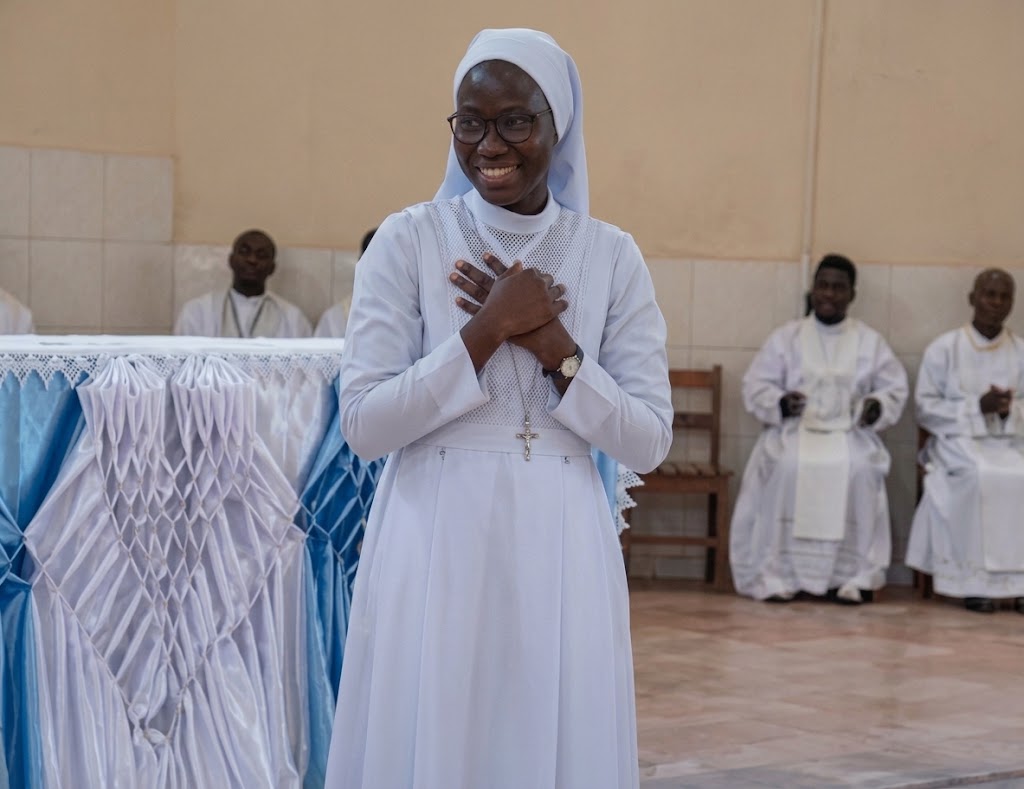
A 27-year-old woman from Guinea-Bissau who was raised in a devout Muslim family has made her first religious profession as a Catholic sister.
The young woman, whose father serves as a local Imam, publicly professed the vows of poverty, chastity and obedience, formally beginning her life as a consecrated member of a Catholic religious congregation.
Her profession represents the culmination of a deeply personal faith journey marked by conversion, family opposition, perseverance and eventual reconciliation.
Growing up in a strictly Islamic household, her initial interest in Christianity and subsequent decision to embrace the Catholic faith reportedly created significant tension within her family. She faced resistance, social pressure and a period of estrangement as relatives struggled to accept her decision.
Despite the difficulties, she remained committed to her vocation and began the formal process of religious formation. She completed the postulancy and novitiate stages, during which candidates receive spiritual guidance, study the traditions of their congregation and discern whether they are prepared for consecrated life.
Consistent dialogue with her family throughout the formation period reportedly helped to reduce tensions. Her continued commitment gradually encouraged greater understanding, creating a path towards reconciliation, mutual respect and acceptance.
The profession is also being viewed as a meaningful example of religious coexistence in Guinea-Bissau. Muslims and Christians in the West African country often share close family, ethnic and community relationships despite their theological differences.
Within the Catholic Church, first profession marks the formal completion of the novitiate. During the ceremony, a candidate publicly promises to live according to the evangelical counsels of poverty, chastity and obedience for a specified period.
Depending on the traditions of the congregation, the newly professed sister may also receive a religious habit and a new name.
Temporary vows are usually renewed periodically while the sister continues her spiritual formation and ministry. After several years of discernment, she may become eligible to make her final or perpetual profession, committing herself permanently to consecrated religious life.
Her journey from an Imam’s household to a Catholic religious congregation has become a powerful story of personal conviction, reconciliation and the possibility of peaceful relations between faith communities.
Source: Omanghana