Omanghana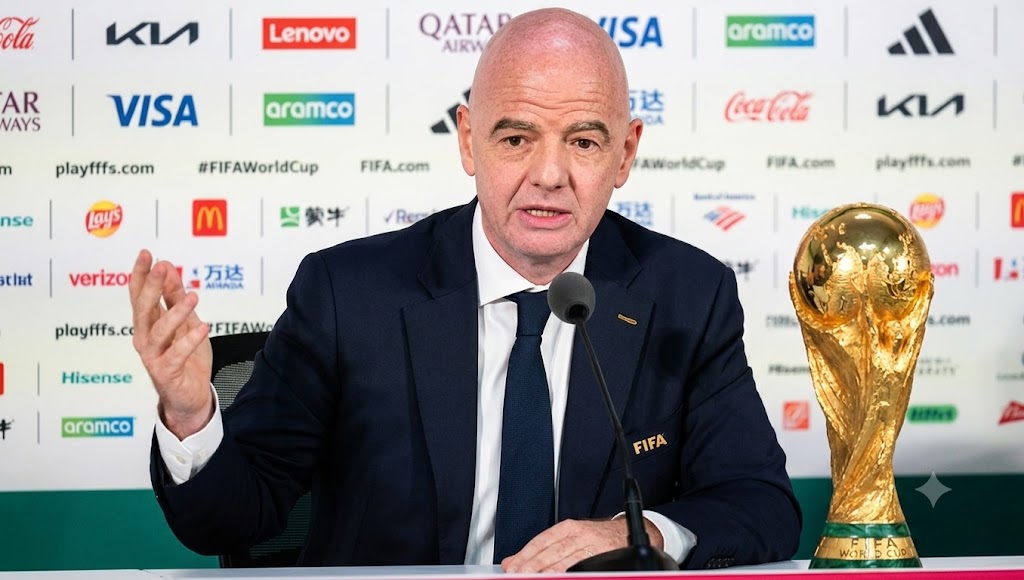
FIFA President Gianni Infantino has abandoned a controversial proposal to sell a minority stake in the governing body’s future commercial revenue to private investors following widespread opposition across world football.
The plan would have created a new commercial subsidiary known as FIFA Forward Enterprise, valued at approximately $20 billion. FIFA intended to raise as much as $4.2 billion by selling a 20% stake to outside investors.
Thrive Capital, the New York investment firm founded by Joshua Kushner, had been identified as the proposed anchor investor. The subsidiary would have controlled commercial operations connected to FIFA’s most valuable competitions, including the men’s and women’s World Cups and Club World Cups.
However, Infantino withdrew the proposal after several days of intense criticism, internal dissent and boycott threats from some of football’s most influential organizations.
“Having listened carefully to all the views, it has become clear that the project has created divisions,” Infantino said. “As a result, this proposal will not proceed.”
UEFA Leads Threat to Boycott FIFA Competitions
UEFA emerged as the strongest opponent of the investment scheme, arguing that allowing private investors to acquire a permanent interest in World Cup revenues would undermine the public and sporting character of the tournament.
Representatives of UEFA’s 55 member associations reportedly agreed to boycott FIFA competitions if the plan moved forward. The opposition later widened when Concacaf and the Asian Football Confederation rejected the proposal.
UEFA subsequently declared that its confidence in Infantino’s leadership had been lost and demanded a broader review of FIFA’s governance and decision-making processes.
Concacaf also called for accountability, arguing that a proposal of such magnitude could not have reached an advanced stage without revealing deeper leadership and governance problems.
Carlos Cordeiro Resigns in Protest
Pressure on Infantino intensified when Carlos Cordeiro, his senior adviser and a former president of the United States Soccer Federation, resigned with immediate effect.
Cordeiro said he had not participated in developing the proposal and described it as harmful to FIFA’s member associations and the long-term interests of football.
He questioned why FIFA, which possesses billions of dollars in reserves and carries no debt, needed to sell a permanent stake in one of the world’s most valuable sporting properties to raise $4.2 billion.
Cordeiro also urged other senior officials to speak openly about the proposal and how it was developed.
FIFA Staff Say They Were Deceived
Kevin Lamour, FIFA’s chief operating officer, delivered another significant blow by publicly distancing the organization’s administration from the project.
Lamour said FIFA staff, confederations, national associations, players, leagues and clubs had been denied important information about the negotiations. He described the proposal as the project of one individual rather than an initiative developed collectively by FIFA’s administration.
The criticism reinforced allegations that Infantino pursued the commercial restructuring without sufficient consultation or transparency.
Infantino Faces Uncertain Political Future
The reversal represents one of the most serious crises of Infantino’s decade-long FIFA presidency. Before the dispute, he appeared likely to secure another four-year term without facing a strong challenger.
FIFA’s next presidential election is scheduled for March 2027 in Rabat, Morocco. Prospective candidates have until November 18, 2026, to enter the race.
Infantino had reportedly secured pledges of support from about 200 of FIFA’s 211 national associations following the 2026 World Cup. However, the private-equity controversy has raised questions about whether those commitments will remain intact.
British Prime Minister Andy Burnham called Infantino the wrong person to lead FIFA, while La Liga President Javier Tebas has separately argued that the FIFA president’s “time is up.”
The failed deal does not automatically end Infantino’s presidency, and he may retain considerable support among smaller national federations that depend heavily on FIFA development funding. Nevertheless, the rebellion has created an opportunity for opponents to organize behind a challenger before the nomination deadline.
Infantino has pledged to bring stakeholders together for further discussions. However, the scale of the opposition suggests the debate will now extend beyond the abandoned investment proposal to questions about transparency, accountability and the future leadership of world football.
Source: Omanghana