Omanghana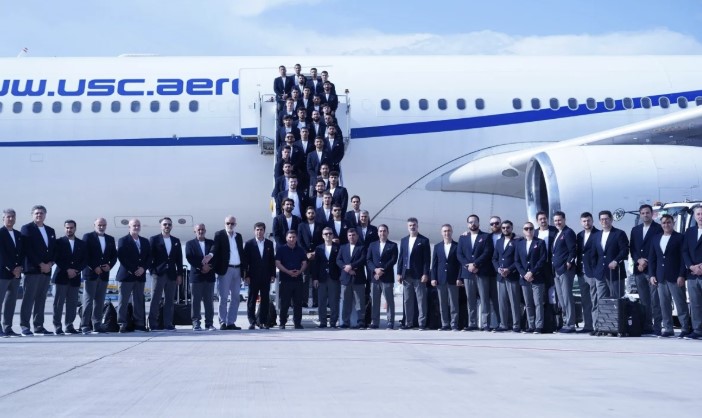
The Iranian national football team has arrived in Tijuana, Mexico, after a diplomatic and logistical dispute over U.S. entry permits disrupted the country’s preparations for the 2026 FIFA World Cup.
The unexpected relocation has forced Iran to abandon its original training plans in the United States and establish a temporary base just across the border, creating one of the most unusual operational challenges in World Cup history.
The situation has also sparked criticism from players and officials, with team captain Ehsan Hajsafi accusing FIFA of failing to protect athletes from the impact of geopolitical disputes.
Iran had initially planned to conduct its pre-tournament preparations in Tucson, Arizona, where the team intended to train and acclimatize ahead of the competition.
However, delays and complications surrounding U.S. visa approvals forced the Iranian Football Federation to revise its plans at short notice.
Instead, the squad traveled from Antalya, Turkey, to Tijuana, Mexico, where it will now be based throughout the group stage of the tournament.
Located directly on the U.S.-Mexico border, Tijuana provides the closest possible alternative while allowing the team to travel to match venues inside the United States.
Although visas were eventually approved for the players shortly before the tournament, the arrangements have created significant logistical challenges.
Rather than residing in the United States during the competition, the team is expected to operate from Mexico and travel across the border for matches before returning to its base.
Iran’s group-stage schedule includes:
- June 15, 2026: New Zealand at Los Angeles Stadium in Inglewood, California
- June 21, 2026: Belgium at Los Angeles Stadium in Inglewood, California
- June 26, 2026: Egypt at Lumen Field in Seattle, Washington
The travel requirements are expected to place additional strain on the squad’s preparations and recovery routines throughout the tournament.
While visas were reportedly granted for players, coaches, and essential technical personnel, several members of the broader delegation were denied entry to the United States.
Among those affected was Mehdi Taj, president of Iran’s football federation, along with other officials connected to the team’s operations.
U.S. authorities stated that visa applications underwent extensive security reviews, with officials emphasizing scrutiny of individuals who may have had links to organizations subject to U.S. sanctions or other immigration restrictions.
The decisions have generated frustration among Iranian football authorities, who argue that the exclusions have complicated tournament preparations and disrupted support structures around the team.
Speaking after the team’s arrival in Mexico, captain Ehsan Hajsafi voiced disappointment over the circumstances surrounding Iran’s World Cup preparations.
The veteran defender questioned FIFA’s role in addressing issues that affect participating teams and argued that athletes should not bear the consequences of political disputes beyond their control.
Iranian football officials echoed those concerns, contending that restrictions affecting support staff and traveling supporters have created obstacles that extend beyond sporting competition.
The comments add another layer of controversy to a tournament already taking place amid heightened geopolitical tensions.
The circumstances surrounding Iran’s arrival highlight the complex intersection between international sport and global politics.
Players arriving in Mexico were seen wearing commemorative pins honoring victims of a recent deadly attack in the region, reflecting the broader backdrop against which the tournament is unfolding.
Despite the challenges, Iran’s focus now turns to its opening World Cup fixture as the team attempts to navigate an unprecedented travel schedule while competing against some of the world’s strongest football nations.
With its World Cup campaign set to begin in just days, Iran faces the task of overcoming both sporting and logistical hurdles in pursuit of a successful tournament run.
Source: Omanghana