Omanghana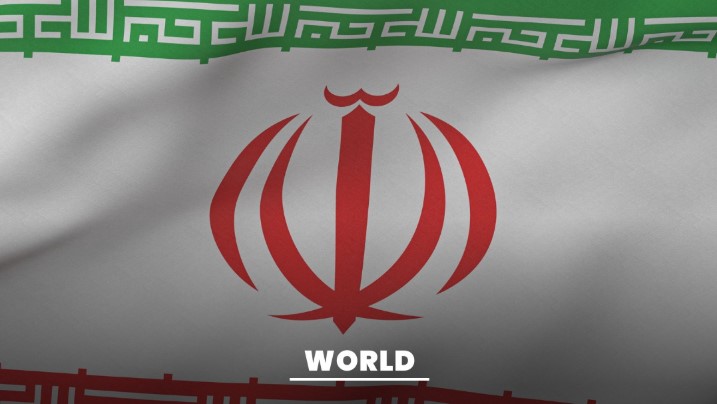
Iran’s participation in the upcoming 2026 FIFA World Cup has been thrown into uncertainty after a dramatic political escalation in the Middle East. Iran’s Sports Minister, Ahmad Donyamali, announced that the country’s national football team would not participate in the tournament following the killing of Iran’s Supreme Leader, Ayatollah Ali Khamenei, in a series of U.S. and Israeli airstrikes.
The tournament, which will be co-hosted by the United States, Canada, and Mexico, now risks losing one of Asia’s top qualifying teams if Iran’s withdrawal is made official.
Speaking to Iranian media, Minister Donyamali stated that, in the current political climate, the Iranian national team “certainly cannot participate” in a tournament partially held on American soil. Iranian officials argue that the ongoing conflict and deteriorating diplomatic relations make it impossible to guarantee the safety and dignity of their players and staff.
The announcement follows heightened tensions after the death of Ayatollah Khamenei, which Iranian authorities attribute to coordinated strikes by the United States and Israel. In response, Iran has hardened its stance toward Western nations, including those hosting major international sporting events.
Government officials also raised concerns about the safety of players traveling to the United States and potential complications with visas for team officials and support staff.
Despite the strong statements from Tehran, the governing body of world football, FIFA, has not yet received an official withdrawal notice.
As of March 12, 2026, the Football Federation of the Islamic Republic of Iran (FFIRI) had not formally communicated a decision to FIFA. Until such notification is submitted, Iran technically remains qualified and scheduled to participate in the tournament.
This leaves the situation in a state of uncertainty, with FIFA monitoring developments closely while preparing contingency plans in case Iran confirms its withdrawal.
The situation has also drawn responses from the U.S. government. Donald Trump initially stated that Iran would be “welcome” to compete in the tournament despite political tensions.
However, he later tempered his remarks, suggesting it might not be “appropriate” for the Iranian team to travel to the United States, given concerns about their “life and safety.” His comments reflected the sensitive geopolitical climate surrounding the event.
Iran had successfully qualified for the 2026 tournament and was placed in Group G. The team was scheduled to play three matches in the United States:
-
June 15 – Los Angeles: Iran vs. New Zealand
-
June 21 – Los Angeles: Iran vs. Belgium
-
June 26 – Seattle: Iran vs. Egypt
Matches in Los Angeles and Seattle were expected to draw large international audiences and Iranian diaspora fans across North America.
If Iran officially withdraws, these fixtures would be reassigned to whichever team takes its place.
If Iran’s withdrawal is confirmed, FIFA rules give the organization wide discretion to select a replacement team.
One of the leading candidates is the national team of Iraq. However, Iraq’s eligibility depends on the outcome of its own intercontinental playoff scheduled for March 31. If Iraq qualifies through that route, the next likely replacement would be the United Arab Emirates.
FIFA has historically prioritized teams that narrowly missed qualification when filling last-minute vacancies.
Withdrawing from a major tournament after qualification can carry significant consequences. Under FIFA statutes, Iran could face a financial penalty of at least 250,000 Swiss francs. Additional disciplinary measures may also include temporary bans from future international competitions.
Such sanctions are designed to discourage politically motivated withdrawals and maintain the integrity of global tournaments.
The unfolding situation highlights the complex intersection between global sports and international politics. The 2026 FIFA World Cup—expected to be the largest tournament in the event’s his torymay now be shaped not only by athletic competition but also by geopolitical tensions.
For now, the football world awaits a final decision from Tehran and official confirmation from FIFA. Until then, Iran’s participation remains uncertain, leaving fans, organizers, and potential replacement teams watching closely.
Source: Omanghana