Omanghana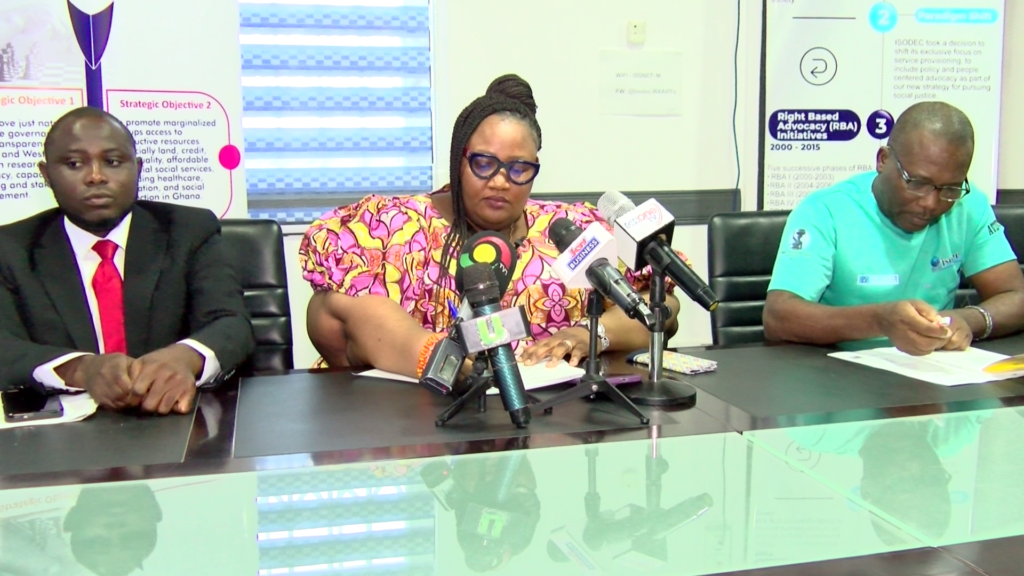
Integrated Social Development Centre (ISODEC) has strongly opposed Ghana’s newly signed Policy Coordination Instrument (PCI) agreement with the International Monetary Fund (IMF), warning that the arrangement risks undermining the country’s economic sovereignty and prolonging dependence on external oversight.
The criticism comes only weeks after Ghana officially concluded its $3 billion Extended Credit Facility (ECF) bailout programme with the IMF on May 15, 2026.
According to ISODEC, instead of marking a transition toward economic independence, the new 36-month PCI framework keeps Ghana tied to the same policy controls and conditionalities associated with previous IMF interventions.
Although government officials have defended the PCI as a non-financing arrangement that does not provide new loans, ISODEC argues that the agreement effectively imposes the same “upper credit tranche” conditions traditionally attached to IMF bailout programmes.
The organization contends that the mechanism continues to subject Ghana’s economic policies to regular IMF monitoring and policy directives despite the country’s exit from direct financial assistance.
ISODEC Policy Analyst Charlotte Kpogli-Dzadey criticized the agreement’s six-month review structure, arguing that it creates an external oversight framework capable of influencing domestic policy decisions.
According to the organization, the repeated reviews risk shifting the centre of economic decision-making away from Accra and toward Washington, while limiting the role of Parliament in shaping national fiscal policy.
The think tank warned that continued IMF supervision could weaken Ghana’s ability to independently determine its own economic priorities.
ISODEC also rejected government arguments that the PCI would improve investor confidence and strengthen Ghana’s credibility in international financial markets.
Research Analyst Adamu Abille argued that using IMF endorsement primarily to reassure ratings agencies could encourage further external borrowing and deepen long-term debt dependency.
The organization maintains that Ghana should focus on building internally driven economic resilience instead of relying on international financial institutions for policy validation.
ISODEC further warned that the fiscal discipline measures commonly associated with IMF oversight — including strict deficit reduction targets, public expenditure controls, and subsidy removals — could intensify pressure on ordinary citizens.
According to the organization, such measures historically strain public services, limit employment opportunities, and worsen living conditions for vulnerable populations.
The group argued that prolonged austerity-focused reforms may undermine broader social and developmental goals.
The advocacy organization also challenged suggestions that Ghana’s recent macroeconomic improvements were primarily driven by IMF intervention.
Instead, ISODEC attributed the relative stability of the cedi and calmer foreign exchange conditions to domestic policy initiatives implemented within Ghana itself.
The organization highlighted internal gold reserve accumulation strategies as a key factor supporting currency stability and strengthening Ghana’s financial position.
ISODEC also pointed to improved domestic revenue generation from Ghana’s extractive industries as an important source of independent foreign exchange inflows that have helped stabilize the economy.
Rather than maintaining what it describes as continued IMF dependency, ISODEC outlined an alternative framework centered on domestic resource mobilization, regional financing, and employment-driven industrial policy.
The organization urged the government to aggressively combat illicit financial flows by closing tax administration gaps and tightening customs enforcement, arguing that losses from such leakages exceed the benefits derived from IMF programmes.
ISODEC also encouraged greater use of African-led financial systems, including the Pan-African Payment and Settlement System (PAPSS) and the African Export-Import Bank (Afreximbank), as alternatives to externally conditioned financing arrangements.
Additionally, the organization proposed a national employment guarantee programme alongside a “Functional Finance” budgeting model aimed at strengthening domestic production, reducing import dependency, and supporting industrial transformation.
ISODEC has formally called on Parliament to undertake a comprehensive public review of the PCI agreement before granting approval.
The organization says lawmakers must carefully assess how continued IMF oversight could affect Ghana’s fiscal autonomy, economic policy independence, and long-term development strategy before committing the country to another multiyear arrangement.
Source: Omanghana