Omanghana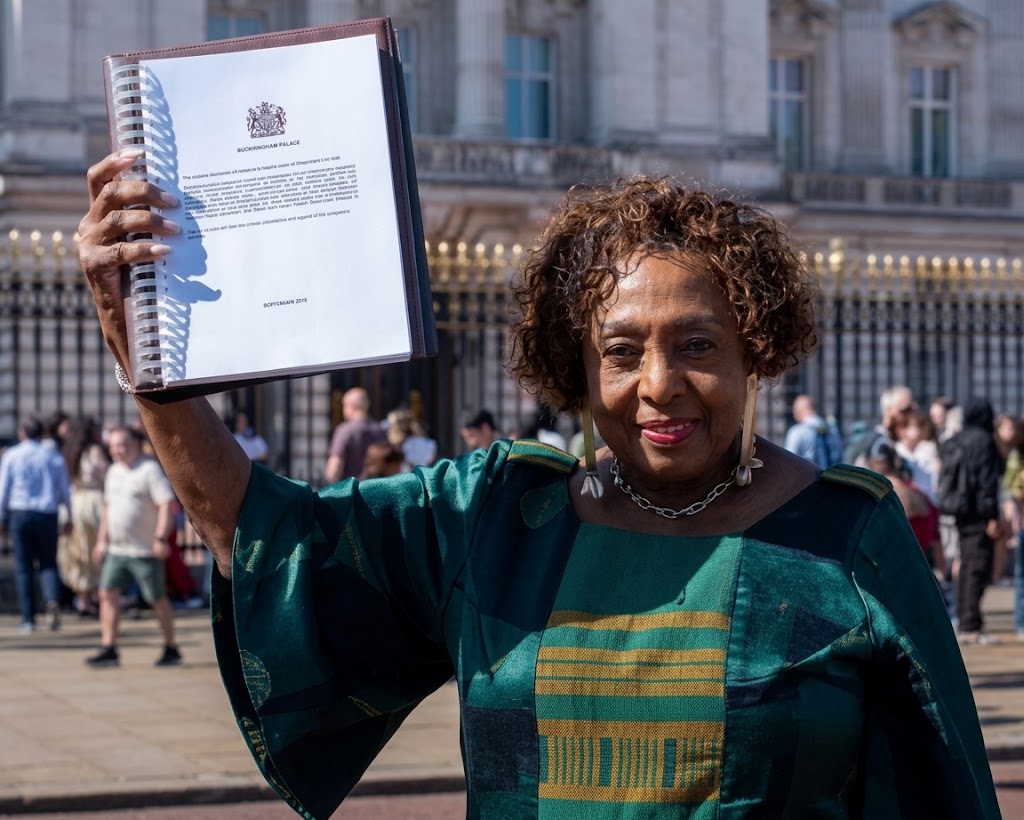
The Jamaican government has formally intensified its campaign for reparatory justice by submitting an unprecedented legal petition to King Charles III in his capacity as the country’s head of state.
The petition seeks to place the legal consequences of the transatlantic slave trade before the Judicial Committee of the Privy Council, one of the highest judicial institutions connected to the former British Empire.
Jamaica is asking the King to refer three central questions to the committee. The first is whether the forced transportation and chattel enslavement of Africans in Jamaica were ever lawful under the fundamental principles of English common law.
The second asks whether those actions constituted crimes against humanity under international law. The third concerns whether the United Kingdom has a legal obligation to provide reparatory remedies to the Jamaican people.
Although the petition is formally directed to the monarch, constitutional convention requires the King to act on the advice of his ministers. This means a direct referral may be unlikely without the support of the British government.
However, the submission carries considerable symbolic and political importance. It seeks to use an institution rooted in Britain’s imperial history to examine the legality and consequences of slavery within one of its former colonies.
The initiative also forms part of a wider Caribbean campaign for reparations. The move has received the unanimous backing of the Caribbean Community, which has long advocated compensation and other forms of redress for slavery, colonization and their continuing social and economic effects.
The filing comes amid growing international attention to reparatory justice, including resolutions and recommendations from United Nations bodies addressing the lasting consequences of the transatlantic slave trade.
Jamaica’s legal campaign is also unfolding alongside efforts by Prime Minister Andrew Holness’ administration to remove the British monarch as head of state and transform the country into a republic.
The petition therefore represents a significant moment in Jamaica’s evolving relationship with the Crown, combining the country’s demand for historical accountability with its constitutional efforts to complete the transition away from monarchy.
Successive British governments have resisted formal financial reparations and full state apologies, frequently arguing that historical conduct must be assessed according to the legal standards that existed at the time.
Jamaica’s latest action seeks to challenge that position by moving the reparations debate beyond political advocacy and into a structured legal process. Even if the requested referral is declined, the petition could establish an important precedent for other Caribbean and African countries pursuing justice for the enduring consequences of slavery and colonial rule.
Source: Omanghana