Omanghana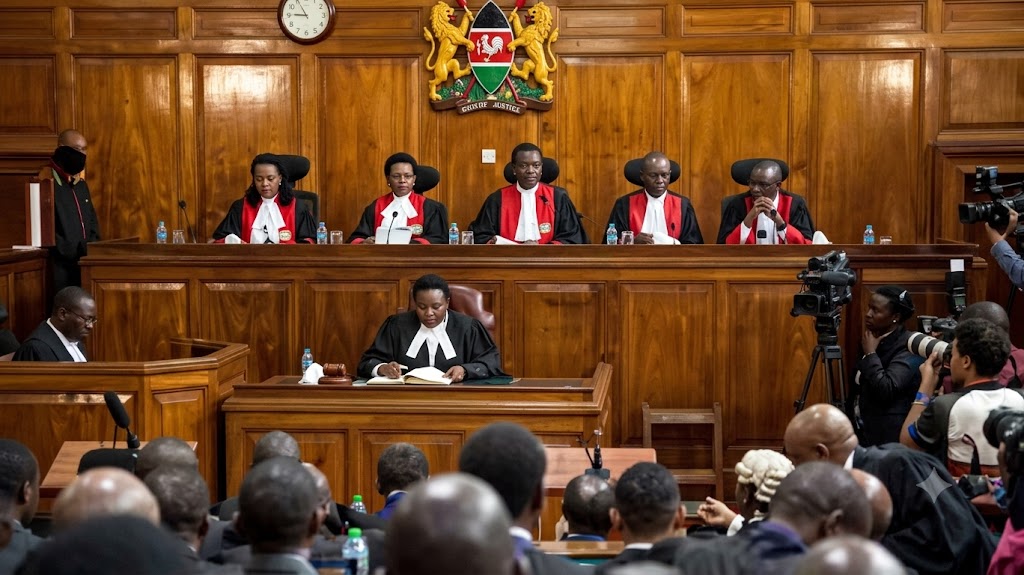
The Law Society of Kenya (LSK) has launched a nationwide court boycott to protest what it describes as widespread judicial corruption, systemic inefficiencies, and persistent delays in the delivery of justice.
The industrial action, led by LSK President Charles Kanjama, began with a one-day nationwide strike that disrupted court proceedings across the country as lawyers stayed away from hearings and legal services.
The legal body is calling for sweeping reforms to restore public confidence in Kenya’s judiciary, where court cases reportedly take an average of two years to conclude.
Two-Phase Protest Strategy
The LSK has outlined a two-stage campaign designed to increase pressure on the judiciary.
Nationwide Strike
The first phase involved a general nationwide boycott of court proceedings, forcing judges in many courts to adjourn cases and reschedule hearings.
While the strike received broad support, some courts in Nairobi, Nakuru, Kisii, and other regions continued limited operations. The LSK alleged that judicial officials had interfered behind the scenes to keep some court activities running despite the boycott.
Targeted Boycott of Judges
The second phase of the campaign involves an indefinite boycott of 12 judges and one magistrate whom the LSK accuses of undermining the integrity of the justice system.
According to the lawyers’ body, the targeted judicial officers issued controversial court orders that blocked anti-corruption investigations and halted disciplinary proceedings before the Judicial Service Commission (JSC).
The LSK says its members will refrain from appearing before the named judicial officers until meaningful reforms are implemented.
Chief Justice Martha Koome Among Officials Named
Among those affected by the targeted boycott is Chief Justice Martha Koome, Kenya’s highest-ranking judicial officer.
The LSK has criticized the judiciary’s leadership for allegedly failing to address corruption and hold compromised judicial officers accountable.
Former LSK President Eric Theuri warned that a judiciary perceived as compromised would struggle to serve as an impartial institution during Kenya’s future elections.
Judiciary Responds to Criticism
Responding to the growing dispute, Chief Justice Koome defended the judiciary, saying accountability mechanisms are already in place to address complaints against judges and magistrates.
However, she acknowledged that the concerns raised by lawyers represent a “moment of reckoning” for the justice system.
As part of efforts to strengthen transparency, Koome announced the establishment of Court Integrity Users Committees at every court station to help identify and combat bribery and other unethical practices.
Judges’ Association Condemns Boycott
The Kenya Judicial Welfare Association (KJWA) strongly criticized the Law Society’s action, arguing that the boycott undermines the rule of law.
The association described the move as an extra-judicial tactic that encourages a “culture of self-help and vigilantism” rather than resolving disputes through established legal and institutional processes.
Magistrate Arrested in Bribery Case
Adding to the controversy, Kenya’s anti-corruption agency arrested a magistrate on the same day the nationwide strike began.
Authorities allege the judicial officer solicited a 170,000 Kenyan shilling (approximately $1,300) bribe in exchange for influencing the outcome of an ongoing criminal case.
The arrest has intensified public debate over corruption within the judiciary and reinforced calls from the legal community for stronger accountability measures.
Calls for Comprehensive Judicial Reform
The Law Society of Kenya says its protest is intended to push for lasting reforms that improve judicial integrity, reduce case backlogs, and rebuild public trust in the country’s justice system.
As tensions between lawyers and judicial authorities continue, the boycott marks one of the most significant challenges facing Kenya’s judiciary in recent years, with both sides insisting that meaningful reforms are essential to safeguarding the rule of law.
Source: Omanghana