Omanghana
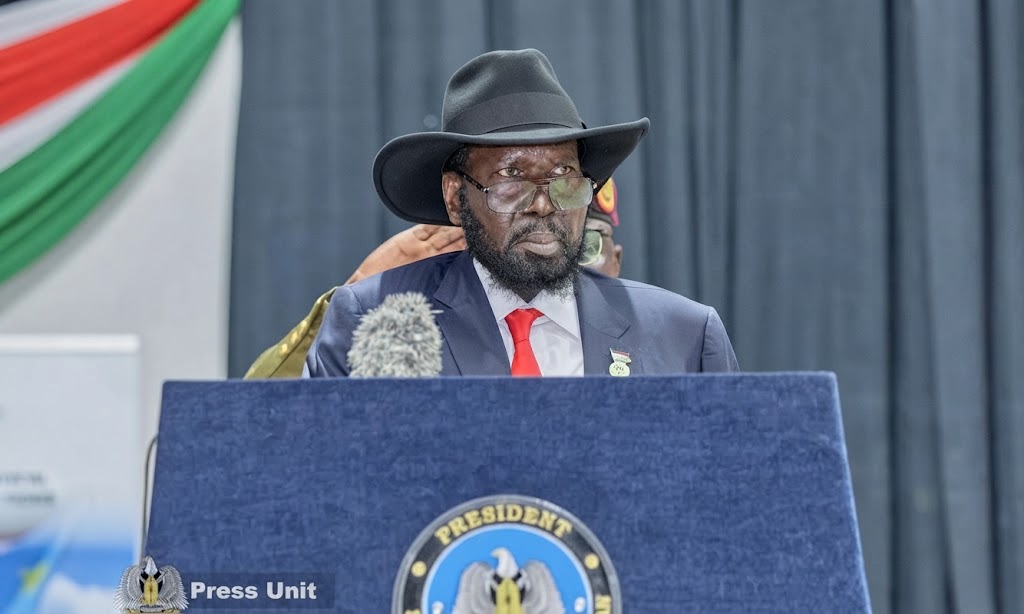
South Sudanese President Salva Kiir Mayardit has opened a two-week inter-party political dialogue in the capital, Juba, as the country prepares for general elections scheduled for December 22, 2026.
The dialogue, launched on Thursday, September 24, brings together political parties and other national stakeholders to discuss election-related issues and seek greater consensus ahead of the vote.
The talks began just two days after Kiir dissolved South Sudan’s transitional unity government and appointed a caretaker administration to oversee the country ahead of the elections.
The December election would be South Sudan’s first national vote since the country gained independence from Sudan in 2011. Previous elections have been repeatedly postponed amid delays in implementing the 2018 peace agreement and continuing political and security challenges.
Kiir Says Dialogue Should Not Delay Elections
The dialogue is being held under the theme “Towards Peaceful, Inclusive, Transparent and Credible Elections.”
Opening the forum, President Kiir said the discussions should focus on election-related matters and should not be used to alter the existing electoral timetable.
“This inter-party dialogue is not a place for negotiations and disagreements. It is not a place to shift the direction of the path that we have taken,” Kiir said.
He said South Sudan’s preparations for the elections were based on four areas: the legal framework, administration and logistics, security, and political dialogue.
According to the president, the dialogue should help political parties agree on practical measures needed to complete the electoral process and achieve peaceful and credible elections.
Transitional Government Dissolved
Kiir’s opening of the dialogue follows his September 22 decision to dissolve the transitional unity government established under the 2018 peace agreement.
The move removed First Vice President Riek Machar and the other vice presidents from their executive positions and replaced the transitional administration with a caretaker government.
The dissolution came after Kiir signed amendments to the National Elections Act that removed previous requirements linking elections to the completion of a permanent constitution and a national population and housing census.
The government has presented the changes as part of the process of clearing remaining obstacles to the December elections.
Opposition Raises Concerns
The government’s approach has faced criticism from opposition figures and political groups.
Presidential aspirant Kornelio Kon Ngu, who leads the National United Democratic Front, has questioned the process used to appoint the caretaker administration and called for broader consultation with political parties.
Kon has also raised concerns about whether the remaining preparations, including voter registration, can be completed in time for the December vote.
Other opposition groups, including factions associated with Riek Machar, have also expressed reservations about the political process following the dissolution of the transitional government.
Election Preparations Face Tight Timeline
With less than three months before the scheduled vote, South Sudan still faces several significant electoral and institutional challenges.
The National Elections Commission (NEC) has said preparations are underway and that it was preparing to begin voter registration after approving registration forms and assessing registration centers around the country.
The commission has maintained that the December 22 election will proceed as scheduled.
However, the Reconstituted Joint Monitoring and Evaluation Commission (RJMEC) has urged South Sudanese political parties to use the dialogue to resolve outstanding disputes and build consensus around the electoral process.
RJMEC has also called for progress on unresolved provisions of the 2018 peace agreement, including security arrangements, constitutional reforms, judicial reforms and transitional justice.
Regional and International Attention
The election process is being closely watched by regional and international partners because of South Sudan’s history of political conflict and repeated delays to its democratic transition.
RJMEC has urged all parties to remain committed to the 2018 peace agreement, while regional actors have continued to call for an inclusive political process.
The inter-party dialogue therefore comes at a critical point, with the government pushing ahead with the December timetable while opposition groups and other stakeholders continue to raise questions about the electoral framework, political participation, security and preparations.
For now, President Kiir’s administration maintains that South Sudan is moving toward the December 22 elections, while the outcome of the two-week dialogue could help determine whether the competing political positions can be reconciled before voters go to the polls.
Source: Omanghana