Omanghana
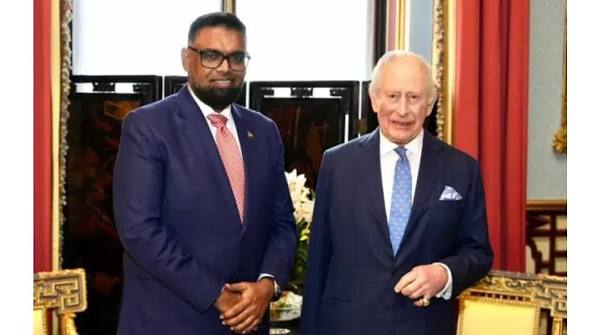
King Charles III arrived in Guyana on Thursday, October 29, 2026, for a two-day visit amid renewed Caribbean demands for a formal British apology and reparations for slavery.
The visit follows a stop in the Bahamas and comes ahead of the Commonwealth Heads of Government Meeting in Antigua and Barbuda, where Caribbean leaders are seeking greater attention to reparatory justice.
Guyana Calls for Action Beyond Regret
Guyanese President Irfaan Ali has welcomed the King’s acknowledgement of slavery’s historical injustices but said a formal apology should be the next step.
Ahead of the visit, Ali called for a development-focused reparations framework addressing inequalities left by slavery and colonialism. His proposals include preferential financing, debt relief and investment in education, healthcare and climate resilience.
The president said the issue should be pursued collectively with the Caribbean Community, the African Union and other partners. He also acknowledged the King’s longstanding support for rainforest conservation and Indigenous communities. The royal visit marks 60 years of diplomatic relations between Guyana and the United Kingdom.
CARICOM Presses for Reparatory Justice
The CARICOM Reparations Commission has urged Britain and institutions that benefited from slavery to engage in meaningful discussions about its continuing consequences.
Commission chairman Professor Sir Hilary Beckles has appealed to Charles, as Head of the Commonwealth, to help advance that dialogue. Regional campaigners regard the forthcoming Commonwealth summit as an opportunity to strengthen international support for their demands.
CARICOM’s reparatory justice framework extends beyond financial compensation. Its ten-point plan includes a formal apology, debt cancellation, educational support, public health initiatives, psychological rehabilitation and technology transfer.
The commission argues that expressions of regret do not amount to accepting responsibility for the institutions and policies that sustained slavery.
No Formal Apology Expected
Despite the renewed pressure, the King is not expected to issue a formal apology during the tour. His advisers have indicated that he will acknowledge historical wrongs while following British government advice on the matter.
The British government has continued to reject demands for an apology and reparations.
The visit therefore places the monarchy’s efforts to strengthen contemporary partnerships alongside unresolved demands for accountability. For Caribbean advocates, the central question remains whether acknowledgement of slavery’s suffering will lead to practical commitments addressing its lasting effects.
Source: Omanghana