Omanghana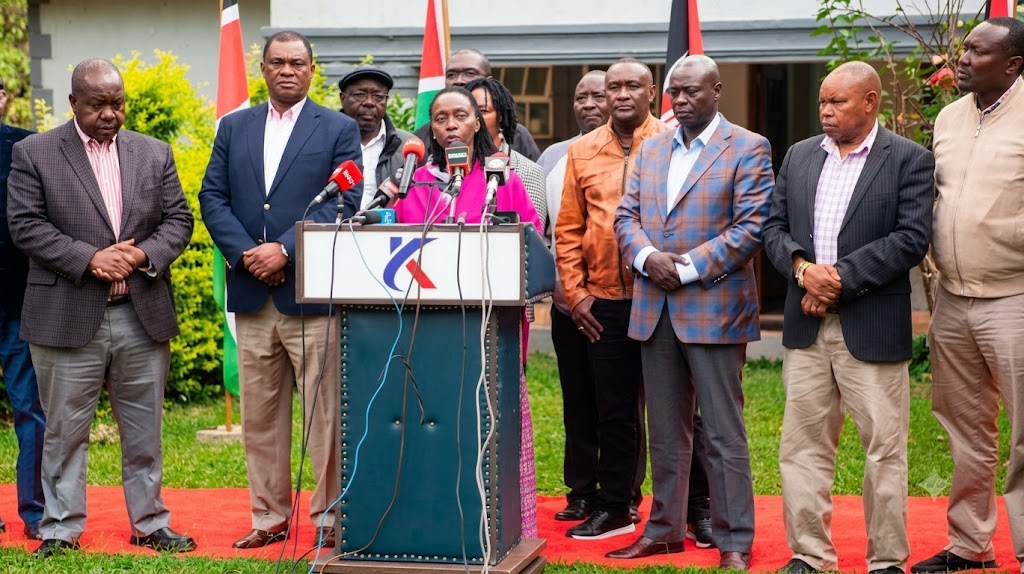
Kenya’s United Opposition is facing growing internal divisions as disagreements over its presidential candidate, electoral vehicle and regional alliances threaten its campaign to unseat President William Ruto in 2027.
The coalition brings together several prominent political figures, including former Deputy President Rigathi Gachagua, Wiper Party leader Kalonzo Musyoka, People’s Liberation Party leader Martha Karua and former Interior Cabinet Secretary Fred Matiang’i.
Although the leaders are united in their opposition to Ruto’s administration, they have struggled to agree on who should lead the coalition or how its presidential candidate should be selected.
Political analysts warn that failure to resolve these disputes early could divide the opposition vote and strengthen Ruto’s prospects of securing a second term.
Disagreement Over When to Name Presidential Candidate
One of the coalition’s most significant disagreements concerns the timing of its presidential nomination.
Gachagua, who leads the Democracy for the Citizens Party, has argued that the opposition should keep its preferred candidate confidential until closer to the May 2027 nomination deadline.
He believes announcing the flagbearer too early would give the government time to target the candidate, encourage internal defections and divide the coalition before the campaign enters its decisive stage.
Other opposition leaders have rejected this strategy. Karua and Matiang’i have called for a transparent and evidence-based selection process that measures the national popularity of each potential candidate.
They favour the use of credible opinion polling and other publicly accepted criteria rather than an agreement negotiated privately among coalition leaders.
The dispute reflects a broader struggle between those who view secrecy as a political advantage and those who believe delaying the decision will intensify rivalry and weaken public confidence.
Opposition Divided Over Azimio’s Future
The alliance is also struggling to agree on the political organization it will use to contest the election.
Kalonzo, who assumed a leading role in the Azimio la Umoja-One Kenya Coalition following the death of veteran opposition leader Raila Odinga, has proposed reviving or restructuring the existing alliance.
He argues that Azimio already possesses a national network, established party structures and recognition among voters, making it a practical foundation for the 2027 campaign.
Karua has rejected a return to Azimio, describing the coalition as a “sunken ship” that cannot be revived. Her People’s Liberation Party wants the United Opposition to create a separate political vehicle with a new identity and leadership structure. People Daily
The disagreement has left the coalition without a settled institutional framework less than a year before the formal candidate-registration period.
Gachagua and Kalonzo Alliance Shows Signs of Strain
Relations between Gachagua and Kalonzo have also become less predictable following conflicting statements about political support from the Mt Kenya region.
Gachagua previously pledged to mobilise the region behind Kalonzo, suggesting that Mt Kenya voters would reciprocate the support Kalonzo offered during the former deputy president’s impeachment crisis.
The comments strengthened expectations that Kalonzo could emerge as the opposition’s consensus presidential candidate with backing from one of Kenya’s largest voting blocs.
However, Gachagua later denied that he had formally endorsed Kalonzo. He said he could not personally dictate how millions of people in Mt Kenya would vote and insisted that the coalition’s candidate must be selected through an agreed process.
The clarification fuelled speculation about a secret political pact between the two leaders and raised doubts about whether their alliance would survive the nomination contest. Nation Africa
Regional Calculations Complicate Candidate Selection
Each leading contender brings a significant regional or political base to the coalition.
Kalonzo commands substantial support in the Ukambani region, while Gachagua is seeking to consolidate voters in Mt Kenya. Matiang’i has support in Kisii and parts of western Kenya, while Karua is attempting to build a broader reform-oriented constituency.
These bases are essential to the opposition’s electoral strategy, but they also complicate the search for a single presidential candidate. Each faction wants guarantees that its political interests will be protected before agreeing to support another leader.
Recent polling underscores the challenge. A May 2026 TIFA survey found that opposition support was spread across several possible candidates, with no individual challenger commanding dominant national backing.
Parallel Statements Expose Communication Breakdown
The depth of the organizational crisis became particularly visible when rival opposition groups released separate State of the Nation statements in Nairobi on the same day.
Several senior coalition figures were absent from one of the media briefings, exposing disagreements over messaging, leadership and control of the opposition’s national agenda.
The two statements, issued in December 2025, demonstrated that the coalition’s principals could not agree on a unified response to the government even while publicly promoting opposition unity.
Communication problems have continued as leaders make competing announcements about the nomination timetable, electoral structure and possible alliances.
Divisions Could Benefit Ruto
President Ruto remains individually stronger than any single opposition contender, although public frustration over the cost of living, taxation, corruption allegations and police conduct continues to create political vulnerabilities for his government.
For the opposition to convert that dissatisfaction into electoral victory, it will need to consolidate support behind one candidate and create a coordinated national campaign.
The coalition must also agree on a transparent nomination method, resolve the dispute over Azimio and develop a formula for sharing power among its competing factions.
Without such agreements, the United Opposition risks entering the 2027 election as a collection of rival presidential campaigns rather than a credible alternative government.
Source: Omanghana