Omanghana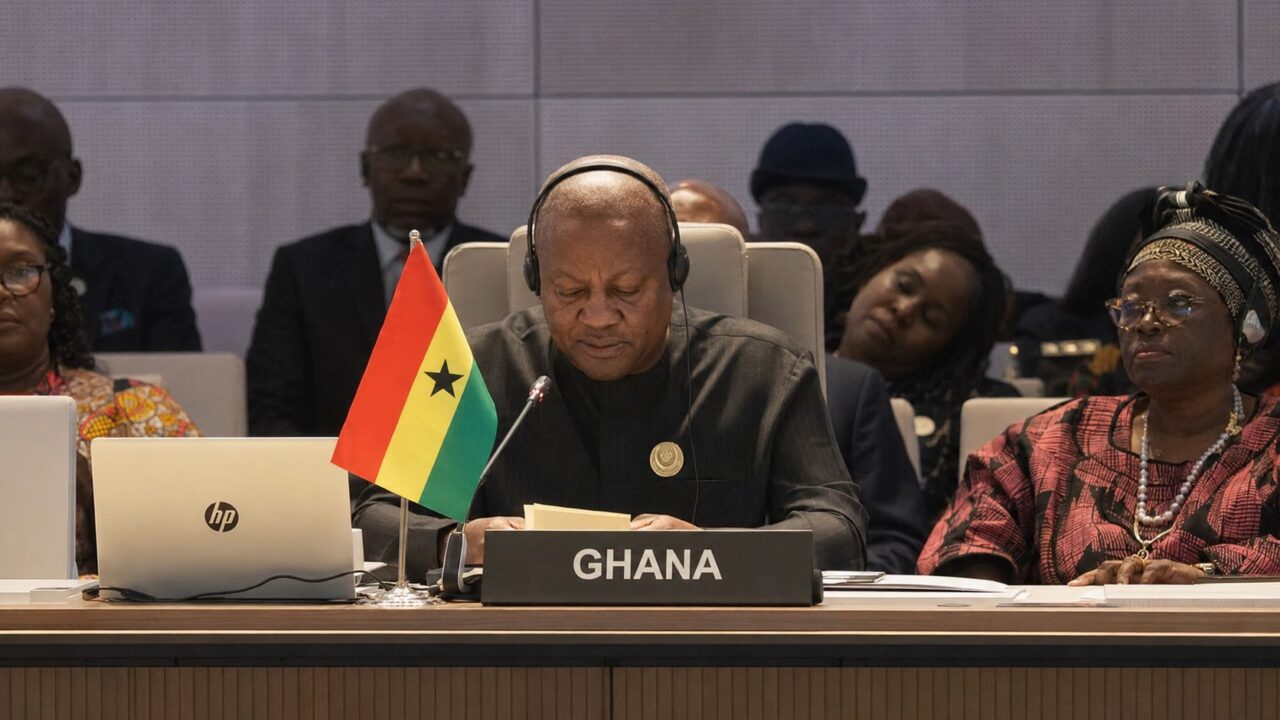
President John Dramani Mahama has announced that Ghana will host a high-level side event on reparatory justice during the 81st Session of the United Nations General Assembly in September 2026.
President Mahama, who serves as the African Union Champion for Reparations, said the event would advance international discussions on reparations for Africans and people of African descent.
He announced the initiative after participating in the 21st Extraordinary Session of the African Union Assembly in Luanda, Angola, where he briefed continental leaders on progress made in the global reparations campaign.
The planned UNGA side event will provide a platform for three international bodies established in June 2026 during the Next Steps Conference in Accra to present their initial progress reports.
The bodies are the High-Level Advisory Council on Reparatory Justice, the Global Experts Panel on the Restitution of Cultural Heritage and the Global Legal Panel on Reparatory Justice.
Their work covers key aspects of the campaign, including legal strategies, the restitution of cultural property and the development of coordinated international approaches to addressing historical injustices.
President Mahama has invited foreign heads of state, government leaders and international partners to participate in the event as part of efforts to broaden global support for the campaign.
The initiative is expected to strengthen cooperation among the African Union, the Caribbean Community and members of the African diaspora worldwide.
Ghana’s planned event also builds on United Nations General Assembly Resolution A/RES/80/250, which expands the reparatory justice conversation to include the experiences of people subjected to indentured labor alongside transatlantic chattel enslavement.
The expanded framework seeks to recognize the lasting social, cultural and economic consequences of different systems of exploitation imposed on Africans and their descendants.
President Mahama noted that reparatory justice, once treated as a difficult or unacceptable subject in international diplomacy, was increasingly receiving serious global attention.
He cited the gradual return of looted African artefacts and acknowledgements by institutions connected to slavery and colonial exploitation as signs of changing international attitudes.
According to him, the campaign has moved beyond symbolic conversations and is becoming an established diplomatic priority requiring coordinated legal, political and institutional action.
The September gathering is expected to assess progress made by the expert bodies, deepen international partnerships and establish the next steps in the global pursuit of restitution and reparatory justice.
Source: Omanghana