Omanghana
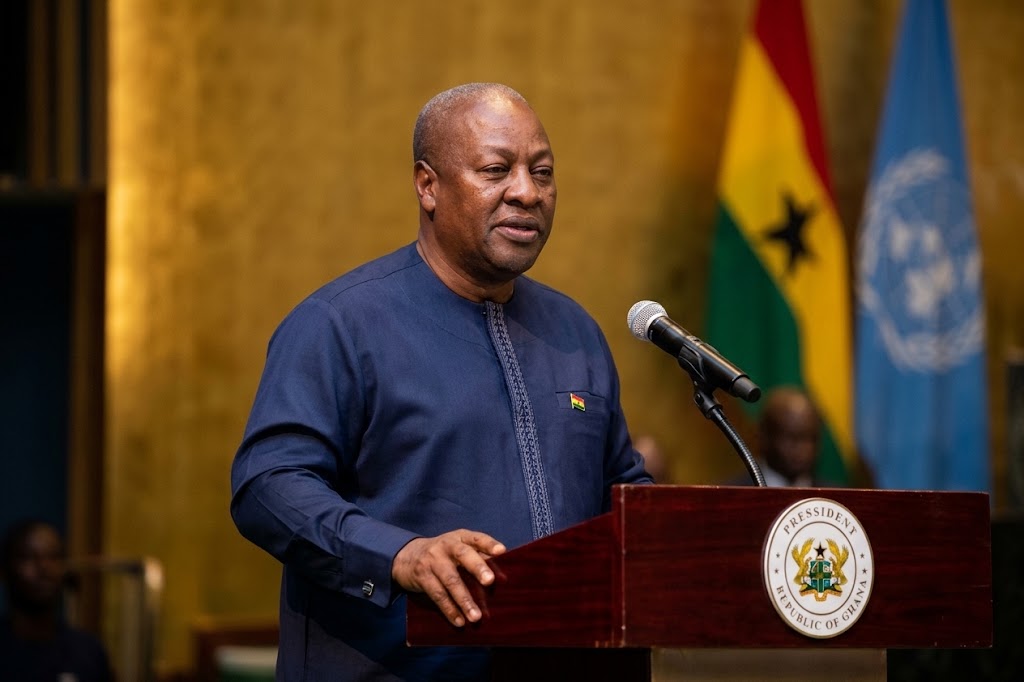
President John Dramani Mahama has defended Ghana’s restrictions on gold exports, saying the measures are intended to ensure that the country benefits more from its mineral wealth and retains more foreign exchange.
Addressing members of the Ghanaian community in Moscow, the President also reaffirmed his goal of ending the export of raw, unprocessed minerals by 2030 as part of a broader push for domestic processing and industrial development.
Mahama said gold exports had previously generated foreign currency that did not always return to Ghana. He argued that tighter controls could help retain export earnings in the local economy and support the cedi.
“Prior to that, anybody could buy gold in Ghana and take it out, and the forex normally didn’t come back,” he said.
GoldBod’s Role
The government’s strategy is anchored in the Ghana Gold Board Act, which established GoldBod and gave it a central role in the purchase, assessment, valuation and export of gold.
Mahama also emphasized efforts to formalize and track artisanal and small-scale mining so that gold production can be properly documented.
In October 2026, GoldBod reportedly refined 5.4 tones of the 5.7 tones of gold it purchased from small-scale operators in Ghana. The Ghana Accelerated National Reserve Accumulation Program also provides for the local refining of 30% of gold from large-scale operations.
Plans for Other Minerals
The President said the government intends to extend its focus on local processing to other minerals, including bauxite, lithium, manganese and iron ore.
The plans include developing alumina refining to support aluminum production, processing lithium and manganese for industrial use, and expanding iron ore processing to support local steel production.
Mahama has promoted the 2030 goal at international forums, including the African Minerals Policy Forum in Accra. He has also called for African countries to cooperate in developing regional mineral-processing and manufacturing industries.
Legal and Implementation Challenges
The proposed 2030 deadline has yet to be established as a binding legal requirement. A pending Minerals and Mining Bill includes a provision that would allow the sector minister to restrict exports of unprocessed minerals, but it does not codify an absolute 2030 deadline.
The target also extends beyond Mahama’s current term, which ends in January 2029, meaning its implementation would continue under his successor.
Source: Omanghana