Omanghana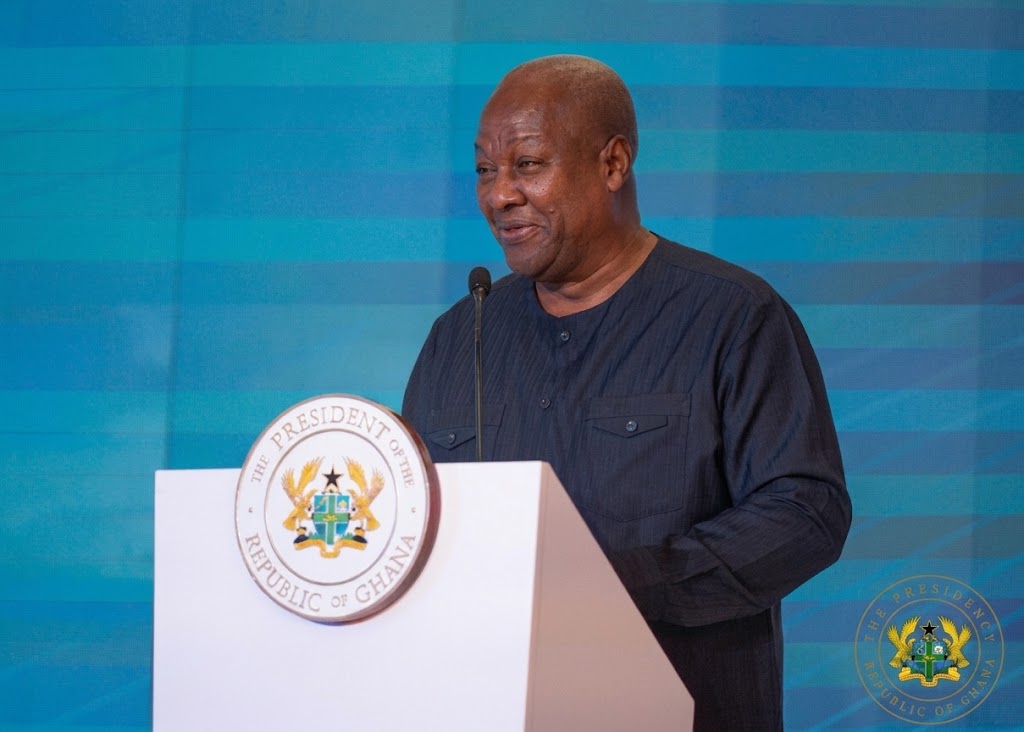
President John Dramani Mahama has called on African countries to reduce their reliance on foreign aid, external borrowing and raw material exports as part of efforts to achieve economic sovereignty.
He maintained that the continent’s sustainable development cannot continue to depend on the goodwill of foreign partners or repeated borrowing during periods of economic difficulty.
African governments, he said, must instead strengthen domestic institutions, mobilize local resources, expand industrial production and deepen trade among countries on the continent.
One of Africa’s greatest economic weaknesses is its continued export of unprocessed commodities. Countries across the continent produce crude oil, cocoa, gold and critical minerals but frequently export them in their raw state before importing more expensive finished products.
This structure allows much of the value, industrial activity and employment associated with African resources to be created elsewhere.
Mahama therefore urged governments to invest in processing, refining and manufacturing capacity. Transforming commodities locally would allow producing countries to retain more revenue, create jobs and reduce their vulnerability to fluctuations in global commodity prices.
The African Continental Free Trade Area was identified as another important vehicle for economic transformation. The agreement brings together African economies to create the world’s largest free-trade area by number of participating countries.
However, its potential will depend on the ability of member states to remove trade barriers, improve transportation links, harmonies customs procedures and support the movement of goods and services across borders.
Increasing trade among African countries could reduce dependence on external markets and supply chains while creating a stronger market for locally manufactured products.
Mahama also warned against the continued use of expensive external loans to finance national infrastructure and development programs. Excessive borrowing, particularly from commercial markets, can consume public revenue and limit the ability of governments to determine their own economic policies.
He called for stronger domestic revenue mobilization through improved tax administration, broader compliance and decisive action against illicit financial flows. Governments must also ensure that public-private partnerships are transparent and structured to protect the long-term interests of citizens.
In an address to an African Union gathering in 2025, Mahama said the continent must mobilize domestic and African resources more effectively to reduce dependence on traditional external financing and advance sustainable growth.
Strategic sectors such as agriculture, renewable energy and digital technology must also be treated as priorities for continental sovereignty.
Africa continues to spend substantial amounts of foreign exchange importing food that could be produced locally. Investing in irrigation, storage, mechanization, agricultural research and food-processing industries could improve food security while creating employment for the continent’s growing youth population.
Renewable energy investment would similarly reduce exposure to imported fuel and expand electricity access for households and industries. Digital transformation could improve productivity, support innovation and make public services more accessible.
Mahama stressed that political independence must be supported by genuine economic capacity. For African countries, sovereignty should include the ability to feed their populations, finance development priorities and negotiate fairly within the global economic system.
Achieving that objective will require more than political declarations. Governments must undertake difficult structural reforms, improve public financial management and strengthen democratic institutions.
African countries must also negotiate better terms for the exploitation of natural resources. Mining, petroleum and other extraction agreements should generate meaningful revenue, promote local ownership and support the development of domestic supply chains.
Technical and vocational education will be equally important. With Africa’s youth population continuing to grow, investment in practical skills, engineering, technology and industrial training could provide the workforce required for the continent’s economic transformation.
Mahama’s call reflects a broader demand for Africa to move from being primarily a supplier of raw materials and recipient of aid to becoming a competitive center of production, trade and innovation.
By adding value to its resources, mobilizing domestic capital and expanding regional commerce, Africa can strengthen its negotiating position and build a more resilient, self-sustaining economic future.
Source: Omanghana