Omanghana
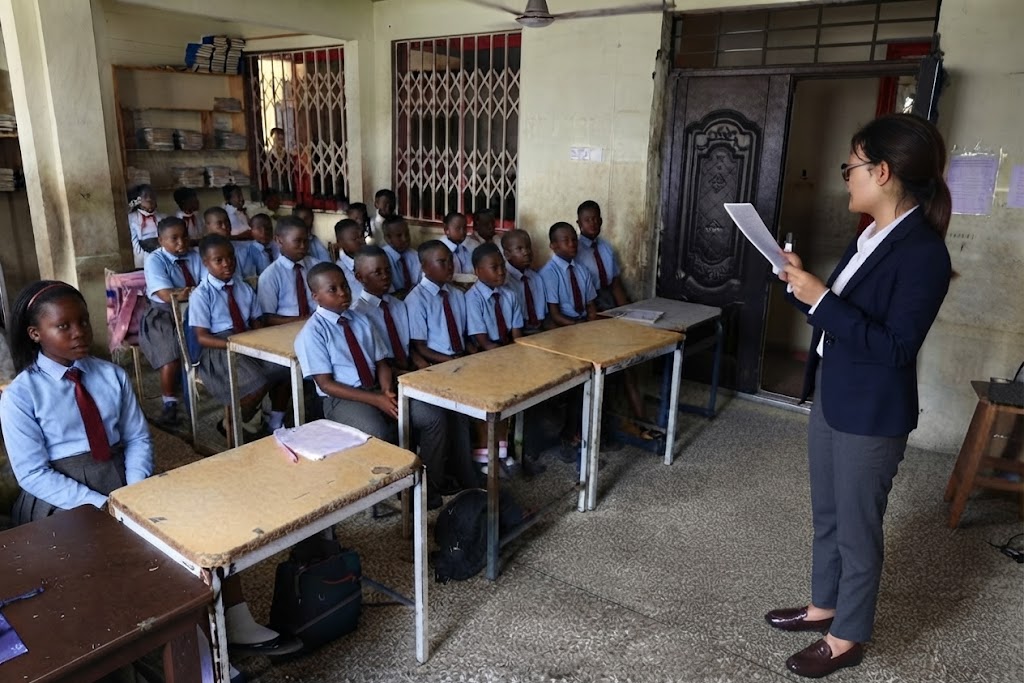
The debate over teaching Mandarin Chinese in Ghanaian schools has raised questions about how the country can prepare young people for international opportunities while addressing existing challenges in education.
President John Dramani Mahama has clarified that Cabinet has not approved a policy introducing Chinese or Arabic across all public schools. His statement addressed claims of a nationwide rollout, including suggestions that the languages would become compulsory.
Speaking during a citizens’ engagement at the University of Business and Integrated Development Studies in the Upper West Region on September 12, the President questioned the practicality of introducing Chinese when Ghana still struggles to provide sufficient French teachers. He pointed to the importance of French given the country’s proximity to Francophone neighbors.
However, arguments in favour of Mandarin instruction extend beyond the controversy over policy approval. Supporters view the language as a potential asset for Ghanaian students seeking careers connected to China’s role in international trade, technology and education.
An analysis published by Afenya Media argues that Ghana’s economic relationship with China provides a practical reason to consider Mandarin as an optional subject. Language proficiency, it suggests, could help Ghanaian professionals communicate with Chinese business partners and pursue opportunities in engineering, tourism, diplomacy and commerce.
The analysis also identifies potential educational benefits. Students with Mandarin skills may be better prepared for study at Chinese universities, particularly programs requiring Chinese-language proficiency. Such preparation could support their adjustment to academic and everyday life abroad.
Nevertheless, the potential benefits must be weighed against the resources required. The same analysis highlights the need for qualified teachers, suitable learning materials and adequate funding, alongside concerns about adding to pupils’ workloads and widening disparities between urban and rural schools.
It recommends beginning with elective lessons in selected schools, training Ghanaian teachers and evaluating results before considering broader expansion. Under that approach, Mandarin would complement continued investment in English, French, mathematics, science and Ghanaian languages.
The discussion therefore brings together two distinct questions: whether Ghana should create more opportunities to learn Mandarin, and whether its public education system has the capacity to support wider instruction. The President’s clarification establishes that a nationwide policy has not been approved, while the arguments for voluntary study remain part of the broader debate over educational priorities.
Source: Omanghana