Omanghana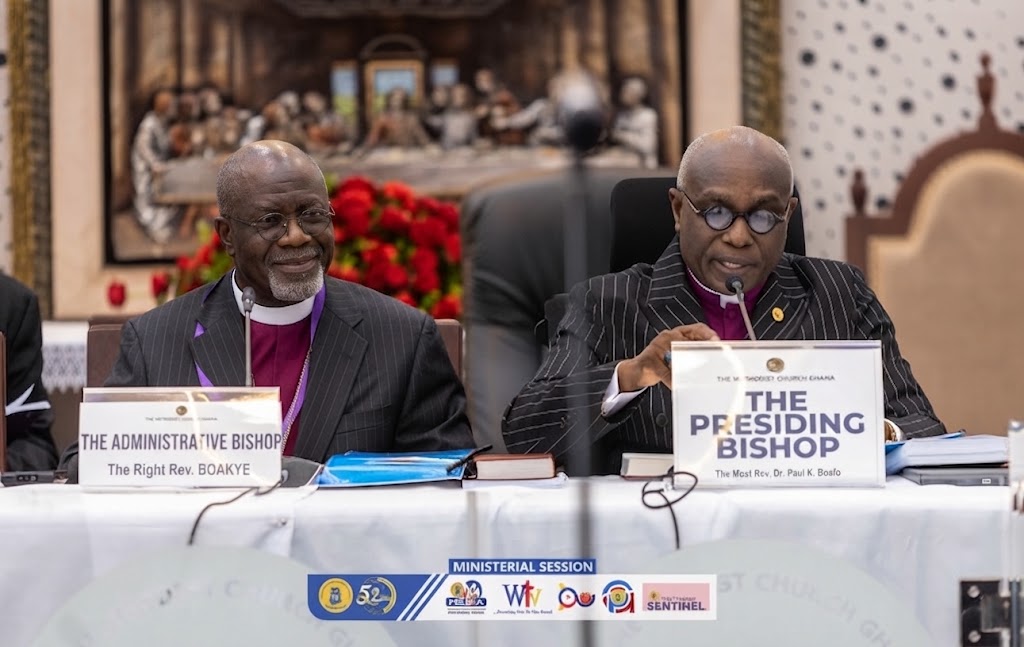
The Presiding Bishop of The Methodist Church Ghana, Most Rev. Prof. Johnson Kwabena Asamoah-Gyadu, has called on the government to honour the promises it made to Ghanaians during the election campaign.
He said citizens expect political commitments to be translated into practical policies and measurable improvements in their lives.
Most Rev. Prof. Asamoah-Gyadu made the remarks while interacting with journalists on Wednesday, August 19, on the sidelines of the Church’s 52nd Conference at the St. Paul Cathedral in Tema.
Government Urged to Avoid Blaming Predecessors
The Presiding Bishop cautioned political leaders against continually citing the failures of previous administrations as justification for present challenges.
He acknowledged that a new government might inherit economic and administrative difficulties. However, he argued that such conditions should not become an excuse for failing to provide the new direction promised during an election campaign.
“My message to the citizenry is, let us fulfil our obligations as citizens. I will like to also extend that to the government to pay close attention to the promises they made to the country when they were campaigning for office,” he said.
According to him, voters elect a different government because they expect a change in leadership, policies and development priorities.
“If we liked what we saw, we wouldn’t have voted them out. So there’s no point in making any reference. You promised that you would do new things, so we expect that that will be done,” he added.
Church Supporting National Development
Most Rev. Prof. Asamoah-Gyadu also recognised that the government cannot address all of Ghana’s social and economic difficulties without assistance from other institutions.
He said churches and civil society organisations must complement state programmes, particularly in areas such as employment creation, education, social welfare and community development.
The Methodist Church Ghana is consequently implementing an entrepreneurship initiative to help young people establish sustainable businesses.
The programme is expected to provide selected beneficiaries with funding, tools, workspaces, start-up capital and other resources needed to develop their enterprises.
“The government promises a lot. If you follow the politics of the last few years, for example, the government promised to give employment to a lot of young people. I am sure the government does, but it can’t do everything. And that’s where the Church comes in,” the Presiding Bishop explained.
He said the initiative forms part of the Church’s contribution towards reducing youth unemployment and promoting economic independence.
Stronger Action Against Galamsey Demanded
Environmental protection was another major subject discussed at the conference.
Most Rev. Prof. Asamoah-Gyadu called on the Church to take a stronger prophetic position against activities that destroy Ghana’s natural environment.
He identified illegal small-scale mining, commonly known as galamsey, as a serious threat to arable land, forests and water bodies.
The Presiding Bishop argued that Christian stewardship should extend beyond spiritual matters to include the protection of communities and the environment.
He urged religious leaders and congregations to speak firmly against destructive practices while supporting national efforts to restore polluted rivers and degraded lands.
Evangelism Remains Central to Church’s Mission
Despite its growing involvement in national development, the Church said evangelism and winning souls would remain at the centre of its mission.
Most Rev. Prof. Asamoah-Gyadu encouraged ministers and lay leaders to reconnect with members who had stopped participating in church activities.
He noted that some people had experienced personal, social and economic difficulties—particularly following the COVID-19 pandemic—which affected their involvement in congregational life.
He therefore called for stronger pastoral care to help inactive members overcome their challenges and return to the Church.
Conference Reviews Future Priorities
The annual conference provides a platform for Methodist leaders, clergy, lay representatives and other stakeholders to review the Church’s work and determine its priorities for the coming year.
Discussions cover evangelism, social responsibility, youth development, environmental protection, infrastructure and the general administration of the denomination.
Most Rev. Prof. Asamoah-Gyadu said that although the conference would approve programs and development priorities, the Church’s fundamental responsibility remained rooted in Scripture and service to society.
Source: Omanghana