Omanghana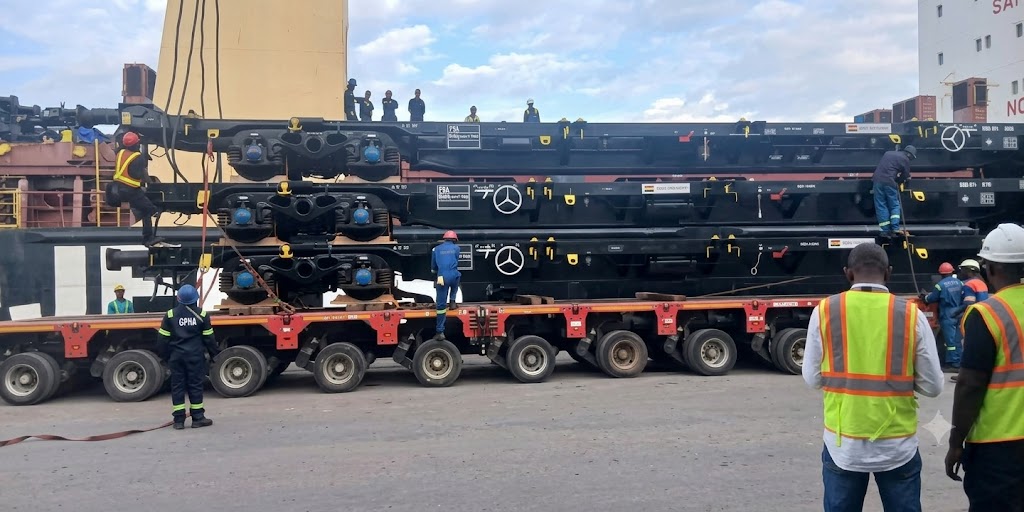
The Minority Caucus in Parliament has expressed strong concerns over the government’s decision to acquire refurbished British locomotives and freight wagons for the Ghana Railway Authority (GRA), arguing that the purchase represents a setback to the country’s efforts to modernize its railway infrastructure.
In a statement issued by the Minority’s Transport Committee on June 28, 2026, the opposition criticized the Mahama administration for procuring diesel-powered railway equipment originally manufactured in the 1970s and 1980s, describing the move as inconsistent with Ghana’s long-term transportation and industrial development goals.
According to the Minority, while investment in the railway sector is essential, priority should be given to modern, efficient, and sustainable technology capable of supporting the country’s expanding rail network.
Concerns Over Aging Railway Equipment
The procurement reportedly includes two refurbished diesel locomotives and 20 freight wagons imported from the United Kingdom.
Opposition lawmakers argue that purchasing railway equipment that is approximately four to five decades old raises serious concerns about efficiency, reliability, and long-term operational costs.
Describing the acquisition as a “Margaret Thatcher-era achievement,” the Minority said Ghana should be investing in modern railway technology rather than equipment designed several decades ago.
Summarizing their criticism, the caucus remarked, “You do not buy yesterday’s hoe to farm today’s land,” suggesting that outdated technology is ill-suited to meet the demands of a rapidly developing economy.
Questions Over Compatibility with Modern Rail Infrastructure
Another major concern raised by the Minority relates to the compatibility of the refurbished locomotives with Ghana’s evolving railway system.
According to the committee, the imported trains were designed for the British Cape Gauge system and may not integrate efficiently with Ghana’s newer standard-gauge railway infrastructure, particularly the recently developed Tema–Mpakadan railway line.
The lawmakers warned that any mismatch between old rolling stock and modern rail infrastructure could reduce operational efficiency and require additional expenditure on modifications or specialized maintenance.
They urged the Ministry of Transport to clarify how the locomotives will be deployed within Ghana’s rail network and whether comprehensive technical assessments were conducted before the purchase.
Fears Over Rising Maintenance Costs
The Minority also questioned the long-term financial implications of operating aging railway equipment.
According to the caucus, although purchasing refurbished locomotives may initially appear less expensive than acquiring new ones, the long-term costs of maintaining obsolete engines could significantly outweigh any short-term savings.
They warned that sourcing replacement parts for decades-old locomotives may become increasingly difficult and expensive, potentially placing an additional financial burden on taxpayers.
The committee argued that continued investment in aging technology could divert resources that might otherwise be used to expand and modernize Ghana’s railway infrastructure.
Calls for Greater Transparency
The Minority is demanding that the Ministry of Transport publicly disclose full details surrounding the procurement process.
Among the information being requested is the total contract value paid for the refurbished locomotives and freight wagons, as well as documentation explaining how value for money was assessed before the acquisition was approved.
The caucus is also seeking engineering certification reports detailing the mechanical condition, operational safety, and expected lifespan of the imported railway equipment.
In addition, lawmakers want the government to outline its long-term maintenance strategy, including how it intends to secure spare parts and technical support for the aging British-built locomotives.
According to the committee, greater transparency is necessary to assure Ghanaians that public funds have been used responsibly and that the investment aligns with the country’s broader railway modernization strategy.
Minority Reaffirms Support for Railway Development
Despite its criticism, the Minority emphasized that it fully supports efforts to revitalize Ghana’s railway sector and expand both passenger and freight transport across the country.
However, the caucus maintained that future investments should prioritize modern technology, operational efficiency, environmental sustainability, and prudent use of public resources.
The lawmakers stressed that every major infrastructure investment should deliver long-term value for money while strengthening Ghana’s transport network to support industrial growth, regional trade, and economic development.
The Ministry of Transport is yet to publicly respond to the concerns raised by the Minority regarding the procurement.
Source: Omanghana