Omanghana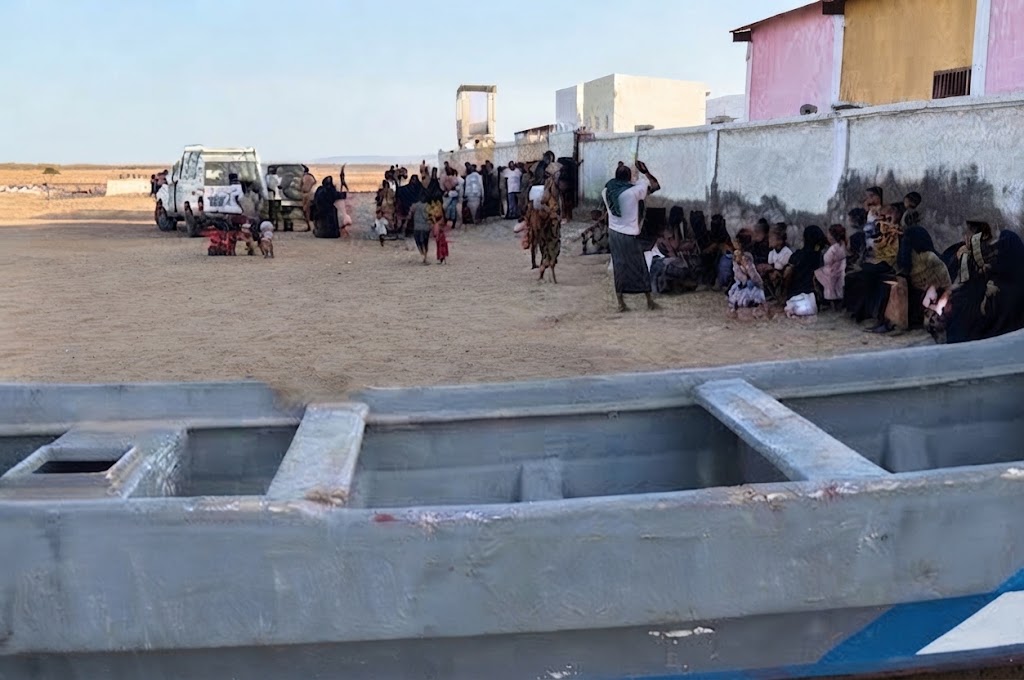
More than 2,000 Yemenis have crossed the Bab el-Mandeb Strait into Djibouti as rapidly escalating fighting along Yemen’s Red Sea coast forces families to abandon their homes.
The arrivals form part of a growing humanitarian crisis caused by a major offensive by the Iran-aligned Houthi movement against forces backed by Yemen’s internationally recognized government and Saudi Arabia.
The International Organization for Migration said more than 100,000 people had been displaced by the latest violence, with most seeking safety in other parts of Yemen. Thousands of others have attempted the dangerous sea journey to Djibouti on the Horn of Africa.
Families escaping towns such as Dhubab described being trapped by air attacks, explosions and ground fighting as Houthi forces advanced along the coastline. Food and water reportedly became increasingly scarce, forcing residents to leave with little warning.
Wahida Omer, a 50-year-old woman who fled Dhubab, said she crossed the sea in a small boat after her village came under attack. She arrived in Djibouti without knowing whether her husband, who remained behind, was alive, dead or being held by Houthi forces.
She described the journey as frightening and difficult, saying passengers cried throughout the crossing and had no food.
Many of those leaving Yemen have travelled in heavily loaded wooden boats carrying children, household belongings and other possessions they managed to salvage. Some reportedly brought blankets, livestock and solar panels, indicating that they fear the conflict could prevent them from returning home for an extended period.
At least 500 refugees, including women and children, were rescued after their boats ran out of fuel while crossing the strait. Many arrivals have landed near Obock in northern Djibouti, approximately 20 kilometers from the Yemeni coast at its nearest point.
The Bab el-Mandeb, whose Arabic name means “Gate of Tears,” is one of the world’s most important maritime corridors. It connects the Red Sea to the Gulf of Aden and serves as a major route for commercial shipping and global energy supplies.
The narrow waterway is also notoriously dangerous. Overloaded boats, fuel shortages, rough conditions and limited rescue capacity expose fleeing families to the risk of drowning or becoming stranded at sea.
Djibouti’s authorities and humanitarian organizations have been providing emergency assistance, including food, water, medical care, shelter and registration services. The IOM has praised the country’s response but warned that more arrivals are expected.
The sudden influx is increasing pressure on Djibouti, which already hosts more than 36,000 registered refugees and asylum seekers, mainly from Somalia, Ethiopia and Yemen. As one of Africa’s smallest countries, it has limited infrastructure and resources to accommodate a prolonged movement of displaced people.
Humanitarian agencies have warned that the renewed conflict is worsening an already severe crisis in Yemen, where years of war have damaged hospitals, disrupted food supplies and left millions dependent on assistance.
Continued fighting around Yemen’s Red Sea coast could drive further displacement within the country and lead more families to attempt the hazardous crossing to Djibouti.
Source: Omanghana