Omanghana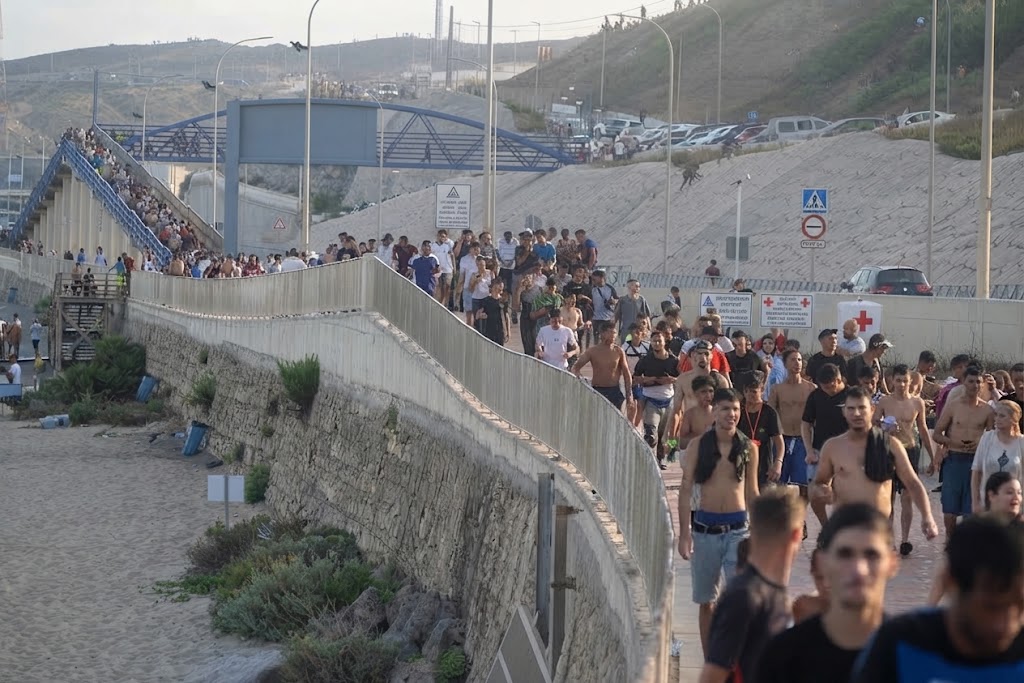
More than 5,300 migrants have voluntarily returned to Morocco from the Spanish enclave of Ceuta as authorities continue addressing the consequences of the unprecedented mass border crossing recorded in late July.
Spain’s Minister for Territorial Policy, Ángel Víctor Torres, said 5,321 people had returned to Morocco since August 10. About 90 others have withdrawn their requests for international protection, while authorities are working to register approximately 1,000 additional migrants to complete procedures for their possible return.
The departures follow the arrival of tens of thousands of people from Morocco on July 30 and 31. Spanish and local authorities issued varying estimates of the number who crossed, with figures ranging from about 50,000 to more than 70,000.
A large proportion of the migrants returned to Morocco within the first days of the crisis. However, thousands remained in Ceuta, overwhelming reception facilities and creating a humanitarian emergency in the small territory.
Spanish authorities have begun at least 1,800 formal return cases, but the process has been slow because each person’s circumstances must be reviewed individually. Migrants must be allowed to submit legal objections, while asylum applications require separate assessments.
Unaccompanied children are protected under Spanish and European law and cannot be summarily deported. Their age, family circumstances and best interests must be examined before any reunification or return arrangement is considered.
The Spanish government has established temporary accommodation providing about 4,500 places for adults, while nearly 2,000 minors are being housed separately. Hundreds of migrants have also been moved from streets and informal camps into newly opened facilities.
Significant disagreements remain over the number of people still in Ceuta. National authorities have provided lower estimates, while local officials and humanitarian organizations say the figure may be considerably higher. Some estimates suggest that about 13,000 migrants, including children, could still be in the territory.
The prolonged presence of migrants has placed pressure on accommodation, sanitation, healthcare and security services. Temporary shelter expansions have also generated protests in some neighborhoods, where residents have raised concerns about overcrowding and the location of new reception centers.
The crisis has intensified political pressure on Prime Minister Pedro Sánchez’s government. Opposition parties have accused the administration of failing to prevent the mass crossing despite earlier intelligence warnings and of responding too slowly to the humanitarian and security challenges that followed.
Sánchez has defended the government’s approach, arguing that migrants must first be received, identified and assessed before they can be returned or granted international protection. He has appealed for patience and said authorities hope to stabilize the situation by the end of 2026.
As voluntary departures continue, the government faces the difficult task of balancing immigration enforcement with asylum obligations, child-protection laws and the humanitarian needs of those still stranded in Ceuta.
Source: Omanghana