Omanghana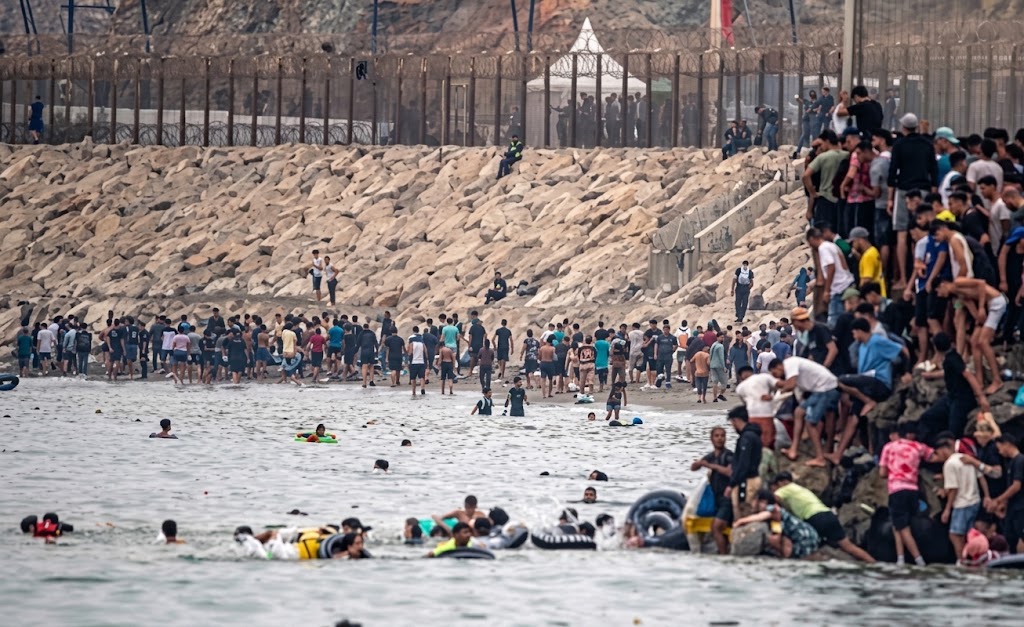
Morocco’s Foreign Ministry has rejected accusations that authorities in Rabat facilitated a mass migrant crossing into Ceuta, insisting that the country did not use border security to exert political pressure on Spain.
The denial followed the July 30 incident in which tens of thousands of migrants reportedly attempted to enter the Spanish-administered North African enclave from neighboring Morocco. Estimates cited after the crossing ranged from 50,000 to more than 70,000 people.
Many of the migrants reportedly swam around coastal barriers or attempted to climb and bypass border fences. More than 100 people were reported to have died during the influx, making it one of the deadliest migration incidents recorded along the border.
Spanish authorities quickly returned most of those who entered the enclave. However, thousands of migrants, including hundreds of unaccompanied children, reportedly remain in temporary camps, overcrowded facilities or on the streets of Ceuta.
Responding to claims that Moroccan security forces had deliberately relaxed border controls, the Foreign Ministry said no credible reports, concrete facts or evidence had been presented to establish Rabat’s involvement in the crossing.
The ministry also rejected suggestions that Morocco had allowed the surge to pressure Madrid over diplomatic or political disagreements. It maintained that the Kingdom should not be turned into a scapegoat or used as a political tool ahead of elections in Spain.
Rabat further highlighted its stated willingness to cooperate with Spanish authorities on the return of migrants who entered Ceuta without authorization. According to the ministry, Morocco has formally offered to readmit eligible nationals and requested the urgent reunification of unaccompanied minors with their families.
Moroccan officials questioned why Spanish authorities had not acted more quickly on those offers, arguing that delays in processing returns had contributed to overcrowding and humanitarian difficulties inside the enclave.
The incident has generated intense political debate in Spain, with opposition parties accusing Prime Minister Pedro Sánchez’s government of failing to prevent the crossing or respond effectively to the resulting crisis.
Some opposition figures have alleged that Morocco either organized the movement or deliberately ignored preparations for it. They have also linked the incident to recent Spanish court decisions and government immigration policies, claiming that these developments encouraged migrants to attempt the crossing.
Intelligence assessments cited during the political debate reportedly indicated that security agencies in both Spain and Morocco were aware of social media messages promoting a coordinated attempt to enter Ceuta before the incident occurred.
The reports have raised questions about whether authorities on both sides had enough advance warning to strengthen security and prevent the loss of life. Morocco, however, maintains that prior awareness of online calls does not prove that its security forces supported or permitted the crossing.
Ceuta, together with Melilla, is one of two Spanish-administered territories located on Morocco’s northern coast. The enclaves represent the European Union’s only land borders with Africa and have repeatedly become focal points for migrants seeking entry into Europe.
The latest dispute threatens to place renewed strain on relations between Madrid and Rabat, despite cooperation between the two countries on migration control, security and the fight against human trafficking.
Source: Omanghana