dthanki
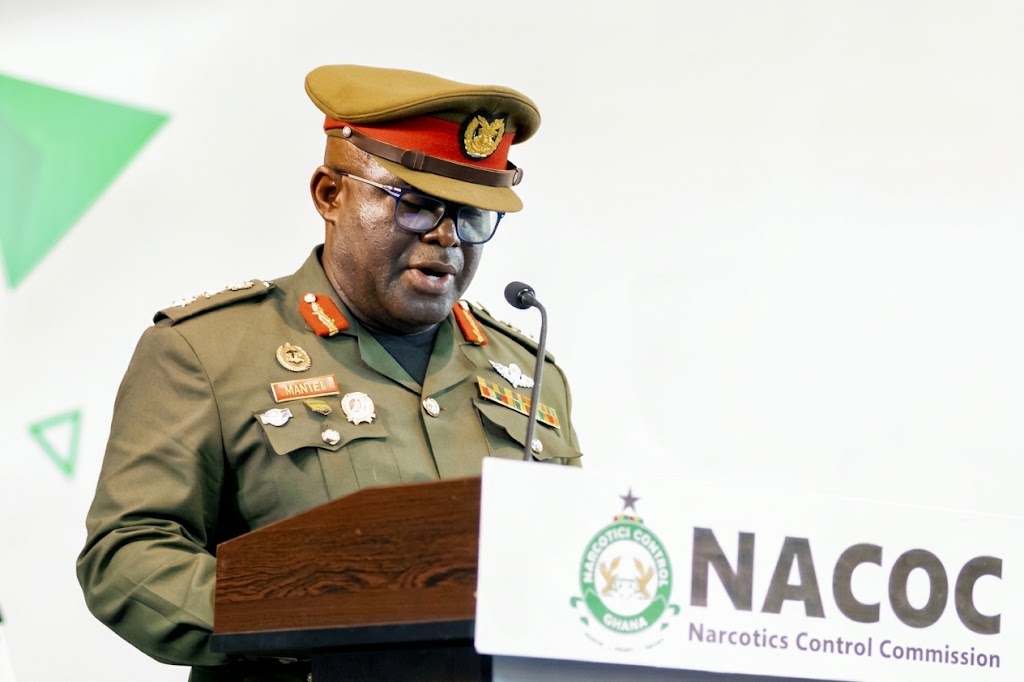
The Director-General of the Narcotics Control Commission (NACOC), Brigadier General Maxwell Obuba Mantey, has revealed that a suspected drug trafficker purchased a private scanner to assess whether concealed narcotics could be detected by airport screening equipment.
Appearing before Parliament’s Public Accounts Committee on Tuesday, October 20, 2026, Brig. Gen. Mantey cited the case as an example of the increasingly sophisticated methods traffickers are adopting to evade security checks.
He was responding to recent audit findings when he outlined some of the challenges confronting the commission in its efforts to combat drug trafficking.
According to him, some trafficking networks are investing in equipment to test concealment methods before attempting to move illicit substances through ports of entry. Such practices, he indicated, present an evolving challenge for enforcement agencies.
Brig. Gen. Mantey also raised concerns about the misuse of privileged access by airport personnel. He described an investigated incident in which a supervisory security officer allegedly bypassed screening checkpoints while carrying a traveler’s bag and later handed it to a departing passenger in an airport restroom.
The account highlighted the threat posed by insiders who exploit their positions to undermine security procedures.
He further disclosed that traffickers were experimenting with substances intended to interfere with detection by sniffer dogs, adding another challenge to narcotics screening operations.
To strengthen its response, NACOC is working with international partners, including the United Kingdom, France and the Netherlands, to improve its detection capabilities.
These efforts include the deployment of mobile drug detection devices and the replacement of older, body-intrusive scanning equipment at Kotoka International Airport with more advanced screening and forensic technology.
Source: Omanghana