Omanghana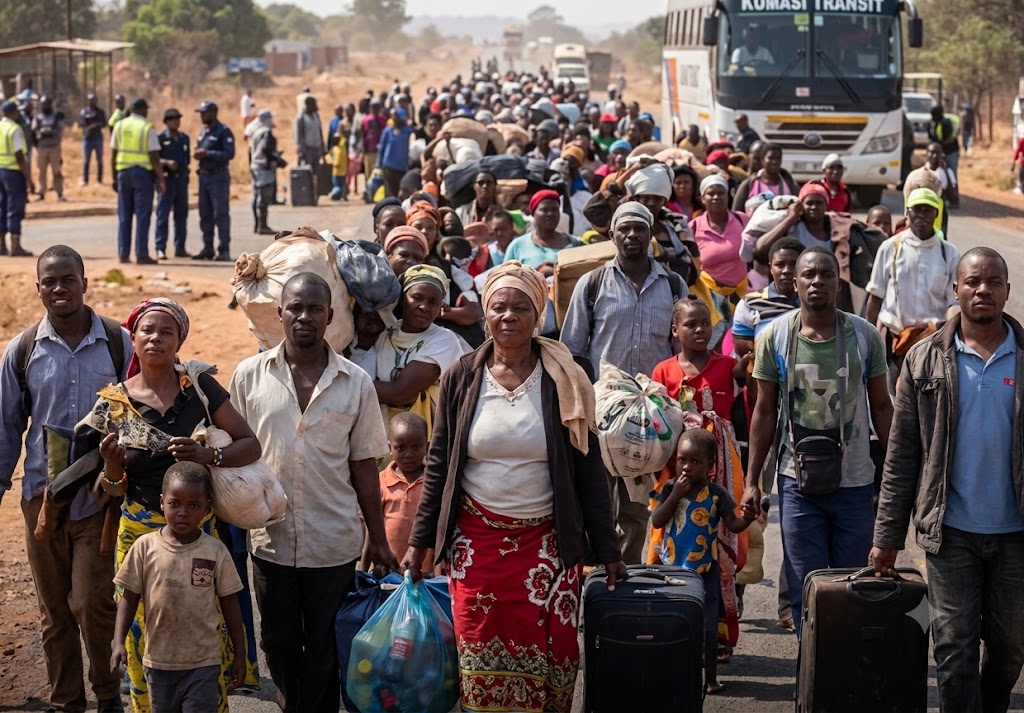
The Zimbabwean government has confirmed that 99,418 citizens have returned home from South Africa since May 28, 2026, following a surge in anti-immigrant sentiment and growing fears among foreign nationals living in the neighboring country.
The mass return has been linked to heightened tensions surrounding undocumented migrants, particularly after an unofficial deadline issued by a South African anti-illegal migration group triggered widespread anxiety among Zimbabweans and other foreign communities.
June 30 Deadline Sparks Fear Among Migrants
The sharp increase in departures was accelerated by a self-imposed June 30 deadline announced by the South African group March and March, which called on undocumented migrants to leave the country.
The group carried out door-to-door campaigns in some communities, warning foreign nationals to depart. The actions reportedly created fear among migrants who worried about possible violence, harassment, and attacks on their homes or businesses.
Zimbabwean officials said many citizens chose to return voluntarily rather than risk further uncertainty and possible confrontation.
Women and Children Make Up Majority of Returnees
Speaking to journalists after a Cabinet briefing on July 14, 2026, Zimbabwe’s Information Minister Zhemu Soda provided details on the ongoing repatriation process.
He revealed that more than 70% of the returnees are women and children, making them among the most vulnerable groups affected by the crisis.
The large number of children and families returning has increased pressure on humanitarian and government support systems at border entry points.
Beitbridge Border Handles Massive Influx
Most of the returning Zimbabweans are entering the country through the Beitbridge Border Post, one of the busiest crossing points between Zimbabwe and South Africa.
Authorities have expanded operations at the border to manage the increased movement of people and ensure that returning citizens receive assistance.
Officials have established systems to support:
- Registration of returnees.
- Transport coordination.
- Emergency humanitarian assistance.
- Health screenings.
Health Support Provided to Vulnerable Families
The Zimbabwean Ministry of Health, together with humanitarian partners including Doctors Without Borders, has established a dedicated transit facility to provide medical assistance.
Healthcare teams are screening children for:
- Malnutrition.
- Dehydration.
- Diarrheal illnesses.
- Other health concerns linked to displacement and difficult travel conditions.
The intervention is aimed at ensuring that vulnerable returnees receive immediate medical attention before continuing to their final destinations.
Government Provides Emergency Assistance
Zimbabwean authorities have also mobilized support for returning families.
First Lady Auxillia Mnangagwa has been involved in providing assistance at the border, including distributing food supplies and clothing to displaced families.
Government officials say the immediate priority is ensuring that returnees are welcomed safely while longer-term reintegration plans are developed.
Long-Term Reintegration Plans Underway
Zimbabwean authorities have warned that the current wave of returns could continue.
With an estimated two million Zimbabweans living in South Africa, officials acknowledge that a prolonged deterioration in relations or increased hostility toward migrants could result in significantly more citizens returning home.
To prepare for a larger influx, the government has established an Inter-Ministerial Committee led by Local Government Minister Daniel Garwe.
The committee is working with United Nations agencies and civil society organizations to develop reintegration programm, including:
- Transportation support.
- Temporary accommodation.
- Psychosocial counselling.
- Education placement for returning children.
- Assistance with rebuilding livelihoods.
Support for Other Foreign Nationals
Zimbabwe has also extended assistance to other nationals affected by the regional migration crisis.
Authorities are using border facilities to support stranded Malawian and Zambian citizens passing through Zimbabwe as they make their way back home.
Officials say the humanitarian response is being coordinated to ensure that all vulnerable travelers receive necessary assistance.
Diplomatic Efforts to Ease Regional Tensions
Amid the migration crisis, Zimbabwe has also pursued diplomatic engagement aimed at reducing tensions between neighboring countries.
President Emmerson Mnangagwa hosted King Misuzulu kaZwelithini of the AmaZulu and a delegation of South African traditional leaders in Harare.
The meeting focused on strengthening historical ties between the two nations and promoting dialogue amid growing concerns over xenophobic tensions.
Regional Migration Challenge Continues
The return of nearly 100,000 Zimbabweans highlights the broader challenges facing migrant communities across Southern Africa.
As governments respond to rising migration pressures, Zimbabwean authorities say they will continue working with regional partners and humanitarian organizations to protect citizens while promoting peaceful relations among neighboring countries.
Source: Omanghana