Omanghana
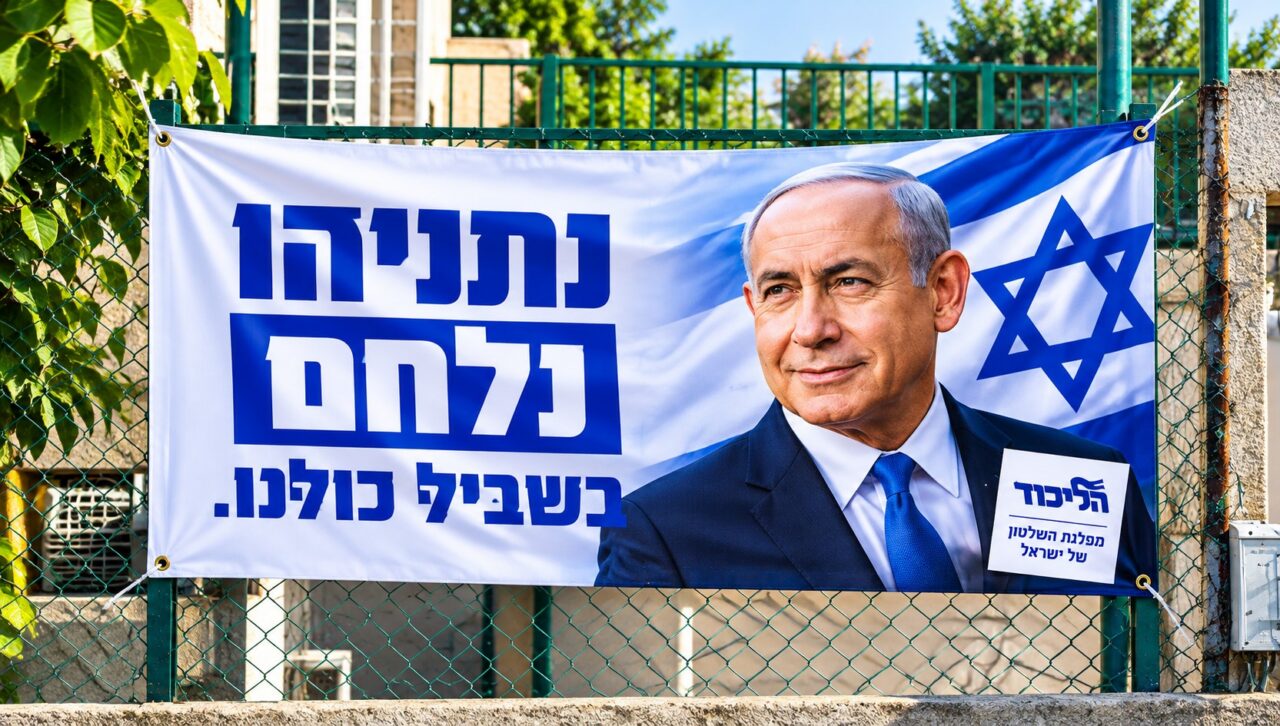
Israeli voters are preparing to cast their ballots in the country’s first national election since the October 7, 2023, Hamas-led attacks, with Prime Minister Benjamin Netanyahu’s leadership and security record at the centre of the contest.
The vote follows three years of conflict involving Gaza, Lebanon and Iran. It offers voters an opportunity to assess Netanyahu’s handling of the wars, the security failures preceding the October 7 attacks and the country’s future direction.
Netanyahu, 77, is seeking a seventh term. His campaign has focused heavily on national security, presenting him as the leader best equipped to confront regional threats and prevent Iran from developing nuclear weapons. On the eve of the election, his campaign also highlighted an endorsement from U.S. President Donald Trump.
However, opinion polls have indicated declining support for Netanyahu’s Likud party, putting the parliamentary majority held by his alliance of right-wing, far-right and ultra-Orthodox parties under pressure.
His principal challenger, former military chief Gadi Eisenkot, leads a centrist alliance campaigning for a change in leadership. Eisenkot has accused Netanyahu of placing political survival ahead of a coherent strategy for ending the conflicts and securing lasting stability.
Eisenkot, whose son and two nephews were killed in combat, has also promised an official state inquiry into the failures surrounding the October 7 attacks. Accountability for those failures remains one of the campaign’s most divisive issues.
Netanyahu’s critics argue that his government must bear responsibility for the security breakdown. His supporters contend that the defence establishment failed him and point to subsequent military operations against Hamas, Hezbollah and Iran as evidence of his ability to restore Israeli security.
Despite the intensity of the contest, polling suggests that neither Netanyahu’s bloc nor Eisenkot’s alliance has a clear route to a parliamentary majority. Israel’s coalition-based political system could therefore produce extended negotiations, with Netanyahu remaining at the head of a caretaker government while parties attempt to form an administration.
The rivalry also comes against a broader shift to the right in Israeli politics following years of warfare. Differences over leadership and accountability remain pronounced, but opposition to an independent Palestinian state extends across much of the major Jewish-led political spectrum, including Eisenkot’s centrist alliance.
The election’s outcome will depend both on voter support for individual parties and their ability to assemble a governing coalition, leaving open the possibility of further political uncertainty after the ballots are counted.
Source: Omanghana