Omanghana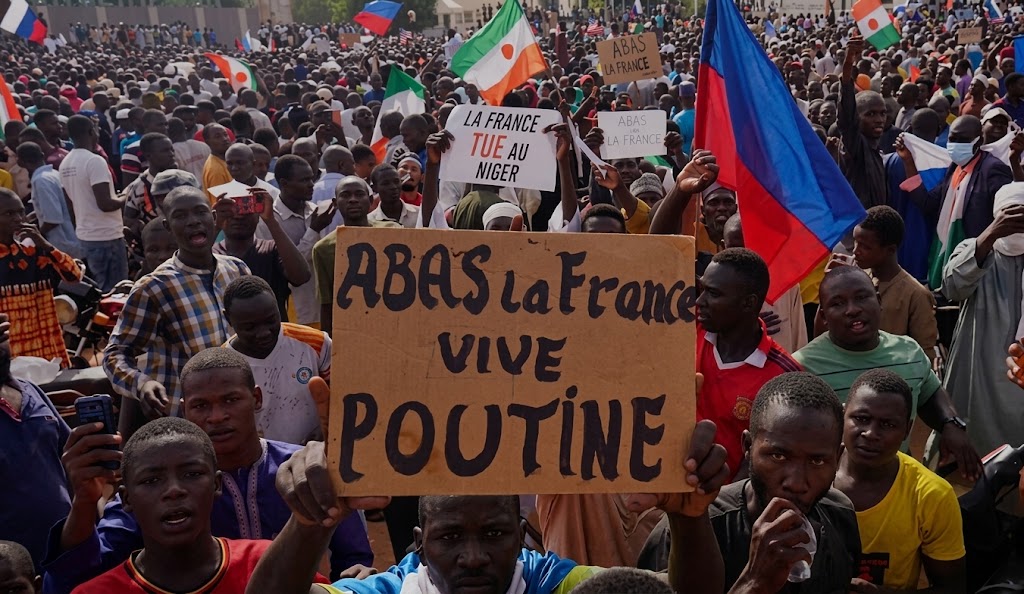
Niger’s military government has accused France of helping to organize and incite a failed mutiny in the capital, Niamey, further deepening tensions between the two countries.
France has firmly rejected the allegation, describing it as completely unfounded and another attempt by Niger’s military authorities to blame Paris for the country’s internal difficulties.
Following a Council of Ministers meeting chaired by General Abdourahamane Tiani, Niger’s government said an investigation had linked the August 29 unrest to what it described as a “vast network of accomplices led by France.”
According to a government statement broadcast on state television, the soldiers involved in the uprising were allegedly promised foreign assistance as part of an operation intended to destabilize Niger, weaken its sovereignty and interfere with its control over strategic natural resources.
Niger claimed it had gathered substantial evidence concerning the attack and reserved the right to take the matter before international courts. However, the authorities had not publicly released evidence independently linking France to the mutiny.
French Foreign Minister Jean-Noël Barrot rejected the accusations during an interview with Radio France International.
Barrot described the allegations as “pure fantasies,” insisting that France had neither the intention nor the operational means to organize or support such an attack.
Nigerien military broadcasts also accused neighboring Benin and Ivory Coast of assisting elements allegedly involved in the unrest. The two countries have previously been named in similar allegations by Niger’s military government amid wider regional tensions.
The mutiny began when renegade soldiers attacked several strategic locations across Niamey, including Air Base 101 at Diori Hamani International Airport. Gunfire and explosions were also reported near the presidential palace, while the national broadcaster was briefly taken off air.
The mutineers temporarily controlled parts of the airbase before loyalist forces launched an operation to retake the facility. General Tiani’s presidential guard defended the presidential compound and played a central role in suppressing the uprising.
Three members of the presidential guard were confirmed killed and later honored at an official military funeral. Other reports placed the total death toll at five or more, including civilians, although Nigerien authorities had not released a comprehensive casualty figure.
Russia’s Africa Corps, which maintains personnel at Air Base 101, provided direct combat assistance to loyalist troops. Security sources said Russian forces used ground units and explosive drones to help regain control of the airbase and force some mutineers to surrender.
Dozens of suspected mutineers were reportedly killed or detained, while government forces recovered weapons and other military equipment. Normal activity gradually returned to Niamey after loyalist troops secured the airport, presidential area and broadcasting facilities.
The uprising represented the most serious internal military challenge to General Tiani since he overthrew elected President Mohamed Bazoum in July 2023. Analysts have linked the unrest partly to frustration within the armed forces over worsening insecurity, heavy battlefield losses and the government’s struggle to contain armed groups connected to al-Qaeda and the Islamic State.
Since taking power, Niger’s military leadership has expelled French forces, ended several Western security partnerships and strengthened its relationship with Russia. The country has also joined Mali and Burkina Faso in the Alliance of Sahel States.
The latest accusations are likely to worsen the already hostile relationship between Niamey and Paris. They also highlight the growing internal pressure facing Niger’s military leadership as it confronts armed insurgencies, dissatisfaction within the security forces and increasing dependence on Russian military support.
Source: Omanghana