Omanghana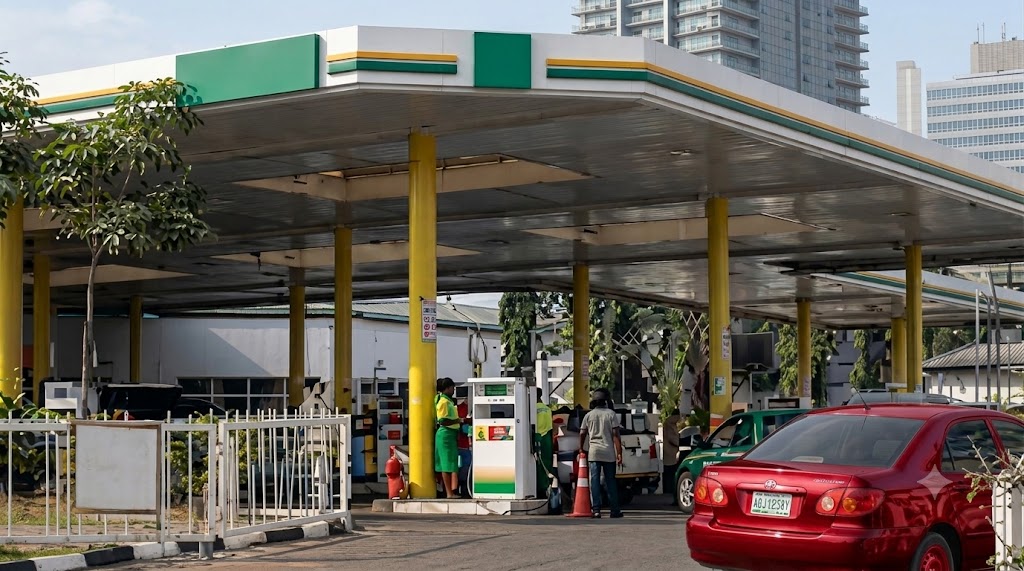
The Nigerian government has directed regulators to intensify oversight of fuel marketers and ensure that declining global crude oil prices translate into lower petrol prices for consumers across the country.
The move follows a significant drop in international crude oil prices from around $120 per barrel earlier this year to approximately $72 per barrel, raising concerns that retail fuel prices have not reflected the global market trend despite Nigeria’s fully deregulated downstream petroleum sector.
Government Moves to Protect Consumers
Minister of State for Petroleum Resources, Senator Heineken Lokpobiri, in collaboration with the Federal Competition and Consumer Protection Commission (FCCPC), has instructed the Nigerian Midstream and Downstream Petroleum Regulatory Authority (NMDPRA) to closely monitor fuel stations nationwide.
The directive aims to prevent fuel marketers from exploiting consumers by maintaining high pump prices even as international crude prices continue to decline.
Authorities say the NMDPRA will intensify surveillance of filling stations to ensure that reductions in international petroleum costs are reflected at the pumps, while also enforcing compliance with pricing regulations.
Regulators Warn Against Profiteering
The FCCPC has also vowed to take decisive action against refiners, importers, depot owners, and marketers found engaging in anti-competitive practices or unjustified pricing.
Regulatory agencies are expected to impose sanctions on companies that fail to pass on cost savings to consumers or manipulate market conditions for excessive profit.
In addition to price monitoring, enforcement teams have been tasked with conducting routine inspections of filling stations to detect under-dispensing of fuel and other practices that shortchange motorists.
Global Oil Prices Fall Sharply
The government’s intervention comes after Brent crude prices retreated to about $72–$73 per barrel, following easing geopolitical tensions in the Middle East, including a ceasefire agreement between the United States and Iran and the reopening of the Strait of Hormuz.
Earlier in the year, when crude prices surged to nearly $120 per barrel, petrol marketers rapidly increased retail prices, with fuel selling for between ₦1,350 and ₦1,500 per litre in many parts of the country.
However, despite the sharp decline in global oil prices, petrol continues to retail at more than ₦1,200 per litre across several states, prompting criticism from consumers and government officials.
Signs of Market Adjustment
Some adjustments have already begun within the domestic fuel market.
The Dangote Refinery recently announced successive reductions in its gantry loading price, bringing it down to ₦1,125 per litre in an effort to improve affordability.
Meanwhile, figures released by the Major Energies Marketers Association of Nigeria (MEMAN) indicate that the landed cost of imported petrol has dropped significantly to ₦983.92 per litre, making imported fuel cheaper than some locally supplied products.
The Nigerian National Petroleum Company Limited (NNPC) has also responded by slightly reducing its Abuja retail pump price to ₦1,210 per litre, although many consumers and industry observers argue that the decrease falls well short of what current global market conditions justify.
Pressure Mounts for Further Price Reductions
With international crude prices remaining well below their recent highs, pressure is mounting on fuel marketers to implement more substantial reductions at the pumps.
The federal government insists that consumers should benefit from the lower cost of crude oil and has pledged continued enforcement to ensure transparency, fair competition, and reasonable pricing throughout Nigeria’s downstream petroleum industry.
Source: Omanghana