Omanghana
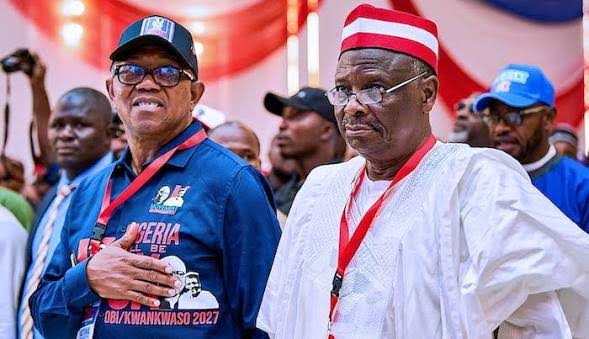
The Obi-Kwankwaso Movement (OK Movement) has rejected claims that it receives financial support or administrative direction from presidential candidate Peter Obi or the Nigeria Democratic Congress (NDC), insisting that it operates as an independent political organization.
The movement’s National Director-General, John Ozyl Ughulu, made the clarification in a statement issued in Abuja on Friday, September 25, 2026, as disagreements between the group and the NDC continue ahead of the 2027 general elections.
Ughulu said the OK Movement’s organizational structure was built around its own principles, leadership and internal processes and was not dependent on funding from Obi, his running mate Rabiu Kwankwaso, or the NDC.
According to the movement, its cooperation with the NDC and support for the Obi-Kwankwaso presidential ticket does not amount to organizational subordination.
Dispute Over 59-Member Campaign Council
The latest disagreement follows the OK Movement’s unveiling of a 59-member Presidential Campaign Council earlier in September to coordinate mobilization and other campaign-related activities in support of Obi and Kwankwaso.
The NDC subsequently dissociated itself from the council, saying the structure had not been authorised by the party’s leadership.
NDC National Chairman Moses Cleopas said the party’s National Working Committee had the authority to establish or approve formal campaign structures operating in the party’s name.
The party also warned support groups against establishing parallel structures that could compete with or circumvent the official party machinery.
The OK Movement, however, has maintained that it has the right to organize its own affairs and that its campaign council remains an internal structure of the movement.
OK Movement Insists on Autonomy
Ughulu has argued that the movement is not an ordinary support group that can simply be absorbed into the structures of the political party.
The movement says it maintains its own national, state, local government and ward-level structures and intends to preserve those structures while supporting the NDC’s presidential ticket.
The OK Movement has also rejected suggestions that its cooperation with the NDC requires it to surrender its organizational identity.
In a separate statement earlier this week, the group said its collaboration with the party did not erase its independent identity or internal administration.
NDC’s Position
The NDC has taken a different position, maintaining that political support organizations should complement the party rather than establish structures that could operate as alternative party machinery.
NDC National Leader Senator Seriake Dickson has argued that support groups should focus on grassroots mobilization and should not create structures that compete with the official organization of the party.
The party has therefore continued to distinguish between independent support groups and structures formally established or authorised by the NDC.
Obi’s Position on the Campaign Council
The dispute has also drawn attention to the position of Peter Obi, whose candidacy the OK Movement supports.
Reports surrounding the controversy indicate that the 59-member campaign council was not approved as an official NDC campaign structure. The NDC has maintained that the council should not be treated as a party-authorised body.
The disagreement has consequently raised questions about how independent political movements supporting a party’s candidates should relate to the formal structures of that party.
Dispute Continues Ahead of 2027 Elections
The funding dispute is the latest development in an increasingly public disagreement over the organizational relationship between the OK Movement and the NDC.
While the movement insists on maintaining its independent structures and financial arrangements, the NDC maintains that campaign activities conducted in its name must operate within structures authorised by the party.
For now, both sides remain aligned around support for the Obi-Kwankwaso ticket, but the disagreement over organizational authority and campaign structures remains unresolved as political preparations for the 2027 general elections continue.
Source: Omanghana