Omanghana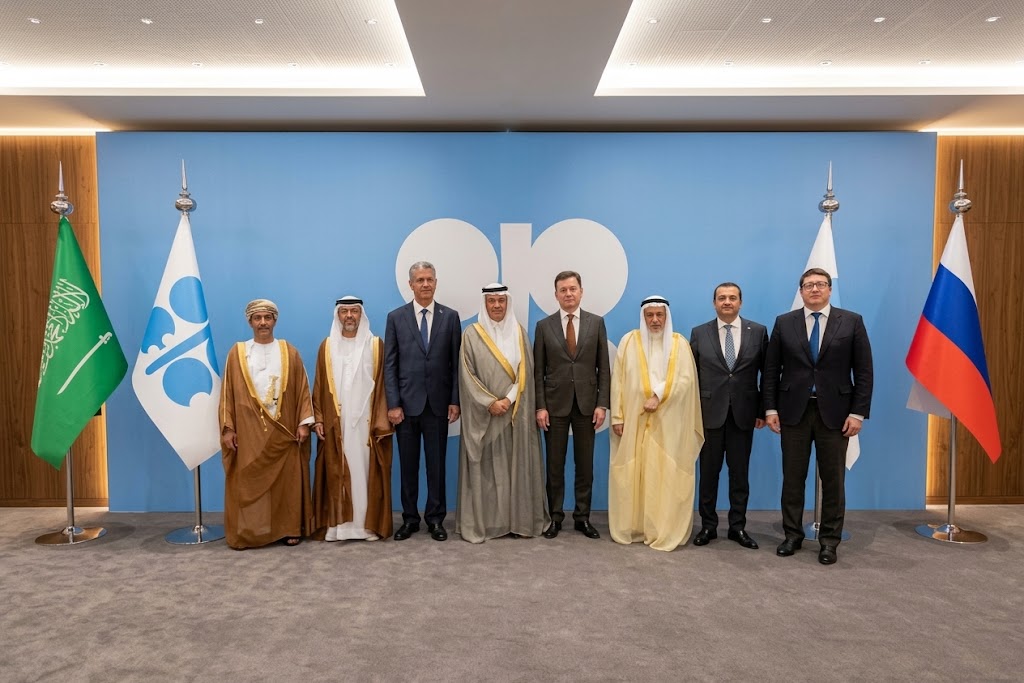
Seven leading members of OPEC+ have agreed to maintain their existing crude oil production targets for October amid continuing geopolitical tensions and disruptions to Middle Eastern exports.
The decision was reached during a virtual meeting involving Saudi Arabia, Russia, Iraq, Kuwait, Kazakhstan, Algeria and Oman.
The seven countries retained their September production levels and gave no policy guidance beyond October. The United Arab Emirates, previously part of the core decision-making group, withdrew from OPEC and OPEC+ earlier in 2026.
The production standstill comes as conflict involving Iran continues to affect tanker movements and crude oil flows through the Strait of Hormuz.
The strategic waterway normally handles about 20% of global oil transit, but shipping activity has declined significantly amid attacks and heightened security concerns.
Under these conditions, analysts say raising official production quotas would have a limited effect if exporters remain unable to transport additional supplies safely through the region.
The seven countries increased their collective production target by approximately 188,000 barrels per day for September, completing the phased reversal of voluntary reductions totaling 1.65 million barrels per day that began in 2023.
However, actual production has remained below official targets in several countries because of infrastructure constraints, maintenance requirements and export disruptions.
The gap between approved quotas and the amount of crude reaching the market has reduced the practical effect of OPEC+ production increases.
Oil prices climbed ahead of the meeting as renewed hostilities intensified concerns about global supplies. Brent crude traded near $97 per barrel, while West Texas Intermediate rose above $92.
Although elevated prices can encourage producers to release more oil, the seven countries chose to maintain their current policy while monitoring shipping conditions and global demand.
Attention within OPEC+ is now shifting towards the difficult process of establishing new production baselines for 2027.
Individual quotas are expected to depend on independently assessed production capacity, potentially creating disputes among members seeking permission to pump more crude.
Broader output restrictions applying to the remaining OPEC+ coalition are scheduled to remain in place through December 2026.
The seven-member group is expected to meet again on October 4 to consider production policy for November.
The next review will assess oil demand, member compliance, production capacity and the stability of exports through the Strait of Hormuz.
Source: Omanghana