Omanghana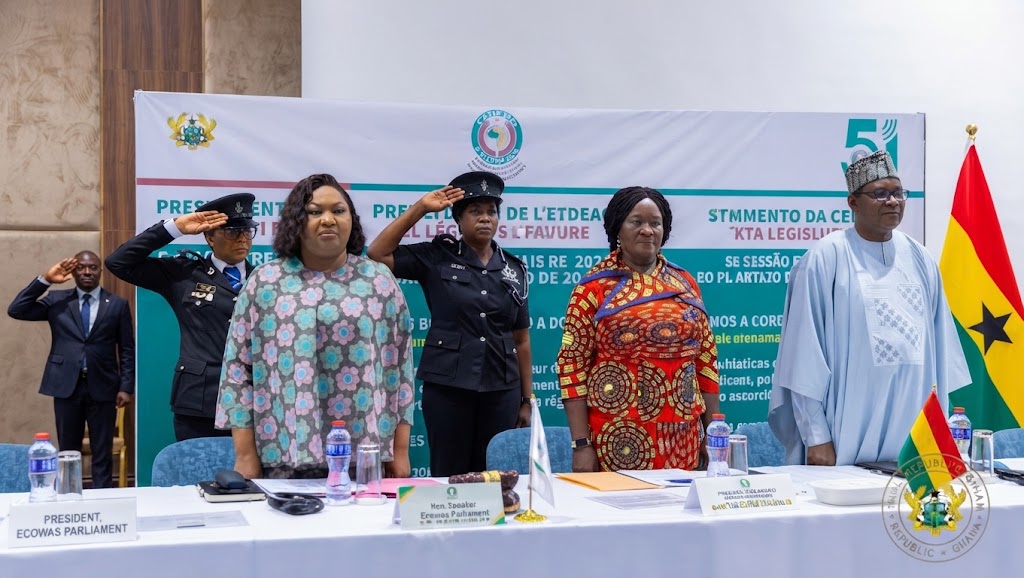
Ghana’s Vice President, Professor Jane Naana Opoku-Agyemang, has called for a coordinated and decisive ECOWAS response to the interconnected challenges of climate change, population displacement and cross-border insecurity in West Africa.
Speaking at the Second Extraordinary Session and Seminar of the ECOWAS Parliament in Accra on Monday, September 21, 2026, she said climate change should be treated as a major development and national security concern rather than solely as an environmental issue.
The seminar was held under the theme, “Climate Change as a Driver of Environmental Degradation, Population Displacement and Rising Insecurity in the ECOWAS Region.”
Participants examined how extreme heat, unpredictable rainfall, flooding and land degradation are destroying livelihoods and forcing people to relocate. Climate-related disasters reportedly displaced more than two million people across West Africa in 2024 while damaging farms, schools and essential public infrastructure.
Professor Opoku-Agyemang warned that competition over increasingly scarce land, water and other resources could heighten tensions within communities and contribute to instability across national borders.
She also highlighted the vulnerability of young people affected by displacement. According to her, failure to provide education, employment and other economic opportunities could leave displaced youth exposed to recruitment and exploitation by extremist organizations.
The Vice President urged ECOWAS member states to strengthen cross-border early-warning systems and improve the sharing of information on climate hazards, migration patterns and emerging security threats.
She further called for increased assistance to towns and cities accommodating displaced populations, noting that adequate support for host communities would help reduce pressure on public services and prevent social tensions.
Professor Opoku-Agyemang also advocated greater investment in climate-resilient agriculture, sustainable infrastructure and local green industries to protect livelihoods and create employment opportunities.
She encouraged West African governments to work collectively to secure international climate financing for adaptation and resilience programs across the region.
The Vice President maintained that the strength of ECOWAS must be demonstrated through practical cooperation in areas including trade, free movement, environmental protection and regional security.
Source: Omanghana