Omanghana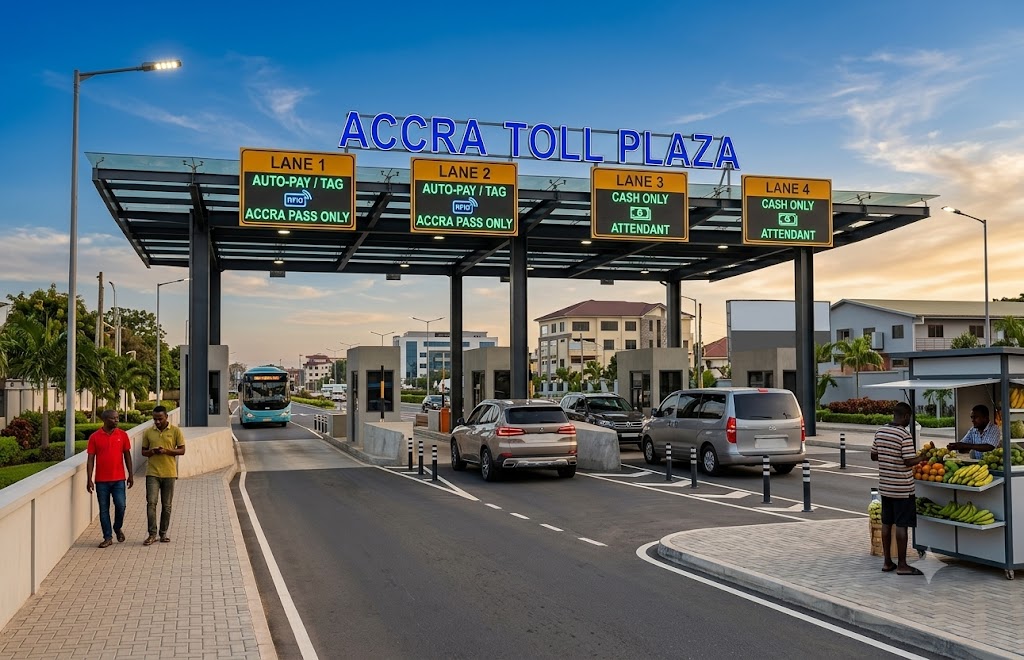
The Parliament of Ghana has approved a 20-year concession agreement for the reintroduction of road and bridge tolls through a fully electronic collection system.
The agreement, approved on Thursday, July 30, 2026, reverses the suspension of manual toll collection announced in November 2021.
Lawmakers argued that ending toll collection deprived the road sector of an important source of revenue for maintenance and infrastructure development.
The new project will be implemented as a public-private partnership between the Ministry of Roads and Highways and a Special Purpose Vehicle to be established by Rock Africa Limited.
Under the agreement, the Government of Ghana will receive 70% of the gross revenue generated from tolls. Rock Africa Limited will retain the remaining 30% to cover its capital investment and operational costs.
The concession will run for 20 years. The first three years will be devoted to designing, engineering and installing the electronic tolling infrastructure.
Rock Africa Limited will operate the system for the remaining 17 years before handing the entire infrastructure to the government.
The electronic network is expected to cover 66 tolling locations across 13 operational corridors. These will include 38 former manual toll stations and 28 newly identified locations.
Unlike the previous system, the new arrangement will not rely on physical booths or barriers that require motorists to stop and make cash payments.
Minister for Roads and Highways Kwame Governs Agbodza said the government would introduce multi-lane, free-flow technology to reduce congestion and prevent the long queues previously recorded around toll booths.
Cameras and other digital equipment will automatically capture vehicle information as motorists pass through designated tolling points.
The proposed system is expected to link vehicle-registration information to the owner’s Ghana Card. Toll charges could then be deducted from a registered mobile money wallet or linked bank account.
The Ministry of Roads and Highways also indicated that tolls would be imposed only on properly engineered and maintained roads. It said motorists should not be charged for using roads that remain in poor condition.
The parliamentary resolution received broad bipartisan support, with lawmakers from both sides endorsing the transition to a modern cashless collection system.
Supporters of the agreement believe electronic tolling will reduce revenue leakage, improve accountability and provide a reliable source of funding for road construction and maintenance.
The government expects the cashless system to support national infrastructure development while reducing the pressure placed on the central budget to finance road projects.
Source: Omanghana