Omanghana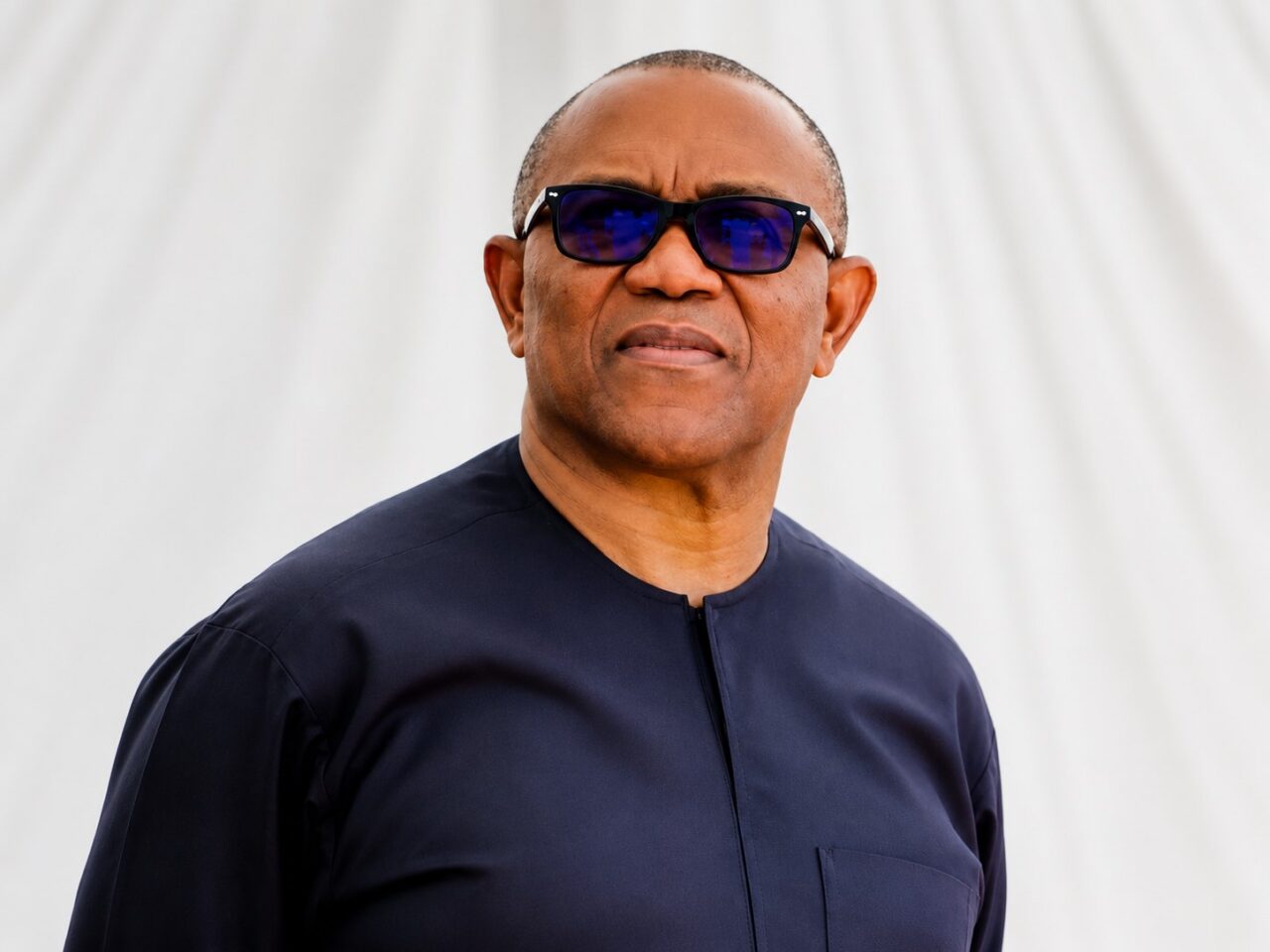
Former Anambra State Governor Peter Obi has defended his repeated movement between political parties, insisting that his decisions have been guided by ideology and national interest rather than personal ambition or political convenience.
Speaking during interviews on major television networks, the 2023 presidential candidate said he would not remain in a political organisation that had abandoned its founding principles, disregarded internal rules or reduced politics to a system of personal and financial transactions.
Obi argued that political parties should serve as vehicles for pursuing good governance, national development and the welfare of citizens. According to him, loyalty to a party should not take priority over loyalty to democratic values and the country.
He compared political parties to vehicles carrying passengers toward a destination, explaining that a responsible leader must be prepared to change vehicles if the one being used is no longer travelling in the right direction.
Why Obi Left APGA
Obi began his rise to national prominence through the All Progressives Grand Alliance, the platform on which he governed Anambra State.
He said his eventual departure from APGA followed serious disagreements involving the gubernatorial successor he had personally supported. According to him, the friction became so intense that remaining within the party could have worsened the dispute and undermined governance in the state.
Obi maintained that he chose to leave rather than allow internal political rivalry to paralyse the Anambra State administration. He presented the decision as an attempt to protect governance and reduce tension rather than a move motivated by political advantage.
His departure marked the beginning of a political journey that would later take him through several opposition platforms.
PDP Primary Process Became Transactional
Obi later joined the Peoples Democratic Party and emerged as the party’s vice-presidential candidate in the 2019 general election.
He resigned from the PDP in 2022, shortly before its presidential primary, and moved to the Labour Party. Explaining that decision, Obi said the PDP’s internal processes had become heavily transactional.
He alleged that established rules governing delegates and presidential primaries had been compromised, creating an environment in which financial influence carried more weight than competence, ideas and public service.
Obi said he was unwilling to participate in a political structure dominated by money and private arrangements. He argued that such practices weakened internal democracy and prevented political parties from selecting candidates based on credibility and capacity.
Labour Party Crisis Undermined Opposition Role
The former governor contested the 2023 presidential election on the Labour Party’s ticket, building a nationwide support movement that attracted many young Nigerians and first-time political participants.
However, the party subsequently became engulfed in leadership disputes, competing claims to executive authority and prolonged legal battles among rival factions.
Obi said the continuous internal crisis weakened the Labour Party’s ability to function as a stable and effective opposition platform. The conflict also created uncertainty about the party’s leadership, structure and preparedness for future elections.
He maintained that an opposition party distracted by internal litigation and factional rivalry could not effectively challenge the government or provide Nigerians with a credible political alternative.
Opposition Coalition and ADC Disagreements
As opposition figures began discussions about forming a broad coalition ahead of the 2027 elections, Obi became involved with the African Democratic Congress.
The coalition was presented as an attempt to unite politicians and political movements seeking to challenge the ruling All Progressives Congress. Obi’s involvement was expected to strengthen the alliance because of his national profile and support base.
He later withdrew from the ADC arrangement, citing what he described as a toxic political atmosphere and worsening internal instability. His political movement subsequently shifted toward the Nigeria Democratic Congress.
Obi said any coalition seeking to replace the governing party must demonstrate internal discipline, transparency and a clear commitment to national development. He warned that simply bringing opposition politicians together would not be enough without an agreed vision and credible leadership structure.
Obi Accuses APC of Destabilising Opposition Parties
Beyond internal disagreements, Obi accused the ruling APC of deliberately encouraging divisions within opposition parties.
He alleged that some of the leadership disputes and factional conflicts affecting opposition platforms were being instigated or supported by interests connected to the governing party.
According to him, the strategy was designed to weaken political competition and gradually push Nigeria toward a one-party system.
The accusation reflects growing concerns among opposition politicians about defections, disputed party congresses and competing leadership structures. The APC would, however, be entitled to respond to Obi’s allegations, which remain political claims unless supported by independently verified evidence.
Obi warned that a weakened opposition would be harmful to Nigeria’s democracy because effective democratic governance depends on competition, scrutiny and credible alternatives.
Principles Over Party Loyalty
Addressing criticism that his repeated defections demonstrated political inconsistency, Obi argued that remaining in a party after it had abandoned its values would represent a greater betrayal.
Drawing on a quotation associated with former British Prime Minister Winston Churchill, Obi maintained that changing political parties to preserve one’s principles was more honourable than changing one’s principles simply to retain a position within a party.
He said his political decisions should be judged by the ideas and policies he promotes rather than by the number of platforms he has joined.
For Obi, political organisations are instruments for achieving a larger national objective. Once a platform stops serving that objective, he believes politicians should have the courage to leave instead of sacrificing their convictions for party loyalty.
As political alignments intensify ahead of Nigeria’s 2027 general election, Obi’s next steps will remain closely watched. His ability to secure a stable platform, preserve his support movement and build alliances across regional and political divisions could significantly shape the opposition’s challenge to the APC.
Source: Omanghana