Omanghana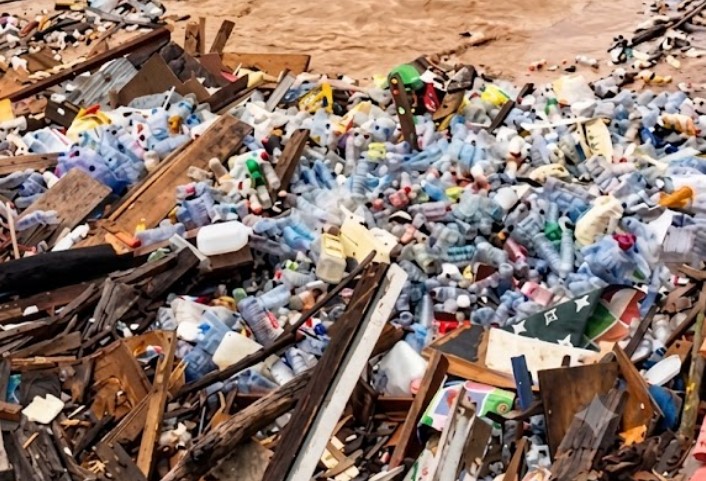
As Accra recovers from the devastating floods of June 29–30, 2026, engineers and urban planning experts say poor waste management continues to be one of the biggest factors behind the capital’s recurring flooding crisis.
Although the latest disaster was triggered by intense rainfall, experts argue that blocked drainage systems filled with plastic waste, household refuse, and other debris significantly worsened the impact, causing floodwaters to overflow into homes, businesses, and major roads.
Many believe that meaningful reforms in solid waste management, coupled with improvements to the city’s drainage infrastructure, are essential to breaking the cycle of destructive floods that have plagued the capital for decades.
How Poor Waste Management Worsens Flooding
One of the most persistent challenges facing Accra is the widespread dumping of waste into drains, waterways, and open gutters.
Large volumes of plastic bottles, single-use packaging, household waste, silt, and other debris routinely accumulate in major drainage channels, including the Odaw drain, restricting the natural flow of stormwater.
During periods of heavy rainfall, these blockages act as artificial dams, drastically reducing the drainage system’s capacity and causing water to back up into surrounding communities.
The result is widespread flooding that damages homes, displaces families, disrupts businesses, and places lives at risk.
Limited Waste Collection Adds to the Challenge
Experts also point to shortcomings in the city’s waste collection system.
Several municipal assemblies continue to face logistical and financial constraints that limit their ability to collect all the solid waste generated each day.
As a result, illegal dumping has become increasingly common, particularly in low-lying areas, wetlands, and drainage corridors that are especially vulnerable during heavy rains.
Without adequate waste collection and disposal services, these areas become major flood hotspots whenever storms strike.
Experts Recommend Four Key Reforms
Urban planners, members of the Ghana Institution of Engineering, and environmental advocates have outlined several priority measures they believe could significantly reduce flood risks across the capital.
Ban or Restrict Single-Use Plastics
Experts say stricter regulations on single-use plastics—including shopping bags and non-biodegradable packaging—would substantially reduce the volume of waste entering drains and waterways.
Because plastic materials do not decompose easily, they remain one of the leading causes of blocked drainage systems throughout Accra.
Modernize the Drainage System
Many specialists advocate replacing the city’s aging open gutters with underground, engineered stormwater drainage systems.
Unlike open drains, underground infrastructure is less susceptible to being used as informal dumping sites and can improve the efficient movement of stormwater during periods of heavy rainfall.
Strengthen Enforcement of Sanitation Laws
Environmental experts are also calling for stricter enforcement of sanitation by-laws.
They recommend empowering metropolitan, municipal, and district assemblies to impose stronger penalties on individuals and businesses that illegally dump refuse into rivers, lagoons, drains, and other public waterways.
Greater public education, combined with consistent enforcement, is viewed as critical to changing long-standing waste disposal practices.
Expand Waste-to-Energy and Recycling Facilities
Another recommendation is increased investment in modern waste-processing infrastructure through public-private partnerships.
Expanding recycling facilities and waste-to-energy plants would help reduce the volume of waste sent to landfills while creating economic opportunities through resource recovery and renewable energy generation.
Building a More Flood-Resilient Accra
Experts stress that while climate change is contributing to more frequent and intense rainfall events, the severity of flooding in Accra can be significantly reduced through better urban planning, improved drainage infrastructure, and effective waste management.
They argue that sustained investment in sanitation, stricter environmental enforcement, and modern waste disposal systems will be essential if Ghana’s capital is to become more resilient to future flooding and protect lives, property, and critical infrastructure.
Source: Omanghana