Omanghana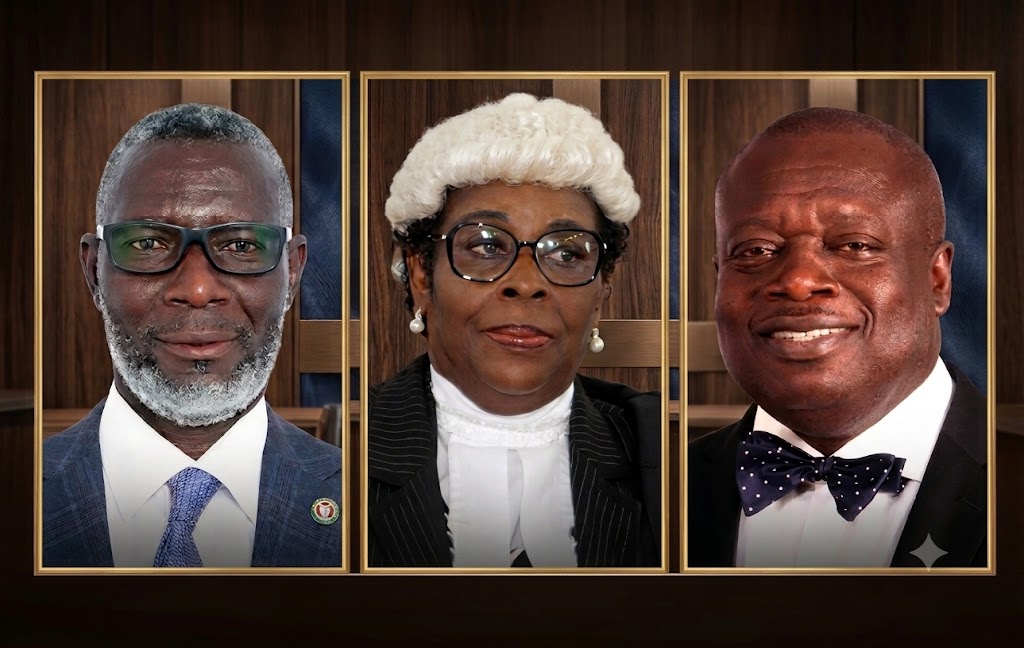
President John Dramani Mahama has nominated three distinguished legal professionals for appointment to Ghana’s Supreme Court, a move that will expand the country’s highest court if approved by Parliament.
The nominations, announced in accordance with the constitutional appointment process, include two experienced Court of Appeal judges and a renowned private legal practitioner with extensive experience in Ghana’s legal sector.
The Nominees
The three individuals nominated for the Supreme Court are:
- Justice Bernasko-Essah, currently serving as a Justice of the Court of Appeal.
- Justice Amoako Asante, also a Justice of the Court of Appeal and a former President of the ECOWAS Court of Justice.
- Tony Forson, a private legal practitioner and former President of the Ghana Bar Association (GBA).
The nominees bring a wealth of judicial and legal expertise, having served in various capacities within Ghana’s justice system and the wider legal profession.
Constitutional Process
The nominations were made in consultation with the Judicial Council, as required under Article 144(2) of the 1992 Constitution of Ghana, which outlines the procedure for appointing Supreme Court justices.
Under the Constitution, Supreme Court nominees must undergo a parliamentary vetting process conducted by the Appointments Committee before their appointments can be approved.
Supreme Court Set for Expansion
If Parliament approves the nominations, the number of sitting justices on Ghana’s Supreme Court will increase from 18 to 21, strengthening the country’s apex court as it continues to handle constitutional, civil, and criminal matters of national importance.
The three nominees will now appear before Parliament’s Appointments Committee for vetting. Following parliamentary approval, they will be formally sworn into office to assume their roles as Justices of the Supreme Court.
The appointments form part of the government’s ongoing efforts to strengthen Ghana’s judiciary and ensure the efficient administration of justice at the country’s highest court.
Source: Omanghana