Omanghana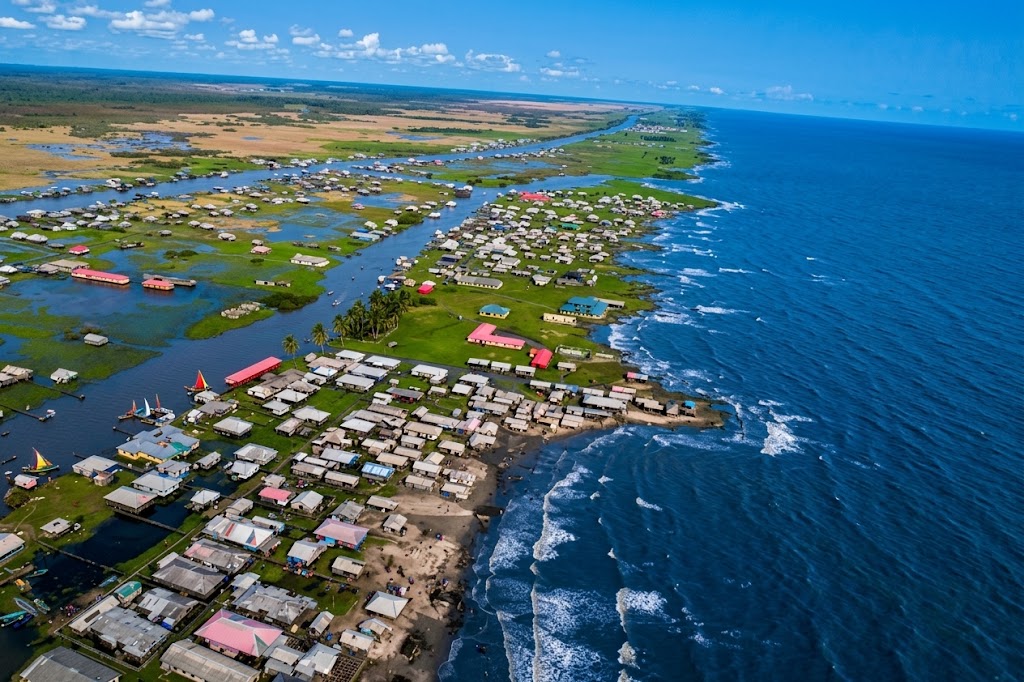
Ayetoro, a historic fishing community in the Ilaje area of Nigeria’s Ondo State, is facing an existential threat as coastal erosion and rising sea levels continue to destroy homes, schools and other essential infrastructure.
Popularly known as “The Happy Place,” Ayetoro is home to about 10,000 people. The coastal settlement was established in 1947 by communist-inspired Christians who sought to create a self-sufficient society founded on communal ownership and the sharing of assets.
Nearly eight decades later, the community has become one of Nigeria’s most visible examples of the devastating effects of coastal erosion and climate change.
Studies examining changes along the coastline indicate that Ayetoro lost an average of about 15 meters, or 50 feet, of shoreline every year between 1987 and 2022. The continued retreat has pushed the Atlantic Ocean deeper into areas once occupied by homes and public facilities.
For residents, the erosion is not an abstract environmental concern but a daily struggle for survival. Families regularly wake up to find seawater surrounding their houses, while powerful waves gradually weaken and collapse buildings.
Many people whose homes have been swallowed by the ocean have attempted to rebuild farther inland. However, the advancing water repeatedly reaches the new locations, forcing some residents to relocate three or more times.
The constant movement has placed severe financial and emotional pressure on families. Residents must repeatedly search for safer land and obtain materials to rebuild, often without receiving adequate government assistance.
Ayetoro’s public infrastructure has also suffered extensive damage. The community’s only health center has already been consumed by the sea, leaving residents with reduced access to basic medical care.
Schools and other important buildings have either been destroyed or remain at risk. The loss of educational facilities has disrupted learning and made it increasingly difficult for children to attend classes safely.
One of the most powerful symbols of the destruction is the palace of Ayetoro’s traditional ruler, Oluwambe Ojagbohunmi. The palace originally contained about 100 rooms, but repeated coastal flooding and erosion have reduced the structure to roughly a dozen surviving rooms.
The shrinking palace reflects the wider disappearance of Ayetoro’s history, culture and physical identity. Residents fear that if the erosion continues unchecked, future generations may have little evidence that the settlement ever existed.
Climate change is believed to be accelerating the crisis. A 2024 study published in Scientific Reports estimated that sea levels along West Africa’s Gulf of Guinea were increasing by approximately 3.9 millimeters annually, about 10.5 per cent higher than the global average.
Rising sea levels allow waves and storm surges to travel farther inland, particularly in low-lying coastal communities such as Ayetoro. The problem is compounded by land subsidence, the loss of natural coastal vegetation and poorly regulated development.
Environmental advocates have called for urgent measures to protect the town. Proposed interventions include stricter land-use regulations, improved coastal planning and the restoration of natural barriers.
Experts have also recommended planting mangroves and coconut palms along vulnerable parts of the shoreline. Mangrove forests can reduce the strength of waves, trap sediment and slow erosion while providing important habitats for fish and other marine life.
However, residents say small-scale environmental measures may not be enough without a comprehensive government-backed coastal defense program. They are demanding immediate action to protect the remaining population and public facilities.
The crisis also raises difficult questions about relocation. While moving residents to safer areas may reduce immediate danger, many families depend on fishing and other coastal activities for their livelihoods. Leaving Ayetoro could mean abandoning both their economic survival and a unique communal heritage dating back to 1947.
Unless effective protection measures are introduced, introduced, the Atlantic Ocean is expected to continue advancing into the settlement. Residents fear that Ayetoro, once celebrated as “The Happy Place,” could eventually disappear beneath the waves along with its homes, institutions and history.
Source: Omanghana