Omanghana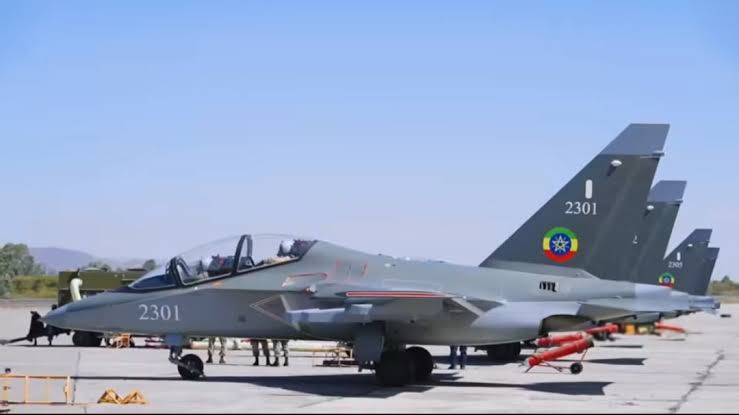
Russian state-owned arms exporter Rosoboronexport has intensified efforts to market the upgraded Yak-130M aircraft to developing air forces, with particular attention on countries across sub-Saharan Africa.
The campaign follows the maiden flight of the modernized Yak-130M prototype, which Russia is positioning as an affordable platform capable of performing both advanced pilot training and light combat missions.
For African countries operating with limited defense budgets, the aircraft’s dual-purpose design could offer significant savings. Maintaining dedicated fleets of frontline supersonic fighters such as the Su-30, MiG-29 or comparable Western aircraft involves considerable spending on fuel, maintenance, spare parts and specialized pilot training.
The Yak-130M is being promoted as a less expensive alternative that can train pilots while also conducting operational missions. This approach could allow air forces to reduce the number of aircraft types in service and simplify their training and maintenance systems.
The aircraft may also appeal to countries whose primary security challenges include insurgencies, terrorism, border violations and unmanned aerial threats rather than conventional warfare against technologically advanced opponents.
In such operating environments, a light combat aircraft could be deployed for counter-insurgency operations, border surveillance, reconnaissance, ground support and the interception of slow-moving aerial targets.
The Yak-130M is expected to offer several improvements over the original Yak-130 trainer. The upgraded version reportedly includes an active electronically scanned array radar, an electro-optical and laser-targeting system, enhanced self-protection equipment and compatibility with precision-guided weapons.
It is also being designed to carry short- and medium-range air-to-air missiles, including weapons such as the R-77. These additions could expand the aircraft’s role beyond training and ground attack to include limited air-defense operations.
Despite those improvements, analysts caution that the Yak-130M cannot completely replace a conventional multirole fighter. As a subsonic aircraft, it would face serious limitations when responding to high-speed threats or operating against advanced enemy fighters and sophisticated air-defense systems.
Russia has also presented possible local production, maintenance and technology-transfer arrangements as part of its export strategy. Such proposals can be attractive to African governments seeking to develop domestic defense industries and reduce their dependence on foreign technical support.
However, establishing an independent aerospace manufacturing sector requires substantial investment, skilled personnel and decades of industrial development. In practice, technology-transfer agreements may be limited to local assembly, aircraft servicing, weapons integration or the production of selected components.
The Yak-130M could therefore provide a practical and comparatively affordable option for countries seeking to strengthen training, surveillance and light-attack capabilities. However, describing it as a complete solution to Africa’s diverse defense requirements appears to be more of an ambitious marketing claim than an accurate assessment of the continent’s security needs.
Source: Omanghana