Omanghana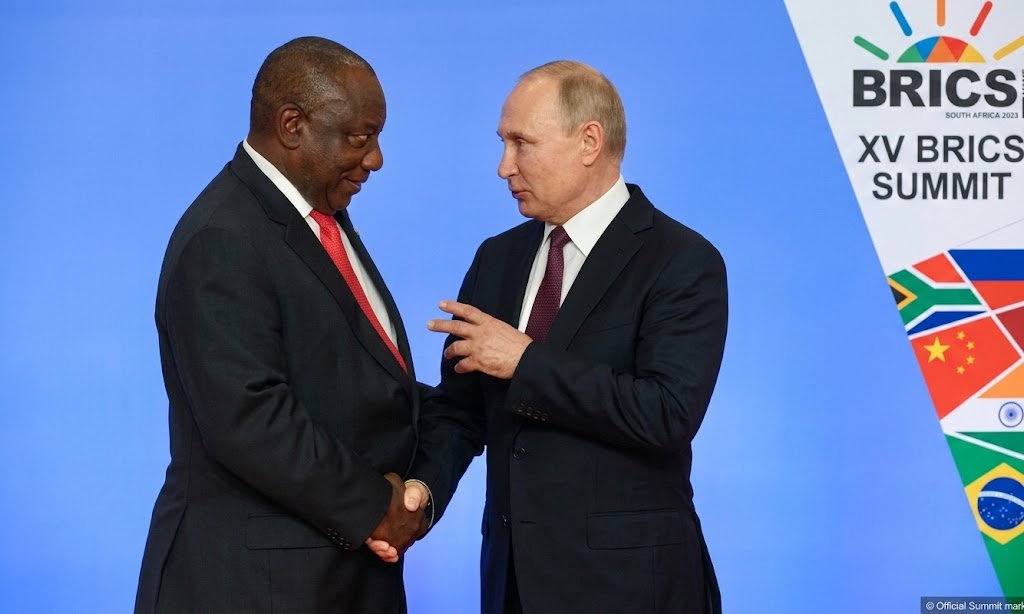
Russia has renewed its opposition to attempts to exclude South Africa from the Group of 20, reaffirming its diplomatic support for Pretoria amid an escalating dispute with the United States.
Moscow maintains that South Africa is a permanent member of the G20 and that no host country has the authority to remove another member from the forum unilaterally.
The intervention comes nine months after U.S. President Donald Trump announced that South Africa would not be invited to the 2026 G20 Leaders’ Summit in Miami, Florida.
The dispute reflects worsening relations between Washington and Pretoria while highlighting growing diplomatic coordination among members of BRICS and the wider Global South.
Russia Defends South Africa’s G20 Status
The Russian Foreign Ministry argued that the G20 belongs collectively to its members and operates through consensus rather than unilateral decisions.
According to Moscow, South Africa’s status as a full and permanent member cannot be changed by a single government, even when that country holds the rotating presidency and hosts the annual summit.
Russia warned that using host-country powers to restrict the participation of an established member could undermine the G20’s credibility and create a damaging precedent for international economic cooperation.
It added that excluding South Africa would make it more difficult for the forum to reach meaningful consensus on global economic challenges.
“South Africa is a full-fledged permanent member of the Group of Twenty. This status cannot be changed unilaterally by any single decision,” the Russian Foreign Ministry said in an earlier statement defending Pretoria’s participation.
Moscow’s position also reflects its close relationship with South Africa through BRICS, where both countries promote a more multipolar international system and oppose what they describe as Western dominance over global institutions.
Trump Announces South Africa’s Exclusion
The diplomatic confrontation intensified after the United States boycotted the G20 Leaders’ Summit hosted by South Africa in Johannesburg in November 2025.
Trump subsequently announced that South Africa would not receive an invitation to the 2026 summit, which the United States is scheduled to host in Miami.
He linked the decision partly to a dispute over the ceremonial transfer of the G20 presidency following the Johannesburg summit. Trump claimed that South Africa refused to hand over the presidency to a senior representative from the U.S. Embassy.
South African President Cyril Ramaphosa formally closed the summit and declared that the presidency would pass to the United States. Pretoria maintained that the handover could not be conducted at the level requested by Washington because the United States had not sent an appropriately senior delegation.
The American president also repeated allegations that South Africa was persecuting white Afrikaners and confiscating their farms. The South African government has consistently rejected those claims, while independent reporting has found no credible evidence supporting allegations of systematic racial persecution or genocide. Trump’s announcement was reported by Reuters.
Wider Disagreements Strain Relations
The G20 dispute forms part of a broader deterioration in relations between Washington and Pretoria.
The two governments have clashed over South Africa’s land reform policies, its non-aligned position on Russia’s war in Ukraine and its expanding political and economic relationships with Moscow and Beijing.
Washington has also strongly criticized South Africa’s case against Israel at the International Court of Justice. Pretoria maintains that its application is based on its obligations under international law rather than hostility toward Israel or support for any armed organization.
Trade tensions have added to the diplomatic strain, with South African exports facing tougher American tariffs and uncertainty surrounding future access to preferential U.S. markets.
Pretoria Insists Membership Is Not Optional
South Africa has rejected the planned exclusion as procedurally invalid, arguing that its G20 membership does not depend on an invitation from the country hosting the summit.
Pretoria maintains that individual presidencies may invite non-member countries as guests but cannot decide whether an established member remains part of the organization.
Russia and several Global South partners have supported that interpretation, warning that the G20 could lose legitimacy if host governments are allowed to determine participation based on bilateral political disagreements.
Some European officials have also expressed concern over South Africa’s possible absence, emphasizing the importance of preserving the forum’s representative character.
The 2026 summit is expected to test whether the G20 can maintain its consensus-based structure amid growing divisions between major powers. South Africa’s participation remains a significant diplomatic issue ahead of the Miami gathering, with no clear indication that Washington intends to reverse its position.
Source: Omanghana