Omanghana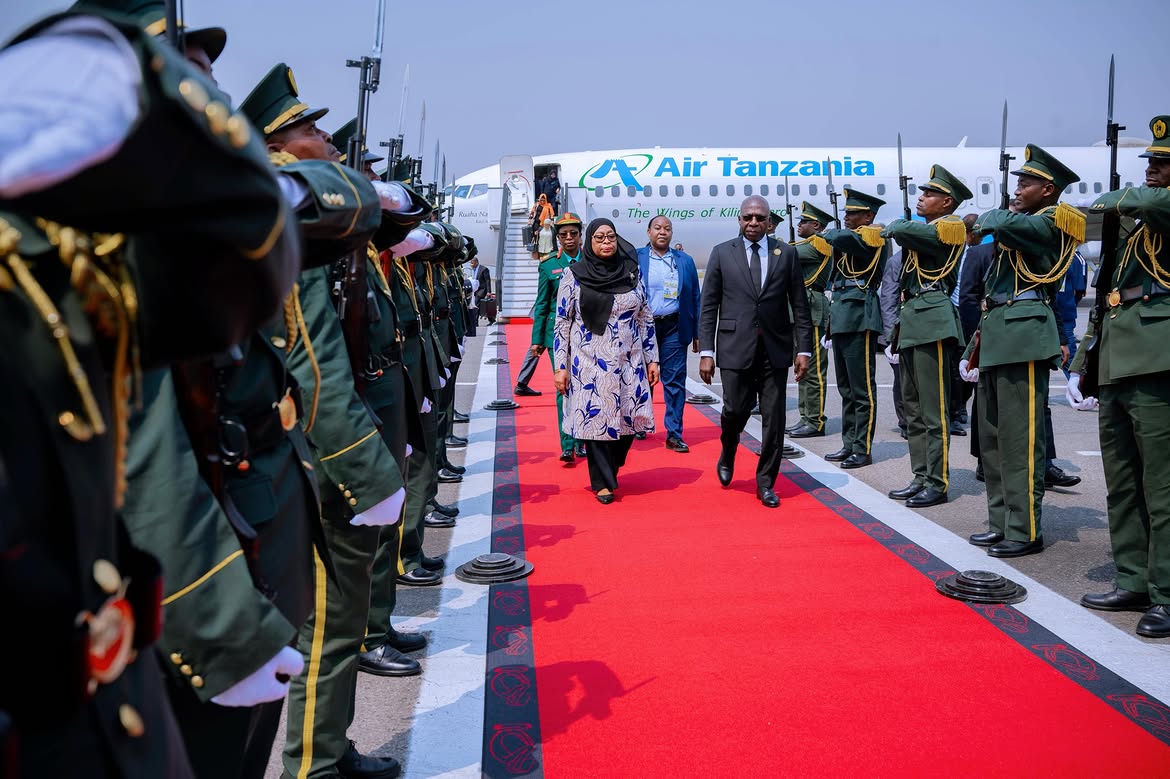
Tanzanian President Samia Suluhu Hassan is seeking to transform her country’s historic relationship with Angola into a modern partnership focused on trade, infrastructure, investment and healthcare.
The renewed cooperation was highlighted during President Samia’s visit to Angola in early August 2026, where the two countries celebrated their shared liberation history while outlining plans for stronger economic engagement.
On August 1, President Samia joined Angolan President João Manuel Gonçalves Lourenço to inaugurate the Julius Nyerere Referral Hospital in Luanda.
The state-of-the-art facility, which includes a specialist burns treatment center, was named after Tanzania’s founding president, Julius Nyerere, in recognition of his contribution to Angola’s struggle for independence.
During the 1960s and 1970s, Nyerere made Tanzania a sanctuary for liberation movements fighting colonialism and minority rule across Southern Africa. Angolan freedom fighters battling Portuguese colonial rule were among those who received political and practical support from Tanzania.
Members of the Nyerere family, including former Tanzanian First Lady Maria Nyerere, attended the hospital’s inauguration.
Although the ceremony celebrated the countries’ historical solidarity, President Samia used the visit to advance a broader economic and diplomatic agenda.
One of the major proposals discussed was connecting Angola’s Benguela railway to Tanzania’s TAZARA railway through the Lobito Corridor. Such a link could create a transcontinental transport network connecting the Atlantic and Indian oceans.
The proposed route would provide landlocked countries in Central and Southern Africa with improved access to international markets. It could also position Tanzania as the eastern gateway of a major African trade corridor, with Angola serving as the western outlet.
The infrastructure plan has the potential to reduce transportation costs, improve the movement of minerals and agricultural products, and strengthen regional supply chains. Its implementation would, however, require extensive coordination, financing and improvements to existing railway networks.
President Samia also called for increased trade and investment between the two countries. Despite their longstanding political relationship, economic exchanges remain limited.
Tanzanian exports to Angola were valued at approximately $4.4 million in 2024, highlighting the gap between the countries’ diplomatic ties and their commercial activity.
The Tanzanian leader encouraged Angolan businesses to explore opportunities in agriculture, manufacturing, tourism and energy. Greater private-sector participation, she argued, could turn historical goodwill into jobs, revenue and long-term economic growth.
Healthcare cooperation also featured prominently during the visit. Speaking at the hospital’s opening, President Samia urged African governments to invest in specialized medical services, including cancer, kidney and heart treatment.
She said stronger domestic health systems would reduce the large amounts African countries spend sending patients abroad for procedures that could be provided on the continent.
Tanzania has introduced additional measures to facilitate closer relations, including a 90-day visa waiver for Angolan citizens. The government has also allocated land in Dodoma for the construction of a permanent Angolan embassy.
The initiatives reflect President Samia’s wider strategy of using Tanzania’s liberation-era reputation to develop commercially valuable partnerships across Africa.
By linking Nyerere’s historical legacy with modern infrastructure, healthcare and investment projects, Tanzania and Angola are attempting to move their relationship beyond symbolism and establish a partnership capable of delivering measurable economic benefits.
Source: Omanghana