Omanghana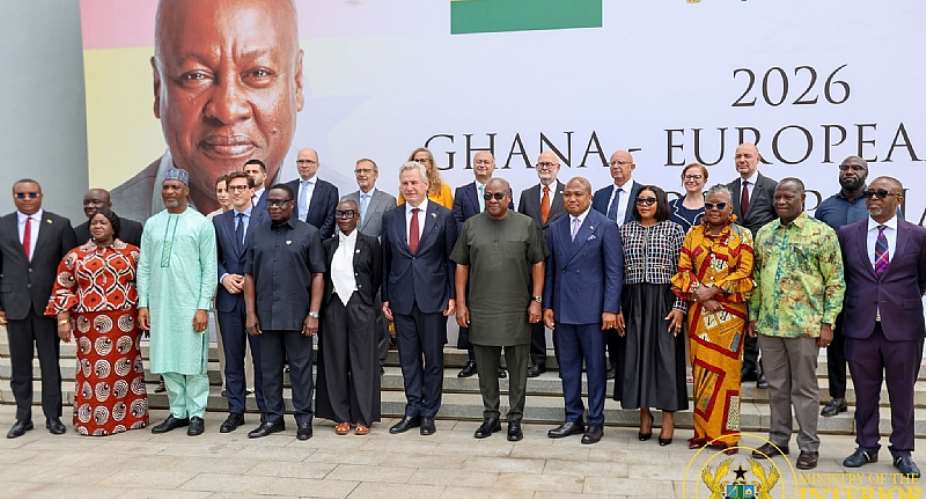
Samuel Okudzeto Ablakwa, Chairman of Parliament’s Foreign Affairs Committee, has called for deeper collaboration between Ghana and the European Union (EU) to tackle the growing challenges of human trafficking, cyber fraud, and irregular migration.
Speaking during a high-level diplomatic engagement in Accra, Ablakwa emphasized that transnational criminal networks are becoming increasingly sophisticated, requiring coordinated international action, enhanced intelligence sharing, and modern legislative responses.
He also stressed the importance of addressing the socioeconomic conditions that make vulnerable individuals susceptible to trafficking and unsafe migration routes.
Ablakwa highlighted the need for closer cooperation between Ghanaian security agencies and their European counterparts, advocating for more effective real-time intelligence sharing to identify and dismantle organized trafficking networks.
According to him, improved collaboration could strengthen investigations, enhance cross-border enforcement efforts, and disrupt criminal organizations that exploit migrants for profit.
Joint Action Against Cybercrime
The Foreign Affairs Committee Chairman also underscored the growing links between human trafficking operations and international cyber fraud syndicates.
He called for expanded partnerships in cybersecurity, including coordinated operations to combat online criminal activity, protect digital infrastructure, and intercept illicit financial transactions connected to organized crime.
Such efforts, he argued, would strengthen both national and regional security while safeguarding individuals from exploitation.
Beyond enforcement measures, Ablakwa advocated for increased investment in education, skills development, and employment opportunities as long-term solutions to irregular migration.
He encouraged the European Union to support initiatives focused on technical and vocational training, entrepreneurship, and green economy projects that can provide sustainable livelihoods for young people in Ghana.
By expanding economic opportunities at home, he said, governments can reduce the incentives that drive many individuals to pursue dangerous migration routes.
Legislative Reforms and Institutional Capacity
As Chairman of the Foreign Affairs Committee, Ablakwa pledged to support legislative measures aimed at strengthening Ghana’s response to human trafficking and migrant smuggling.
He indicated that Parliament would continue exploring reforms to enhance penalties for offenders while improving the operational capacity of immigration and law enforcement agencies tasked with protecting the country’s borders and vulnerable populations.
Recognizing that many migrants originate from economically disadvantaged fishing and farming communities, Ablakwa called for targeted interventions to improve livelihoods in these areas.
He proposed localized development programs, financial support initiatives, and economic diversification strategies designed to create more resilient communities and reduce migration pressures.
The lawmaker also stressed the importance of establishing stronger reintegration mechanisms for Ghanaians who return after unsuccessful migration attempts or trafficking experiences.
He advocated for state-backed programs that provide social support, employment assistance, and economic opportunities to help returnees rebuild their lives and reintegrate into their communities with dignity.
Ablakwa’s remarks reflect a broader push for comprehensive cooperation between Ghana and international partners in addressing migration-related challenges.
By combining stronger law enforcement, legislative reform, intelligence sharing, and investments in youth development, he believes Ghana and the European Union can make meaningful progress in combating trafficking networks while creating safer and more sustainable opportunities for future generations.
Source: Omanghana