Omanghana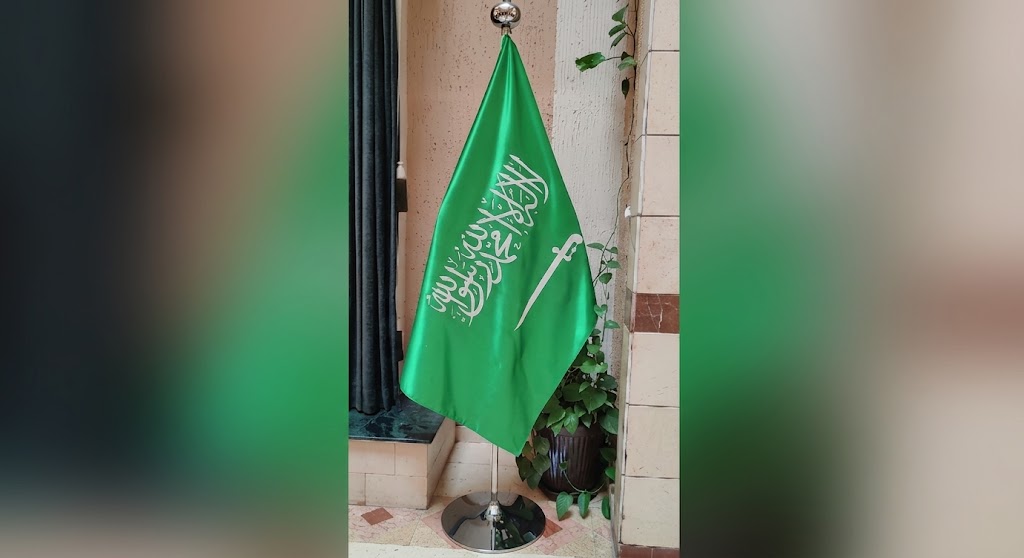
Saudi Arabia’s Ambassador to Pakistan, Nawaf bin Said Al-Malki, has announced that a newly signed trilateral defense agreement involving Saudi Arabia, Pakistan and Türkiye will soon be implemented “on the ground.”
Al-Malki made the announcement on Monday, August 17, 2026, during an event at the Saudi Embassy in Islamabad celebrating Pakistan’s Independence Day.
The ambassador said the three countries were committed to translating the agreement into practical security cooperation aimed at strengthening stability across the Middle East and South Asia.
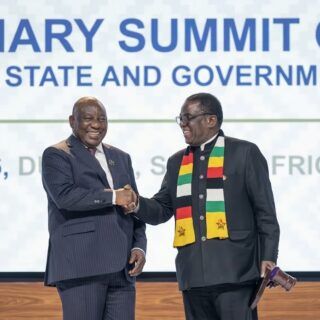
Known as the Makkah Joint Defense Agreement, the pact was signed in Mecca on August 7, 2026, by Saudi Crown Prince Mohammed bin Salman, Turkish President Recep Tayyip Erdoğan and Pakistani Prime Minister Shehbaz Sharif.
The agreement establishes a coordinated security framework under which an armed attack against any one of the three countries would be treated as an attack against all of them.
That provision has drawn comparisons with Article 5 of the North Atlantic Treaty Organization, which considers an attack on one NATO member an attack on the entire alliance.
The pact brings together three countries with different but potentially complementary military and economic strengths.
Saudi Arabia contributes substantial financial resources, global energy influence and a strategic location in the Middle East. The kingdom has also invested heavily in modernizing its armed forces and developing a domestic defense industry.
Türkiye possesses one of NATO’s largest militaries and has built a rapidly expanding defense-manufacturing sector. Turkish companies have gained international attention for producing drones, armored vehicles, naval platforms, missiles and other military technologies.
Pakistan brings extensive combat experience, a large military force and nuclear capabilities. It remains the only Muslim-majority country officially recognized as possessing nuclear weapons.
The combination of these strengths could provide the three countries with greater capacity to coordinate their responses to security threats, maritime risks, terrorism and regional instability.
Ambassador Al-Malki said Saudi Arabia, Pakistan and Türkiye were deeply invested in protecting regional peace. He indicated that implementation of the agreement would include practical measures rather than remain limited to political declarations.
Possible areas of cooperation include joint military exercises, coordinated defense training, intelligence sharing and the transfer of military technology.
The framework could also encourage increased cooperation among the countries’ defense industries. Türkiye’s growing manufacturing capacity, Saudi Arabia’s investment resources and Pakistan’s military expertise could support the joint production or development of defense equipment.
The agreement represents a significant development in relations among the three nations, which already maintain close political, economic and military ties.
Pakistan and Saudi Arabia have a longstanding defense relationship that includes military training, security cooperation and high-level strategic consultations. Türkiye and Pakistan have also strengthened their defense partnership through naval projects, joint exercises and procurement agreements.
Saudi Arabia and Türkiye, meanwhile, have worked in recent years to improve relations and expand economic and security cooperation following earlier diplomatic disagreements.
The trilateral arrangement is attracting international attention because of its potential impact on the balance of power across the Middle East and South Asia.
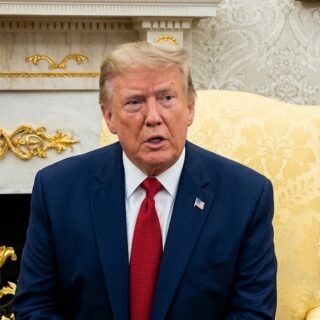
United States President Donald Trump publicly welcomed the agreement on August 17, describing it as a “big, bold, and important first step” towards countries in the Middle East assuming greater responsibility for their own defense.
The United States has long maintained security partnerships across the region, including close ties with Saudi Arabia, Türkiye and Pakistan. Türkiye is also a member of NATO, making its participation in a separate mutual-defense framework particularly significant.
India has responded cautiously to the development. Its Ministry of External Affairs said New Delhi was closely studying the pact and assessing its possible implications for India’s national security and wider regional stability.
India’s interest is expected to focus heavily on Pakistan’s participation, particularly because of the two countries’ longstanding rivalry, unresolved territorial disputes and history of military confrontation.
The agreement could also raise questions about how its mutual-defense provision would operate during a crisis involving one of the participating states. Details concerning the conditions for collective action, command structures and limits of military support have not yet been fully disclosed.
Implementation will therefore be closely monitored by governments and security analysts. Joint exercises, intelligence arrangements and defense-industrial projects are likely to provide the first indications of how the pact will function in practice.
For Saudi Arabia, Pakistan and Türkiye, the agreement reflects a shared desire to build a stronger and more coordinated security partnership capable of responding to emerging regional threats.
Ambassador Al-Malki’s comments suggest that the three governments intend to move quickly from signing the agreement to implementing its provisions through concrete military and institutional cooperation.
Source: Omanghana