Omanghana
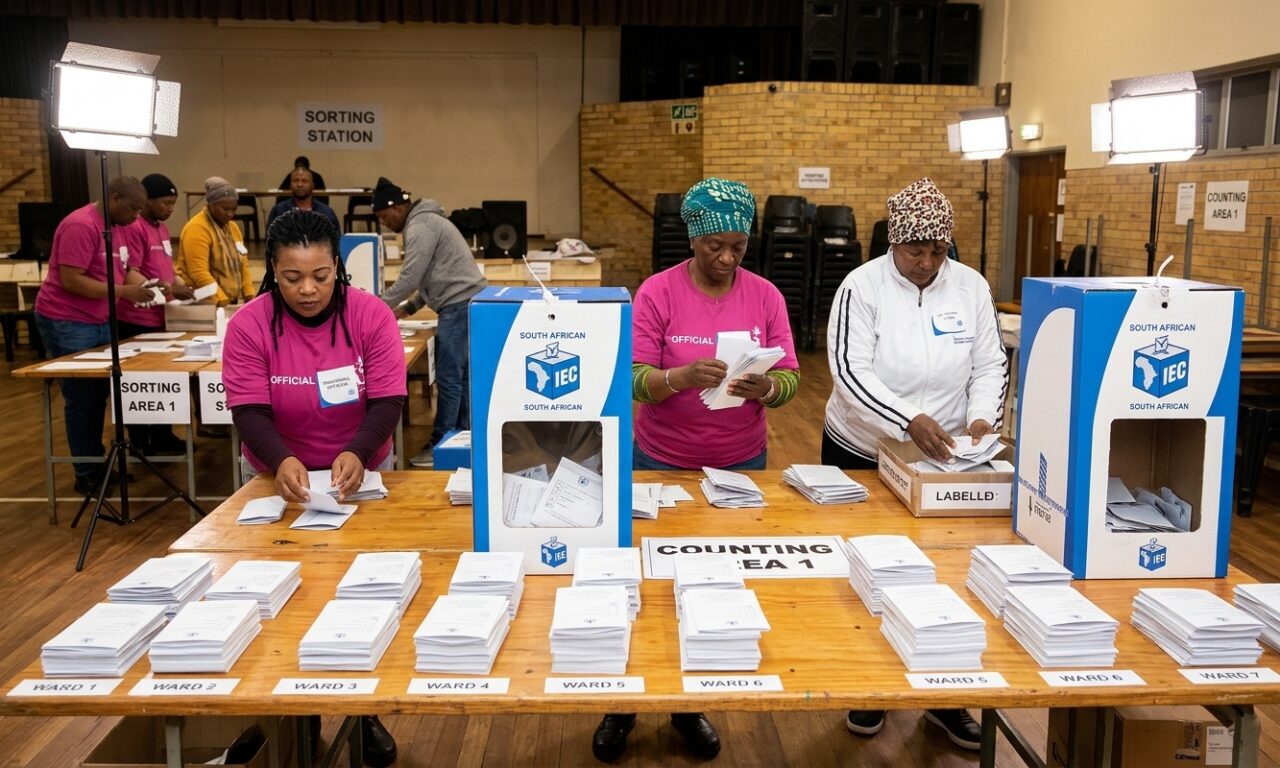
South Africa’s political parties face complex negotiations over control of several major municipalities after a fragmented vote in the country’s local government elections.
Preliminary results from the November 4, 2026 polls show the African National Congress (ANC) remaining the largest party in the national party-list count, while the Democratic Alliance (DA), uMkhonto weSizwe (MK) and other parties have made gains in key areas.
With no party securing a clear majority in several important councils, parties will need to negotiate agreements to form municipal governments.
Preliminary National Results
An election results tracker using Electoral Commission of South Africa (IEC) data showed results from 23,660 of 23,696 voting districts by 3:14 a.m. South African time on Sunday, November 8. The figures below reflect the national share of valid party-list votes and remain provisional. Each municipal council is decided separately.
| Political party | Preliminary party-list vote |
|---|---|
| African National Congress (ANC) | 30.9% |
| Democratic Alliance (DA) | 24.7% |
| uMkhonto weSizwe (MK) | 9.8% |
| Economic Freedom Fighters (EFF) | 6.3% |
| ActionSA | 6.0% |
The tracker put preliminary voter turnout at approximately 52.2%. An earlier IEC estimate indicated that about 15.9 million people had participated. Final turnout remains subject to confirmation.
Major Cities Face Negotiations
The DA was leading the party-list vote in Johannesburg and was the largest party in Tshwane and Ekurhuleni, where preliminary council results indicated that no party had won a majority.
In Cape Town, the DA secured a majority in the preliminary results. Former President Jacob Zuma’s MK party was leading in eThekwini, which includes Durban, while counting continued there.
The distribution of seats means smaller parties could play an influential role in determining who governs hung councils.
Parties Explore Coalition Options
DA leader Geordin Hill-Lewis said his party had begun contacting potential coalition partners as it considered arrangements for municipalities where it could not govern alone.
ActionSA national chairperson Michael Beaumont said his party was prepared to negotiate across the political spectrum, with an emphasis on service delivery, stable councils and fighting corruption.
Political analyst Daniel Silke warned that talks could be complicated by tensions between potential partners, particularly the DA and ActionSA in Gauteng. Previous disputes within municipal coalitions have raised concerns about political instability and its effect on services.
Final Results Expected on November 8
The IEC said it was dealing with objections and completing outstanding verification before declaring the results. It planned to announce the final outcome at 6 p.m. South African time on Sunday, November 8, 2026
Source: Omanghana