Omanghana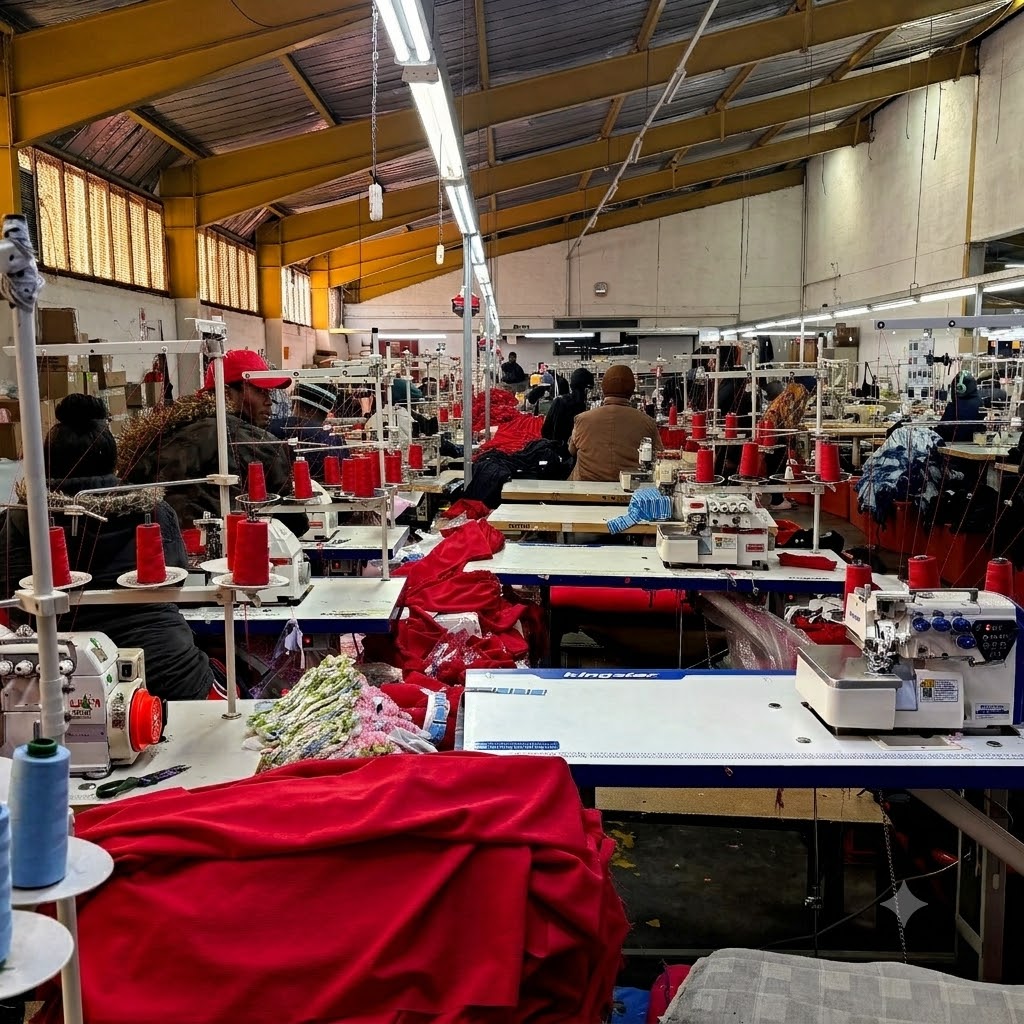
Clothing factories in South Africa are facing labor shortages and growing production backlogs after thousands of migrant workers reportedly left the country amid anti-immigration protests.
The disruption has been particularly severe in Newcastle, KwaZulu-Natal, one of the country’s leading textile and garment manufacturing centers. Rows of sewing machines have been left unused as factory owners struggle to recruit workers with the necessary skills and experience.
Manufacturers have warned that continued disruption could force some factories to close permanently.
Newcastle Factories Lose Significant Share of Workers
Factory operators reported losing between 12% and 19% of their employees within a short period in late July and early August 2026.
Estimates from the Southern African Clothing and Textile Workers’ Union indicate that approximately 15% of Newcastle’s 15,000 garment workers have left the area.
The departures followed anti-immigration demonstrations and vigilante activities reportedly led by a group known as March and March. Participants demanded that undocumented migrants leave South Africa, arguing that foreign nationals were taking employment opportunities away from citizens.
Estimates cited in connection with the unrest suggest that more than 160,000 foreign nationals have left South Africa because of fears for their safety.
Production Delays Affect Major Retailers
Newcastle’s clothing factories supply several major South African retailers, making the labor shortage a concern for the wider retail industry.
The sudden loss of experienced sewing-machine operators has slowed production, created backlogs and affected the ability of factories to complete orders on schedule.
Some manufacturers say they are operating at a loss as they attempt to meet delivery deadlines with a reduced workforce. Continued delays could also affect the availability of locally manufactured clothing in retail stores.
Factory Owners Point to Shortage of Specialized Skills
Employers argue that many of the departed workers, including migrants from Lesotho and Eswatini, possessed specialized sewing skills that cannot be replaced immediately.
Factory representatives Alex Liu and Ronghua Yan said experienced migrant employees were highly productive and accustomed to the demanding nature of garment manufacturing.
They also argued that many young South Africans are reluctant to accept factory jobs requiring them to sit at a sewing machine for about nine hours while completing repetitive manual work.
Employers believe training new workers to reach the required production standard will take time, worsening existing delays.
Union Blames Low Wages and Working Conditions
SACTWU representative Siyabonga Ntombela rejected claims that South Africa lacks qualified sewing-machine operators.
He maintained that many local machinists have the necessary skills but are unwilling to accept jobs offering low wages and difficult working conditions.
The union’s position has shifted the debate from the availability of workers to the quality of the employment being offered.
Piece-Rate System Comes Under Scrutiny
Many garment workers in Newcastle are reportedly paid according to the number of items they complete instead of receiving a fixed hourly wage.
Under the piece-rate system, only the most productive employees consistently earn the national minimum wage of R30.23 per hour. Other workers may receive considerably less when production levels fall below factory targets.
Transportation expenses also discourage some South Africans from accepting the positions. Migrant workers frequently lived in factory-linked accommodation, reducing their daily commuting costs.
These differences have contributed to the industry’s heavy dependence on foreign workers.
Previous Inspections Exposed Poor Conditions
The current labor crisis has intensified problems that were already affecting South Africa’s clothing manufacturing sector.
Government inspections conducted in late 2025 and February 2026 reportedly uncovered unsafe working environments, poor factory conditions and inadequate accommodation for some employees.
Following the enforcement operations, several prominent clothing brands and retailers withdrew orders from factories that failed to meet required labor and safety standards.
The loss of contracts placed additional financial pressure on manufacturers before the latest worker departures.
Factory Owners Consider Permanent Closures
With fewer skilled employees, delayed orders and continued concerns about regulatory compliance, the future of several factories remains uncertain.
Some business owners have adopted a wait-and-see approach as they assess whether production can recover. Others have warned that they may close their factories permanently by December if labor shortages and financial losses continue.
The crisis has exposed deeper tensions surrounding migration, wages, working conditions and the long-term sustainability of South Africa’s domestic clothing industry.
Source: Omanghana