Omanghana
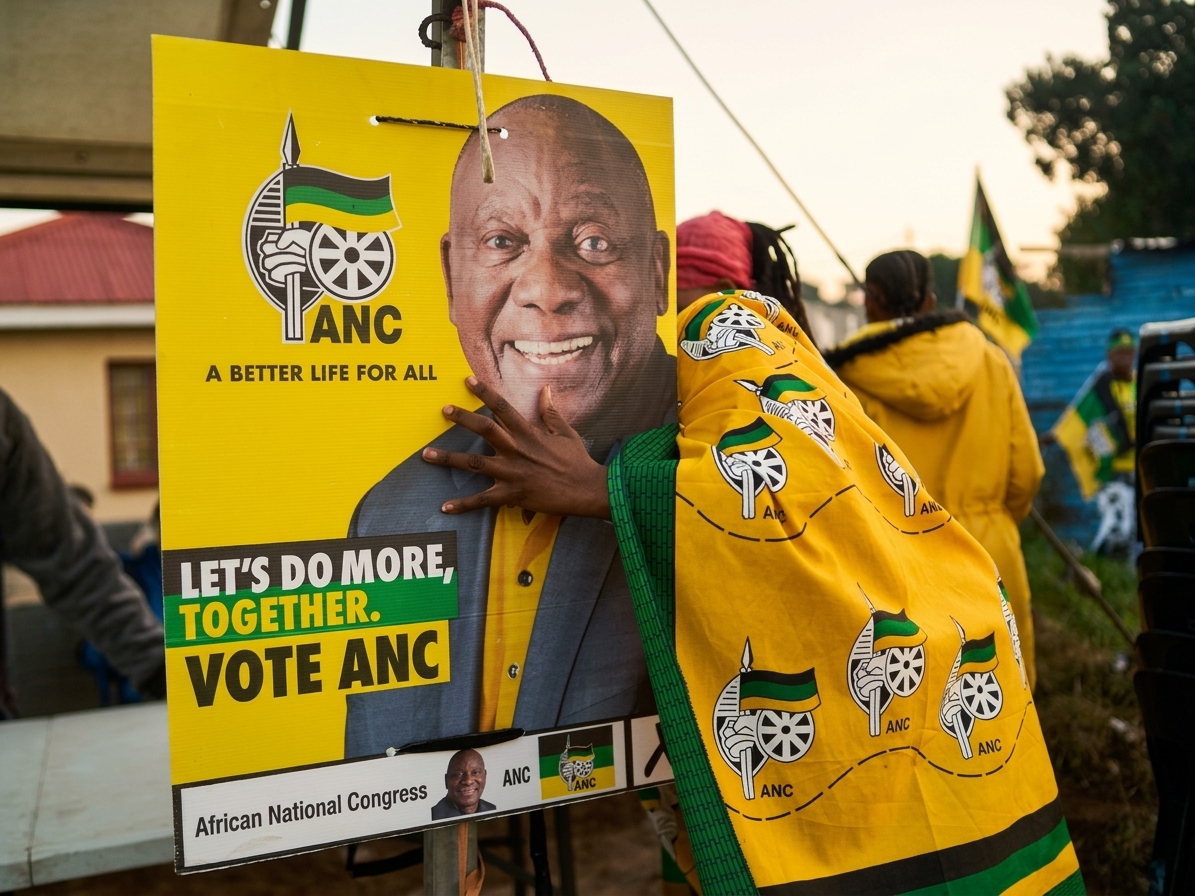
South Africa’s African National Congress (ANC) has suffered a major setback in the country’s local government elections, with its share of the vote falling to about 31% and coalition negotiations expected in numerous municipalities.
The outcome of the November 4, 2026, elections marks a further decline for the party, which received 45.59% in the previous local government vote in 2021. The ANC nevertheless remains the largest party nationally.
The results have left several councils without a single party holding a majority, making negotiations important to the formation of municipal administrations.
Conflicting Published Totals
Two South African government publications report different national vote shares and council seat totals for the leading parties. The figures below show the totals in the government-published address by Electoral Commission chairperson Mosotho Moepya and those in a separate government news report.
| Party | IEC chair’s published address: vote share / seats | Government news report: vote share / seats |
|---|---|---|
| African National Congress | 30.89% / 3,164 | 30.76% / 3,246 |
| Democratic Alliance | 24.60% / 1,527 | 24.64% / 1,695 |
| uMkhonto weSizwe Party | 9.61% / 701 | 9.76% / 785 |
| Economic Freedom Fighters | 6.25% / 505 | 6.22% / 588 |
| ActionSA | 5.68% / 219 | 5.67% / 313 |
The published accounts also give council totals that do not add up to the stated number of municipalities. The precise national seat figures and number of hung councils therefore require confirmation against the IEC’s final results reports.
Service Delivery Concerns
The ANC’s declining support follows years of public frustration over unreliable services and deteriorating infrastructure in many communities.
Water shortages, electricity disruptions, uncollected refuse, broken streetlights and damaged roads were among the concerns raised during the campaign. Corruption and unemployment have also contributed to dissatisfaction with government performance.
ANC Secretary-General Fikile Mbalula described the election outcome as “catastrophic” for the party but said it would not seek positions by begging during coalition negotiations.
The Democratic Alliance (DA) said it would begin discussions with parties committed to clean government, accountability, service delivery and the rule of law.
What Happens Next?
Where no party has a majority of council seats, parties may negotiate coalitions or other arrangements to secure support for municipal leadership.
Under the Municipal Structures Act, a newly elected municipal council’s first meeting must be convened within 14 days after that council is declared elected. Councillors elect office-bearers, including the speaker and mayor where applicable, through the prescribed procedures.
The 14-day requirement applies to the first council meeting; it is not a separate statutory deadline requiring parties to sign a coalition agreement.
Source: Omanghana