Omanghana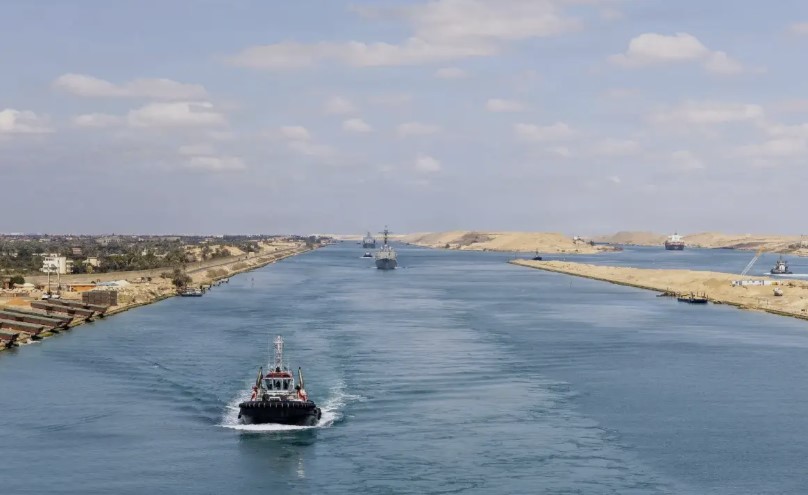
Egypt’s Suez Canal is experiencing a significant financial rebound as global energy suppliers increasingly reroute shipments through the strategic waterway following disruptions to traditional Gulf export routes.
New figures released on June 10, 2026, by Egypt’s Central Agency for Public Mobilization and Statistics (CAPMAS) show that oil tanker traffic through the canal increased by 28 percent year-on-year, generating approximately $419 million in monthly revenue and marking the canal’s strongest performance since early 2024.
The unexpected boost comes as geopolitical tensions continue to reshape international shipping patterns and force energy producers to seek alternative routes to global markets.
Strait of Hormuz Disruptions Reshape Global Trade
At the heart of the traffic surge is the ongoing disruption to maritime movements through the Strait of Hormuz, one of the world’s most important energy chokepoints.
The waterway, which has historically handled a substantial share of global oil and liquefied natural gas exports, has seen severe restrictions following the outbreak of conflict involving the United States, Israel, and Iran earlier this year.
With shipping companies and energy traders seeking safer alternatives, large volumes of crude oil and petroleum products are increasingly being redirected toward the Red Sea and onward through the Suez Canal.
The shift has elevated Egypt’s strategic role in global energy logistics at a time when traditional Gulf shipping routes face heightened uncertainty.
Oil Tanker Traffic Climbs Sharply
According to CAPMAS data, 529 oil tankers transited the Suez Canal during April 2026, representing a 28 percent increase compared to the same period last year.
The broader recovery was reflected across the canal’s overall operations, with total vessel crossings reaching 1,182 ships, a 14 percent increase year-on-year.
The rise in traffic translated into a substantial increase in transit-fee revenue, with water transport earnings climbing 27 percent to approximately $419 million.
For Egypt, the increase provides a welcome source of foreign exchange earnings and additional support for an economy that has faced significant external pressures in recent years.
Alternative Energy Corridors Gain Importance
The disruption of traditional Gulf export routes has accelerated the use of alternative transportation networks across the Middle East.
Saudi Arabia has significantly expanded utilization of its East-West Pipeline, which transports crude oil from production fields in the eastern part of the kingdom to the Red Sea port of Yanbu.
From Yanbu, oil shipments can be loaded onto tankers and transported northward through the Red Sea and Suez Canal toward European and international markets.
Other Gulf producers have also increased reliance on Red Sea ports and overland transportation infrastructure to maintain exports while minimizing exposure to regional security risks.
These alternative routes have become increasingly important in sustaining global energy flows during a period of heightened geopolitical instability.
Canal Benefits From Shifting Trade Patterns
Market analysts increasingly view the Suez Canal as one of the unexpected economic beneficiaries of the latest disruptions in global energy markets.
The canal’s strategic location allows it to serve as a critical link between energy producers in the Middle East and consumers in Europe, North America, and beyond.
As shipping companies adapt to new risk calculations, Egypt has found itself at the center of an evolving trade network that is redirecting billions of dollars’ worth of energy cargo through its territory.
The resulting increase in transit fees is helping offset previous declines in canal revenue that had weighed on Egypt’s finances.
Recovery Remains Incomplete
Despite the recent surge in traffic and earnings, industry experts caution that the canal has not yet returned to pre-crisis activity levels.
In recent years, maritime traffic through the Red Sea and Suez Canal faced significant disruptions due to persistent security concerns and attacks on commercial shipping in the region.
Those challenges contributed to a sharp decline in canal revenue and forced many shipping companies to seek alternative routes.
Although oil tanker volumes have risen sharply in 2026, total vessel traffic remains well below the levels recorded before the disruptions that began in 2023.
As a result, analysts believe the latest figures reflect a stabilization rather than a full recovery.
Strategic Waterway at the Center of Global Transition
The resurgence of the Suez Canal highlights how geopolitical developments continue to reshape global supply chains and energy markets.
While the recent increase in traffic has provided Egypt with an important economic boost, the broader maritime landscape remains highly uncertain.
Shipping companies, energy producers, and governments continue to adjust to evolving security realities across key international trade corridors.
For now, however, the Suez Canal has regained some of its lost momentum, reaffirming its position as one of the world’s most strategically important waterways and a vital artery for global energy trade.
Source: Omanghana