Omanghana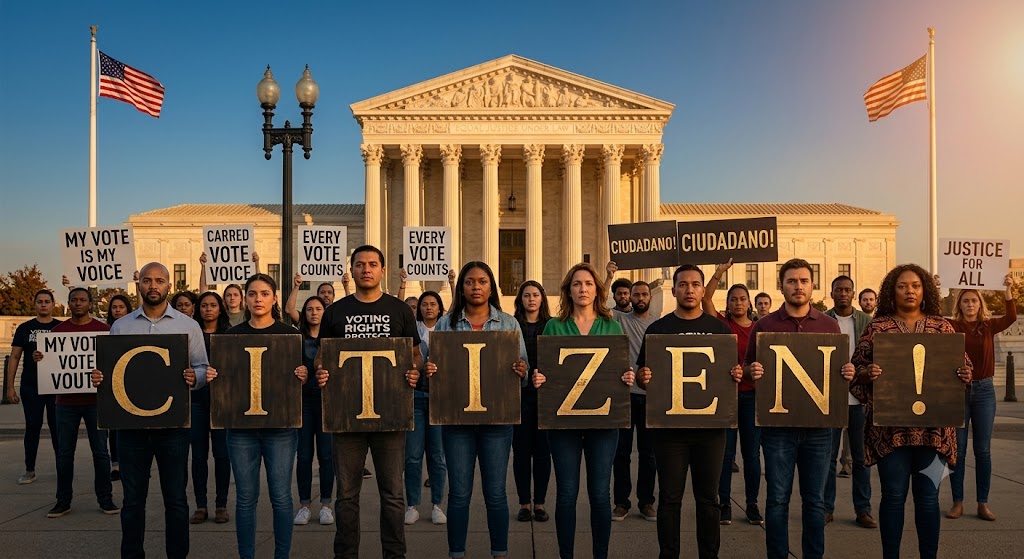
The U.S. Supreme Court’s decision to reject President Donald Trump’s attempt to restrict birthright citizenship has preserved the current interpretation of the 14th Amendment, but the ruling has reignited a long-running national debate over who qualifies as an American citizen.
The case, Trump v. Barbara, kept intact the principle that children born on U.S. soil are generally granted automatic citizenship, regardless of their parents’ immigration status.
However, the ruling was closely divided. Four justices argued that Trump’s order — which sought to deny citizenship to children of undocumented immigrants and some temporary residents — did not violate the Constitution. Justice Brett Kavanaugh said the order conflicted with federal law but not the 14th Amendment itself.
Activists Remain Concerned
Following the decision, supporters of birthright citizenship gathered outside the Supreme Court to mark the anniversary of the 14th Amendment’s ratification in 1868.
Among them was Laura Horn, who traveled from Youngstown, Ohio, with her daughter and mother to show support for the constitutional provision.
Although the court preserved birthright citizenship, Horn said she believed future challenges could continue, arguing that the issue remains unsettled.
The Constitutional Debate
The 14th Amendment, adopted after the Civil War, was designed to grant citizenship and equal legal protections to formerly enslaved people.
Supporters of a broad interpretation argue that the amendment established a universal guarantee of citizenship for anyone born in the United States.
Critics, including Trump and some conservative legal voices, argue that lawmakers who drafted the amendment never intended it to apply to every person born on U.S. territory.
Divided Views Among Justices
The debate was highlighted by separate opinions from the Supreme Court’s two Black justices.
Justice Clarence Thomas argued that the amendment was created primarily to secure rights for newly freed Black Americans and has since been expanded beyond its original purpose.
Justice Ketanji Brown Jackson disagreed, saying the amendment’s principles of equality were meant to extend protections broadly and should not be viewed as limited to one group.
A Continuing National Dispute
Legal experts say the birthright citizenship debate reflects a larger disagreement over how the 14th Amendment should be interpreted.
Some focus on the amendment’s guarantee of equal treatment, while others emphasize its role in protecting vulnerable groups from discrimination.
The Supreme Court’s ruling has temporarily preserved existing citizenship rules, but the political and legal battle over the meaning of the 14th Amendment is expected to continue. The issue remains part of a broader national conversation about immigration, identity, and the definition of American citizenship.
Source: Omanghana